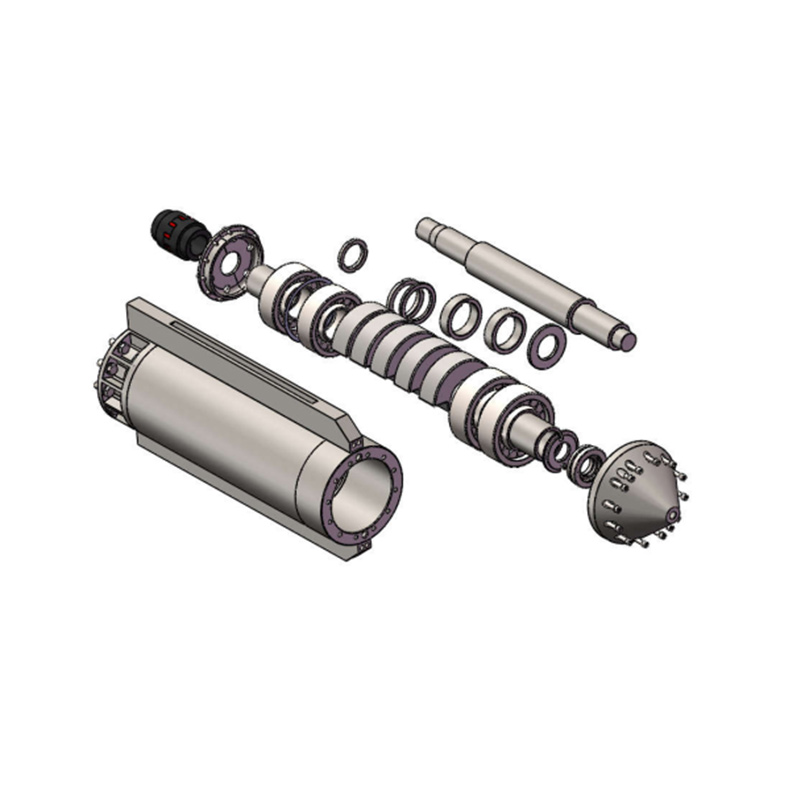
Mega-projects like land reclamations, port expansions, and massive industrial facilities face a common bottleneck: geotechnical timelines. Relying on a single-probe approach for deep vibro compaction limits daily production rates and threatens overall project delivery. Project managers must accelerate soil densification across vast footprints and unfavorable soil conditions without compromising strict quality standards or exponentially increasing labor hours. To meet aggressive schedules, contractors transition from single-unit operations to deploying multiple vibroflots simultaneously. This strategy transforms unstable ground into a safe, stable foundation. It requires rigorous site logistics, synchronized execution, and specialized equipment capable of sustained, high-output performance. We will break down the mechanics of simultaneous compaction, fleet logistics, and equipment selection criteria needed to scale your operations effectively on the job site.
Key Takeaways
Production Scaling: Deploying multiple vibroflots in tandem or fleet configurations can multiply daily compaction yields, making it an economical technique and a mandatory strategy for commercially viable large scale ground improvement.
Logistical Complexity: Successful multi-unit deployment requires precise vibroflot fleet planning, specifically regarding crane capacity, power generation, and hydraulic distribution.
Data Synchronization: Modern high capacity vibroflotation equipment must integrate real-time data logging across all active probes to ensure uniform soil stabilization and verifiable QA/QC.
Partner Reliability: Sourcing from a proven ground improvement equipment supplier is critical to mitigate fleet downtime, ensure rapid mobilization, and secure on-site technical support.
The Shift to Multi-Vibroflot Construction in Mega-Projects
Problem Framing & Success Criteria
Project managers define specific baseline metrics before site mobilization. They analyze total soil volume and strict project duration limits. Single-probe setups often fall short on massive sites. You cannot meet aggressive deadlines using isolated equipment when dealing with millions of cubic meters of fill. Contractors transition to multi-vibroflot construction to solve this bottleneck. This approach multiplies daily production rates. It ensures you achieve the required bearing capacity on time. Engineers evaluate the total cubic meters of soil requiring treatment. They calculate the required daily yield to maintain the critical path schedule. When daily volume requirements exceed the capacity of two independent rigs, fleet deployment becomes necessary. We look at the Standard Penetration Test (SPT) targets. If the site requires N-values above 30 across a 50-hectare footprint, a single probe will take years. You need a fleet.
The Mechanics of Simultaneous Compaction
Utilizing multiple vibrating probes simultaneously accelerates the rearrangement of soil particles. The vibratory fields from adjacent probes interact and overlap. This interaction creates a highly active compaction zone. It results in a denser and more stable ground foundation. You achieve this across a wider radius in a fraction of the time. The overlapping horizontal vibrations break down inter-particle friction faster. Granular materials settle into their densest possible state. This synchronized energy transfer is highly efficient. It reduces the total time each probe must spend at specific depth intervals. When two probes operate three meters apart, their radial energy waves collide. This collision amplifies the liquefaction effect in the soil matrix. The soil grains lose their structure momentarily. Gravity then pulls them into a tightly packed arrangement.
Identifying the Economic Tipping Point
Site planners must identify specific mathematical and logistical thresholds. The upfront cost of mobilizing additional cranes is significant. You must also account for extra power packs and extension tubes. However, this investment becomes a highly economical technique at a certain scale. It drastically reduces the critical path schedule. Shorter project durations reduce overhead costs. You save on site management, dewatering, and general conditions. The economic tipping point occurs when schedule savings outweigh equipment mobilization costs. This calculation is vital for commercially viable large scale ground improvement. We calculate the daily burn rate of the entire site. If running four probes cuts the schedule by six months, the crane rental costs are easily justified. You also reduce the risk of weather delays by finishing the earthwork phase faster.
Evaluating Soil Conditions for Fleet Deployment
Site geology dictates the feasibility of running multiple probes in close proximity. Granular soils like sands and gravels respond exceptionally well to overlapping vibratory fields. The vibrations easily liquefy the localized soil matrix. This allows rapid particle rearrangement. Complex site geology requires careful evaluation. Treating unfavorable soil conditions using multiple probes demands precise control. In silty or mixed soils, excess pore water pressure can build up rapidly. Engineers must monitor these pressures to prevent localized ground failures. They adjust probe spacing based on real-time soil feedback. If the fines content exceeds 15 percent, the overlapping vibrations might cause excessive heaving. You must adjust the water jetting pressure to flush out the fines. This keeps the compaction zone active and prevents the probes from getting stuck.
Vibroflotation Construction Sequence for Multiple Units
Grid Planning and Probe Spacing Overlap
Engineers design specific compaction grids when multiple vibroflots operate simultaneously. They commonly use triangular or square patterns. The goal is to prevent mechanical interference while maximizing densification overlap. Grid planning dictates the exact vibroflotation construction sequence. Triangular grids often provide the most uniform compaction in clean sands. The spacing between insertion points depends on the probe's amplitude. It also depends on the specific soil composition. Proper spacing ensures the vibratory fields overlap just enough to eliminate weak zones. It prevents wasted energy from excessive overlap. We typically space probes between 2.5 and 4.0 meters apart. You must lay out the grid using high-precision GPS rovers. The crane operator needs clear visual markers to position the tandem rig accurately.
Tandem and Triple Rig Configurations
Contractors often suspend multiple probes from a single high-capacity crawler crane. This setup optimizes heavy equipment utilization on crowded sites. Tandem rigs utilize two probes. Triple rigs utilize three probes suspended from a custom spreader beam. You must compare top feed free hanging configurations against leader-guided systems. Free hanging setups offer greater flexibility and faster repositioning. Leader-guided systems provide strict verticality control. They are often preferred for deep vibro replacement in stiff soils. The spreader beam must incorporate heavy-duty vibration isolators. These protect the crane boom from damaging resonant frequencies. Without proper isolators, the vibrations will destroy the crane's hoist cables and sheaves. You must inspect the rigging hardware daily for fatigue cracks.
Phased Execution Models
Managing a synchronized fleet requires a strict step-by-step execution model. The sequence varies based on the chosen improvement method. Top-feed methods use water jetting for deep vibro compaction. The probes penetrate the soil using water pressure and vibration. Bottom-feed methods install aggregate piers for vibro replacement. This involves feeding stone through a tremie pipe attached to the probe. Synchronizing bottom-feed operations across multiple rigs is highly complex. It requires continuous aggregate delivery to prevent idle time. Fleet managers phase the execution to ensure supply chains keep pace with probe penetration rates. You start at the lowest elevation of the site and work upwards. This allows the surface water from the jetting process to drain away from the active work zone.
Step-by-Step Tandem Rig Mobilization Sequence
Assemble the crawler crane and verify the load chart for the maximum anticipated extraction friction.
Attach the custom spreader beam to the main hoist block using certified heavy-duty shackles.
Connect the vibration isolators to the bottom attachment points of the spreader beam.
Hoist the extension tubes and bolt them securely to the top of each vibroflot unit.
Connect the hydraulic hoses and electrical cables to the power packs, ensuring sufficient slack for full depth penetration.
Perform a dry run above ground to verify motor rotation and check for hydraulic leaks.
Position the rig over the first grid coordinates using GPS guidance.
Vibroflot Fleet Planning and Site Logistics
Power Generation and Distribution
Powering multiple units presents significant implementation realities. You must choose between centralized mega-generators and modular dedicated power packs. Vibroflot fleet planning requires precise electrical load calculations. Centralized generators offer a smaller site footprint. They require massive distribution panels and thick, heavy cabling. Modular power packs provide dedicated energy to each rig. This approach offers better redundancy. If one power pack fails, only one rig stops. Modular setups simplify cable management across vast construction sites. They allow for flexible rig repositioning without dragging main power lines. We prefer modular packs for sites larger than 10 hectares. You avoid voltage drop issues over long cable runs. The power packs must have oversized radiators to handle continuous operation in hot climates.
Crane Capacity and Rigging Realities
Operating multiple probes in tandem demands rigorous crane capacity evaluations. You must account for heavy lifting requirements and dynamic loads. Extraction friction in dense soils adds massive stress to the crane hoist. Mast stability is critical when swinging multiple probes between grid points. Site engineers calculate the combined weight of the probes, extension tubes, and spreader beams. For bottom-feed systems, you must include the weight of fully loaded material hoppers. Crawler cranes must maintain strict load chart compliance during all operational phases. A tandem rig might weigh 15 tons in the air. When you pull it out of compacted sand, the friction can add another 20 tons of resistance. You need a crane with at least a 100-ton capacity to handle these dynamic spikes safely.
Water and Material Feed Logistics
Supply chain logistics make or break multi-unit operations. For vibro replacement, you must keep multiple bottom-feed hoppers continuously supplied. Aggregate delivery must match the installation rate of the stone columns. Wheel loaders and specialized conveyor systems feed the hoppers. Idle time destroys the economic advantages of fleet deployment. For top-feed compaction, water supply is equally critical. You need high-volume water pumps and extensive manifold systems. The site must supply thousands of gallons per minute to support simultaneous water jetting across multiple active probes. We use large settling ponds to recycle the jetting water. You pump the water from the pond to a central manifold. The manifold distributes the pressure evenly to each probe in the fleet.
Implementation Risks & Mitigation
Equipment downtime compounds rapidly in fleet operations. If one probe in a tandem rig fails, the entire rig stops. This halts production for that specific crane. You must implement aggressive mitigation strategies. Modular component swapping is essential. Site mechanics must be able to replace a damaged probe head within hours. Maintaining redundant backup units on-site is a standard practice. You keep spare probes, extension tubes, and hydraulic hoses readily available. Preventive maintenance schedules must occur during off-shift hours to maximize active compaction time.
Field Troubleshooting Guide for Tandem Operations
Operational Issue
Primary Cause
Field Mitigation Strategy
Uneven Penetration Rates
Varying soil density across the tandem footprint
Adjust water jetting pressure independently for the lagging probe.
Excessive Crane Boom Vibration
Failed or degraded vibration isolators on the spreader beam
Halt operations immediately and replace the rubber isolator blocks.
Sudden Amperage Spike
Probe hitting a hard clay lens or buried obstruction
Extract the probe two meters, increase water flow, and repenetrate slowly.
Material Hopper Jamming
Oversized aggregate or wet fines clogging the tremie pipe
Use the air flush system to clear the blockage before extracting.
Evaluating High Capacity Vibroflotation Equipment for Fleet Use
Features-to-Outcomes (Amplitude & Frequency)
Equipment specifications directly translate to compaction yield per hour. You must evaluate eccentric moment, centrifugal force, and operating frequency. High amplitude probes generate massive horizontal forces. This pushes soil particles outward, creating dense columns. High capacity vibroflotation equipment is mandatory for fleet deployment. The equipment must deliver consistent energy deep underground. Operating frequency must match the resonant characteristics of the target soil. Proper frequency selection maximizes energy transfer and minimizes wasted mechanical effort. This ensures each probe in the fleet performs at peak efficiency. A 130 kW motor might work for shallow depths. For a 20-meter compaction zone, you need at least a 180 kW motor to maintain amplitude under heavy soil resistance.
Versatility Across Improvement Techniques
Fleet equipment must demonstrate high versatility. Project soil profiles often change across a massive site. You may start in clean sands and transition to cohesive silts. The base fleet must seamlessly switch between deep vibro compaction and vibro replacement. You should be able to attach bottom-feed tremie pipes to standard compaction probes. This modularity prevents the need to mobilize entirely different equipment sets. Versatile equipment keeps utilization rates high. It allows site managers to adapt to unexpected geotechnical discoveries without halting production. We look for probes with interchangeable nose cones. You swap a water-jetting cone for a stone-feeding cone in under two hours.
Durability Under Continuous Load
Vibroflots operating 24/7 face extreme mechanical stress. They work in abrasive, high-resistance soil environments. You must examine the metallurgical and engineering requirements of the equipment. The probe casing must resist severe abrasion from quartz sands and crushed rock. Internal bearings endure massive centrifugal forces. They require advanced lubrication and cooling systems. High-quality hydraulic motors must withstand continuous pressure spikes during hard extraction. Equipment durability directly impacts fleet uptime. Weak components will rapidly fail under the relentless demands of multi-unit synchronized operations. We specify Hardox steel for the wear plates. You must check the oil levels in the vibrator housing every single shift.
Real-Time Data Monitoring (QA/QC)
Integrated telemetry is an absolute necessity for modern ground improvement. Fleet operators cannot rely on manual depth tracking. You must evaluate equipment based on its data logging capabilities. The system must aggregate depth, amperage, and compaction time data. It collects this from multiple vibroflots simultaneously. The software compiles this data into a single, verifiable compliance report. Amperage spikes indicate the soil has reached refusal density. Real-time monitoring allows operators to verify uniform stabilization. It ensures strict adherence to QA/QC protocols across the entire project footprint. The operator watches a monitor in the crane cab. When both probes hit the target amperage, they hold for 30 seconds, then extract one meter.
Daily Maintenance Checks for High-Capacity Probes
Inspect the nose cone for excessive wear or blocked water jets.
Check the hydraulic hose connections for leaks or abrasion damage.
Verify the oil level and temperature in the vibrator housing.
Test the data logger sensors for accurate depth and amperage readings.
Grease the spreader beam shackles and vibration isolator pins.
Selecting a Ground Improvement Equipment Supplier for Fleet Operations
Assessing Inventory and Mobilization Speed
Your equipment partner dictates your mobilization success. You must evaluate a supplier’s capacity to deliver multiple identical units. They must provide matching power packs and extension tubes. Remote or complex project sites operate on tight procurement windows. A reliable ground improvement equipment supplier maintains deep inventory levels. They can dispatch a complete fleet without manufacturing delays. Identical units simplify maintenance and spare parts management. Mixed fleets cause logistical headaches and complicate operator training. Speed to site is a critical metric for mega-project kickoffs. If you need six probes in Dubai by next month, the supplier must have them sitting in the yard ready to ship.
Technical Support and On-Site Troubleshooting
Fleet operations require immediate technical interventions. You cannot wait days for remote troubleshooting. Analyze the importance of a supplier providing embedded technicians. Having factory-trained mechanics on-site prevents minor issues from becoming major delays. The supplier should provide comprehensive training for your local crews. Operators must understand the specific nuances of tandem rig operations. Rapid-response spare parts logistics are non-negotiable. The supplier must guarantee overnight delivery of critical wear parts. Strong technical support ensures your multi-unit fleet maintains maximum operational uptime. We always negotiate a service contract that puts a dedicated mechanic on our site for the first four weeks of production.
Equipment Availability and Fleet Scalability
Contractors must weigh different acquisition strategies for large operations. You evaluate the operational flexibility of owning versus renting. Purchasing a fleet provides long-term asset availability for continuous mega-projects. It gives you total control over maintenance schedules and modifications. Renting offers rapid scalability for specific, short-term project peaks. It allows you to expand your fleet temporarily without permanent inventory commitments. Decision-makers assess their project pipeline to determine the best approach. The right strategy ensures you have the exact number of probes needed at any given phase. You might own four probes but rent an additional two to hit a tight milestone.
Fleet Logistics Comparison
Execution Method
Material Handling
Crane Requirements
Ideal Soil Application
Top-Feed Compaction
High-volume surface water jetting
Standard lifting capacity, dynamic load focus
Clean granular sands and loose gravels
Bottom-Feed Replacement
Continuous aggregate hopper feeding
High lifting capacity, heavy static loads
Mixed soils, silts, and cohesive layers
Tandem Top-Feed
Dual water manifolds, massive pump output
Heavy crawler crane, spreader beam setup
Deep, uniform sand deposits requiring speed
Tandem Bottom-Feed
Synchronized dual wheel loader feeding
Maximum capacity crane, strict verticality
Large-scale industrial foundation support
Conclusion
Utilizing multiple vibroflots represents a fundamental shift in site engineering, logistics, and power management. This approach is essential to achieve economical, large-scale soil stabilization on strict timelines. Decision-makers must evaluate their equipment configurations based on specific site realities. You base these choices on crane availability, target soil types, and the supplier's ability to support a high-demand fleet environment. Proper planning transforms complex multi-rig setups into highly efficient production lines.
Conduct a comprehensive site-specific logistical audit to identify potential power and water bottlenecks before mobilization.
Calculate your required daily compaction yields to determine the exact number of probes needed for the critical path.
Consult with a specialized equipment supplier to model a custom fleet configuration tailored to your soil profile.
Develop a redundant spare parts inventory plan to keep backup probes and hoses on site.
FAQ
Q: What is the advantage of multi-vibroflot construction over single-probe methods?
A: Multi-vibroflot construction exponentially increases daily soil compaction yields. It significantly reduces the critical path schedule for large scale ground improvement projects. This method optimizes crane utilization. You achieve faster densification across vast footprints without sacrificing quality control.
Q: Why is multi-vibroflot construction considered an economical technique for unfavorable soil conditions?
A: Upfront mobilization costs are higher for multiple units. However, deploying multiple probes simultaneously accelerates the rearrangement of soil particles. It speeds up the installation of aggregate piers. This drastically cuts down overall labor, fuel, and project duration costs.
Q: How does running multiple vibroflots affect the vibroflotation construction sequence?
A: It requires advanced grid planning to manage overlapping vibratory fields. You must coordinate synchronized penetration and extraction rates. It also demands continuous, high-volume material feeding to prevent logistical bottlenecks on site.
Q: Can multiple vibroflots be suspended from a single crane?
A: Yes, tandem or triple configurations can be suspended from a single high-capacity crawler crane. This includes top feed free hanging setups. You use specialized spreader beams. The crane must handle the combined dynamic loads and extraction friction.
Q: What are the power requirements for a vibroflot fleet?
A: Vibroflot fleet planning must account for significant electrical or hydraulic power demands. This often requires dedicated, high-output power packs for each individual probe. Alternatively, you can use a heavily centralized generator farm with robust distribution panels.
Q: How do you ensure QA/QC when using multiple probes simultaneously?
A: High capacity vibroflotation equipment utilizes integrated data loggers. These systems record depth, amperage, and time for each individual probe. The software aggregates the data to prove uniform densification across the entire site.
Q: What should contractors look for in a ground improvement equipment supplier?
A: Contractors should prioritize suppliers with deep inventory for rapid mobilization. You need proven equipment reliability in harsh conditions. Comprehensive on-site technical support is vital to minimize fleet downtime and keep projects on schedule.