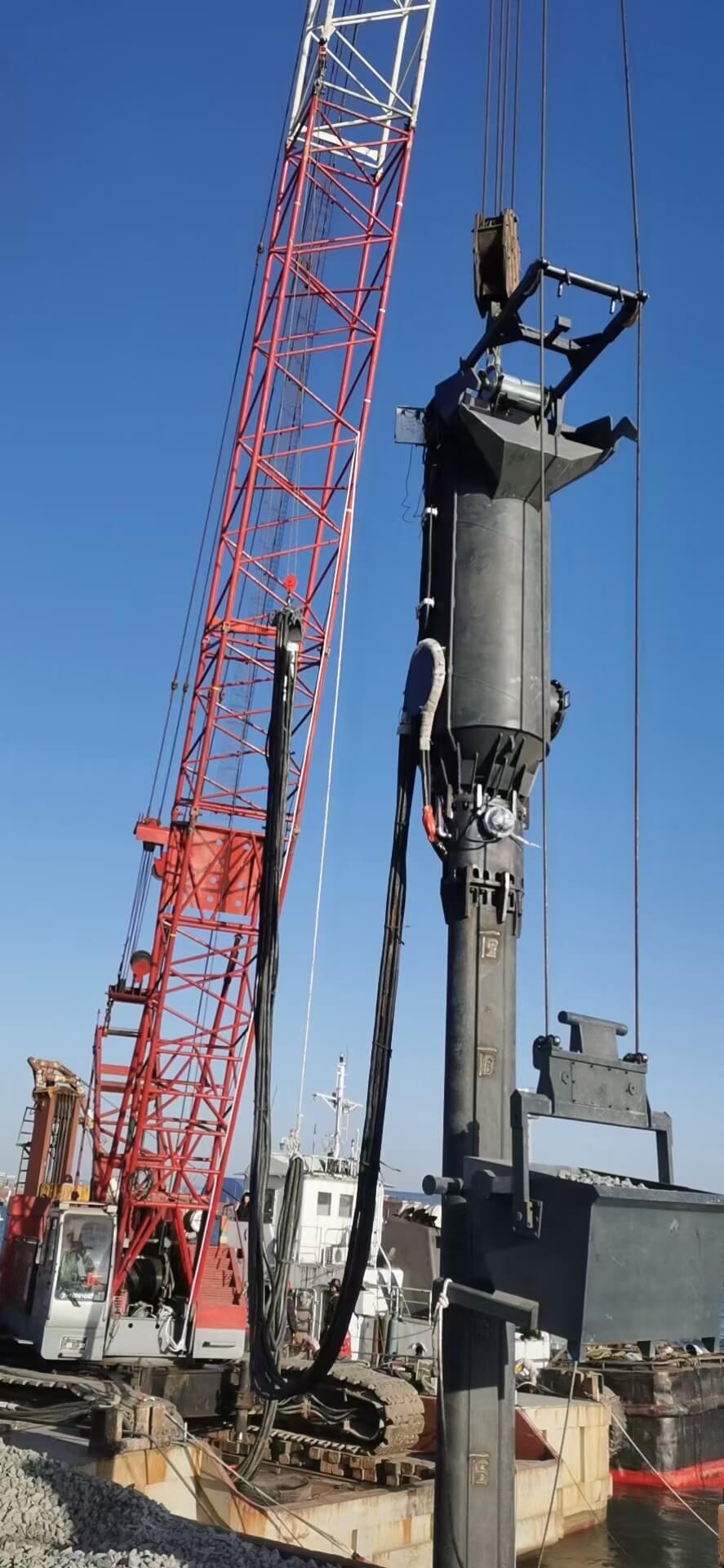
High groundwater tables fundamentally alter soil mechanics, transforming standard ground improvement projects into high-risk engineering challenges. The presence of water reduces effective stress and severely compromises borehole stability. Applying standard dry, top-feed compaction methods in saturated soils often leads to borehole collapse, inadequate densification, and severe project delays. Choosing the wrong methodology or equipment in these conditions inflates costs, fails to achieve the required bearing capacity, and compromises foundation integrity.
We must evaluate execution methods, specify the correct machinery, and vet contractors for projects involving high groundwater or underwater environments. Aligning equipment capabilities with specific site hydrology ensures structural stability while mitigating environmental and operational risks. You need a technical evaluation framework to navigate these complex subsurface conditions. This approach allows site managers to select the correct execution methods and specify the appropriate machinery for saturated environments.
Methodology Selection is Dictated by Saturation: The choice between wet top-feed and dry bottom-feed methods relies strictly on the soil’s permeability, fines content, and the exact elevation of the water table.
Equipment Specifics Matter: Utilizing a specialized bottom feed vibroflot is often mandatory in collapsing, waterlogged soils to ensure continuous stone column integrity without relying on borehole stability.
Depth and Deployment Configurations: Reaching considerable depths in saturated conditions requires choosing between rig-mounted base carriers and free-hanging crane-suspended systems based on site access and target compaction depths.
Environmental and Site Constraints: Wet processes require extensive spoil water management and settlement ponds, directly impacting site logistics and environmental compliance costs.
Data-Driven Verification: Successful vibroflotation in high groundwater demands real-time monitoring of probe amperage, depth, and stone consumption to guarantee compaction metrics are met despite poor visibility and saturated conditions.
The Mechanics of Vibroflotation in High Groundwater
Particle Rearrangement in Loose Sand and Gravel
Saturated granular soils present unique physical challenges during ground improvement. The core issue revolves around pore water pressure and the subsequent reduction of effective stress. When a vibrating probe penetrates loose sand and gravel matrices, it transfers intense lateral forces into the surrounding ground. In dry conditions, this vibration simply forces particles into a denser configuration. However, managing vibroflotation groundwater interactions requires understanding exactly how water alters this dynamic on a granular level.
Groundwater acts as both a lubricant and a potential obstacle. The vibration induces temporary, localized liquefaction around the probe. This rapid increase in pore water pressure causes the soil particles to lose contact with one another, effectively suspending them in the fluid. As the vibration continues and the probe is gradually withdrawn, the particles resettle into a much tighter, denser matrix. The water lubricates the particles, facilitating this rearrangement. Yet, if the localized liquefaction extends too far without proper dissipation, it destabilizes the surrounding strata, making controlled compaction nearly impossible. Site engineers must monitor the vibration frequency and amplitude to ensure the liquefaction remains localized strictly to the compaction zone.
The permeability of the soil dictates how quickly this excess pore water pressure dissipates. In clean gravels and coarse sands, the water escapes rapidly, allowing immediate densification. In silty sands, the water remains trapped longer, requiring slower probe extraction rates. If the operator pulls the probe up too quickly in silty, saturated conditions, the soil will not have time to densify, leaving a loose, uncompacted void behind the vibroflot.
Success Criteria for Waterlogged Soil Ground Improvement
Executing waterlogged soil ground improvement requires strict adherence to technical benchmarks. Success is not merely penetrating the ground; it involves measurable, verifiable changes to the soil mechanics. Engineers must achieve specific targets to ensure the foundation can support heavy industrial or commercial structures without failure.
Target Relative Density: The soil must reach a relative density typically between 75% and 85%, depending on the structural load requirements and the initial state of the ground.
Bearing Capacity Increase: The ultimate bearing capacity must increase to the design specification, often exceeding 150 kPa to 200 kPa for standard commercial loads.
Settlement Tolerances: The process must limit total and differential settlement to acceptable structural limits, usually under 25mm across the building footprint.
Seismic Liquefaction Mitigation: By densifying the soil and decreasing the void ratio, the ground must resist the rapid buildup of pore water pressure during seismic events, keeping the liquefaction potential index well below the danger threshold.
The absolute baseline requirement for success in saturated zones is maintaining borehole stability during probe penetration. If the borehole collapses before the stone backfill is introduced, the entire column loses its structural integrity. The native soil mixes with the aggregate, creating weak zones that will fail under load.
Evaluating Execution Methods for Saturated Sites
The Wet Top-Feed Process (Vibro Replacement/Compaction)
The wet top-feed process utilizes high-pressure water jetting to facilitate probe penetration and manage the borehole. Water jets located at the tip of the vibroflot flush away disturbed soils, creating an annular space around the probe. Once the target depth is reached, aggregate is introduced from the ground surface, falling through the water column to the tip of the probe. The vibroflot is then repeatedly raised and lowered, compacting the stone into the surrounding soil to form a dense column.
This method proves highly effective in clean sands with low fines content. The water jets assist in rapid probe penetration, allowing crews to reach considerable depths efficiently. Operators typically pump between 150 to 200 cubic meters of water per hour at pressures ranging from 6 to 8 bar. This high volume is necessary to keep the borehole open and flush the finer particles to the surface.
However, the wet process demands a massive water supply, often requiring dedicated pumps, holding tanks, and extensive piping networks. It creates significant slurry and spoil management challenges, turning the construction site into a muddy, difficult-to-navigate environment. Most critically, there is a high risk of borehole collapse in soils with higher fines content. If the water pressure drops even momentarily, or if the surrounding soil lacks sufficient cohesion, the walls cave in, ruining the stone column.
The Dry Bottom-Feed Process (Vibro Displacement)
The dry bottom-feed process bypasses the vulnerabilities of the open borehole entirely. This method utilizes high-pressure air and a specialized tremie pipe system attached directly to the vibroflot. Aggregate is loaded into a hopper at the surface and travels down the tremie pipe, exiting precisely at the tip of the probe. Because the stone is delivered directly to the compaction zone, the surrounding soil can collapse against the probe without compromising the column.
Combining intense vibration with high-pressure air via this method represents the industry standard for vibroflotation in high groundwater and unstable soils. It entirely eliminates the need for borehole stability. Zero water flushing is required, which significantly reduces the environmental impact and site mess. The site remains dry, trafficable, and much safer for heavy machinery.
The primary drawback involves the equipment itself. Bottom-feed systems require heavier, specialized machinery. You need large air compressors capable of delivering 10 to 12 cubic meters of air per minute at 7 to 8 bar to keep the tremie pipe clear of water and mud. The initial mobilization costs are higher compared to simpler top-feed setups, but the operational reliability in saturated soils easily offsets these upfront expenses.
Execution Method Comparison for Saturated Soils
Parameter
Wet Top-Feed Process
Dry Bottom-Feed Process
Borehole Stability
Requires open, stable borehole
Bypasses borehole stability needs
Flushing Medium
High-pressure water (150-200 m³/hr)
High-pressure air (10-12 m³/min)
Site Conditions
Muddy, requires extensive slurry management
Dry, highly trafficable
Soil Suitability
Clean sands, low fines (< 10%)
Saturated soils, high groundwater, unstable strata
Selecting Deep Soil Stabilization Equipment for Saturated Sites
Bottom Feed Vibroflot Specifications and Mechanics
Specifying the correct bottom feed vibroflot dictates the operational efficiency of the entire project. The tremie pipe diameter must be carefully evaluated based on the aggregate size. If the pipe is too narrow, the aggregate will arch and jam, halting production immediately. A diameter of at least 200mm to 250mm is generally required to ensure smooth stone flow for standard 40mm to 75mm crushed rock. Hopper capacity also plays a role in cycle times; larger hoppers reduce the frequency of reloading, accelerating the compaction process.
Mechanical lock-out valve systems located at the discharge point of the tremie pipe are non-negotiable in high groundwater. These valves, often heavy-duty steel flaps or pneumatic pinch valves, prevent water and mud from rushing up into the stone feed tube when the probe penetrates saturated layers. Without robust lock-out valves, the hydrostatic pressure will force mud into the pipe, clogging the system instantly and requiring the probe to be pulled and manually cleaned.
Equipment weight and downward crowd force must be sufficient to penetrate dense intermediate layers. A standard vibroflot might weigh 2 to 4 tons, but when equipped with a bottom-feed system, the total weight increases. The rig must provide enough crowd force to push this assembly through stiff clay lenses or dense sand layers while overcoming the natural buoyancy and resistance of saturated, heavy soils.
Base Carriers vs. Free-Hanging Crane Systems
Deployment configurations heavily influence penetration capabilities and site logistics. Rig-mounted systems utilize a heavy base carrier, typically a modified excavator or a custom piling rig, equipped with a vertical mast. This setup provides active downward crowd force, often between 20 to 40 tons, pushing the vibroflot through stiff soil lenses that might otherwise reject a gravity-fed probe. Base carriers offer precise vertical alignment and rapid repositioning between compaction points, making them ideal for large, flat land-based sites.
Conversely, free-hanging systems suspend the vibroflot from a crawler crane. The probe relies entirely on its own weight and the vibration to penetrate the soil. While lacking downward crowd force, crane-suspended systems excel in reaching extraordinary depths, sometimes exceeding 30 meters. They are the superior choice for underwater vibroflotation projects, such as port expansions, breakwaters, or offshore wind foundations, where base carriers cannot operate. Cranes also offer a wider working radius from a single stationary position, which is highly advantageous when working from barges or temporary jetties.
Power and Penetration: Hydraulic vs. Electric Probes
Choosing between hydraulic and electric vibrators impacts performance, especially in submerged conditions. Hydraulic vibroflots utilize pressurized fluid to spin the eccentric weight. They offer variable frequency control, allowing operators to tune the vibration to the specific resonant frequency of the soil. However, hydraulic systems carry the risk of high-pressure fluid leaks. A ruptured hydraulic line poses severe environmental hazards during marine or deep groundwater applications, often resulting in heavy fines and site shutdowns.
Electric probes are widely considered the optimal deep soil stabilization equipment for saturated and underwater environments. They completely eliminate the risk of hydraulic spills. Electric motors, often rated between 130kW and 180kW, provide consistent, sustained eccentric moment capabilities required for deep, submerged compaction. Evaluating the sealing mechanisms is paramount; the probe must withstand immense hydrostatic pressure at depth. Cooling requirements also differ, with some electric units utilizing ambient groundwater for cooling, increasing their efficiency and lifespan in submerged applications.
Real-Time Data Monitoring and Quality Control Systems
Operating blindly in saturated soils guarantees failure. Modern vibroflotation requires sophisticated onboard data loggers to verify compaction continuously. Operators cannot see the probe or the borehole, making real-time telemetry the only indicator of success. These systems record data at every depth interval, ensuring the stone column meets design specifications from the bottom up.
Several critical metrics must be tracked continuously on the operator's monitor. Depth encoders verify the probe has reached the design elevation. Electrical current (amperage) readings indicate soil resistance; a spike in amperage confirms the surrounding soil has reached maximum density as the motor works harder to vibrate the compacted mass. Air pressure metrics ensure the displacement systems are functioning correctly and the tremie pipe remains clear. Finally, tracking the volume of stone backfill per vertical meter guarantees the column maintains its required diameter without necking or collapsing.
Implementation Risks and Mitigation Strategies
Borehole Collapse and Flushing Failures
The most severe risk in saturated ground is borehole collapse. When the walls of the compaction hole cave in, native soil mixes with the introduced aggregate. This creates necking—a dangerous discontinuity in the stone column where the diameter shrinks or the stone is entirely replaced by weak mud. These discontinuities drastically reduce the column's load-bearing capacity and act as failure points under structural stress. You can often detect necking on the data logger if the stone consumption drops significantly but the probe continues to rise.
Mitigating this risk requires strict adherence to bottom-feed methods in high-risk zones. By delivering stone directly to the tip, the process ignores borehole instability. Additionally, operators must maintain continuous positive air pressure during probe extraction. This positive pressure holds the surrounding soil back just long enough for the aggregate to fill the void, ensuring a continuous, dense stone column from the toe to the surface. The operator must coordinate the extraction speed with the stone flow rate perfectly.
Environmental Compliance and Spoil Water Management
Executing the wet top-feed process in high groundwater creates a logistical nightmare regarding runoff. The high-volume water jets produce thousands of gallons of sediment-laden slurry daily. If unmanaged, this spoil water floods the site, traps heavy machinery, and violates local environmental regulations regarding sediment discharge into municipal drains or natural waterways. Site trafficability drops to zero as the ground turns into a swamp.
Effective mitigation demands proactive site engineering. Contractors must design adequate settlement lagoons to capture the runoff. These lagoons allow heavy soil particles to settle out of suspension before the water is discharged or reused. Utilizing closed-loop water recycling systems reduces total water consumption and minimizes discharge. Planning for continuous slurry disposal, including the use of flocculants to speed up settlement and vacuum trucks for removal, ensures strict compliance with environmental regulations while keeping the site operational.
Post-Compaction Testing in Saturated Soils
Verifying density and bearing capacity in waterlogged environments presents distinct challenges. The very act of vibroflotation elevates pore water pressure across the site. If testing occurs immediately after compaction, the trapped water pressure will yield artificially low resistance readings, falsely indicating that the ground improvement failed. The cone penetrometer will simply push through the liquefied soil without registering the true compacted density.
Standard practice involves using Cone Penetration Testing (CPT) and Standard Penetration Testing (SPT) to verify the final soil metrics. However, a mandatory resting period is required for pore water pressure dissipation before testing can commence. In clean sands, this may take only three to five days. In silty sands or highly saturated mixed soils, the resting period can extend from one to three weeks. Accurate post-compaction testing relies entirely on allowing the soil matrix to stabilize and the water pressure to normalize completely.
Vetting a Vibroflotation Contractor for Groundwater Projects
Required Technical Competencies and Fleet Capabilities
Selecting the right vibroflotation contractor determines the project's trajectory. General earthworks contractors often lack the specialized knowledge required for high groundwater environments. You must evaluate their specific fleet capabilities. Do they own specialized bottom-feed rigs, or do they only utilize standard top-feed water jets? Do they have free-hanging crane setups available for deep or underwater sections of the site? A contractor trying to force a top-feed rig into a bottom-feed application will fail.
Request documented case studies of previous underwater or high-water-table projects. Assess their internal engineering capabilities. A competent contractor should provide comprehensive stone column designs, detailed bearing capacity calculations, and robust spoil management plans before mobilization. Their ability to interpret geotechnical reports, identify problematic silty layers, and adjust operational parameters on the fly separates successful deep foundation firms from inexperienced operators.
Cost-to-Outcome Trade-offs and Contract Structuring
Financial analysis must look beyond the initial mobilization quote. Bottom-feed equipment carries a higher mobilization cost due to the weight and complexity of the machinery, including the necessary air compressors and specialized hoppers. However, this upfront premium is almost always offset by avoiding the hidden costs of wet-process delays, extensive slurry cleanup, and failed compaction tests that require costly rework.
Contract structuring should align contractor incentives with project success. Avoid contracts based purely on linear meters drilled, as this encourages operators to rush penetration without ensuring adequate compaction or stone consumption. Instead, recommend performance-based contracting structures. Tie milestone payments to achieved bearing capacity and verified CPT tip resistance results. This ensures the contractor prioritizes column integrity and soil density over sheer production speed.
Conclusion
High groundwater does not preclude successful vibroflotation, but it strictly dictates the methodology. Navigating saturated soils heavily favors dry bottom-feed displacement techniques to guarantee stone column integrity, prevent borehole collapse, and achieve optimal particle rearrangement. Attempting wet top-feed methods in unstable, waterlogged strata introduces unacceptable risks to both the project schedule and the final foundation stability. Equipment selection must prioritize sealed, high-eccentric-force electric or hydraulic probes equipped with integrated data logging systems. Contractors must be shortlisted based on their specific fleet capabilities for saturated conditions, prioritizing those who own and operate advanced bottom-feed rigs and possess a proven track record in complex hydrological environments.
Execute a comprehensive, CPT-heavy geotechnical site investigation focusing on fines content and seasonal water table fluctuations.
Specify bottom-feed displacement equipment in the tender documents for any zones with high collapse potential.
Mandate real-time data logging for all compaction points to track amperage, depth, and stone consumption.
Establish a clear, engineered spoil water management plan if any wet-process methods are permitted on site.
Enforce a mandatory resting period for pore water pressure dissipation before conducting post-compaction verification testing.
FAQ
Q: What is the difference between top feed and bottom feed vibroflotation in high groundwater?
A: Top feed relies on water jetting to wash away disturbed soils in an open borehole, which frequently collapses in high groundwater. Bottom feed delivers stone through a sealed tremie pipe directly to the probe tip, completely bypassing borehole stability issues and ensuring column integrity.
Q: Can vibroflotation be performed completely underwater?
A: Yes. Underwater vibroflotation is highly effective for marine and port projects. It requires specialized sealed electric probes, free-hanging crane systems for deep deployment, and marine-adapted aggregate feed systems to operate successfully beneath the water surface.
Q: How does a bottom feed vibroflot prevent water from entering the stone tube?
A: Bottom feed systems utilize continuous positive high-pressure air and heavy-duty mechanical lock-out valves located at the tip of the tremie pipe. These mechanisms work together to keep water and mud out of the feed tube during penetration to considerable depths.
Q: What type of deep soil stabilization equipment is best for waterlogged soils?
A: The optimal equipment includes bottom-feed vibro-replacement rigs equipped with high-tonnage base carriers for downward crowd force, automated onboard data loggers, and heavy-duty hydraulic or electric vibrators designed to operate in submerged conditions.
Q: Which soil types respond best to vibroflotation in high groundwater?
A: Loose sand and gravel soils are ideal. The intense vibration combined with water or air pressure temporarily liquefies the matrix, allowing the granular particles to easily rearrange into a much denser, more stable foundation structure.
Q: How do you manage the water and slurry produced during wet vibroflotation?
A: Managing wet process slurry requires constructing dedicated settlement ponds, installing silt fences, and utilizing high-capacity water recycling pumps. This infrastructure maintains site trafficability and ensures compliance with local environmental discharge regulations.
Q: What should I look for when hiring a vibroflotation contractor for a saturated site?
A: Look for a contractor with a modern fleet of bottom-feed rigs, integrated real-time quality control software, and a proven track record of successful case studies specifically dealing with high groundwater, underwater compaction, and complex spoil management.