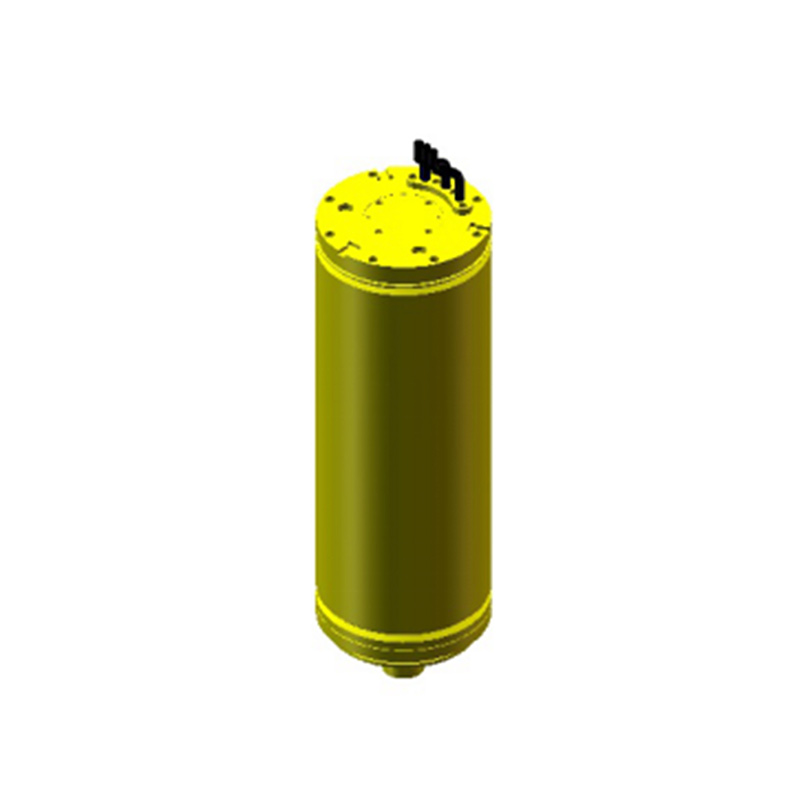
Ground improvement projects rely entirely on the continuous, reliable performance of deep foundation equipment. When you operate a vibroflot underground, equipment failure translates directly to severe project delays. It also compromises the structural integrity of the foundation. Selecting an underpowered, incompatible, or poorly cooled motor leads to inadequate soil compaction. It causes frequent mechanical breakdowns and escalates your daily operational expenses. You cannot afford unexpected downtime when stabilizing soils for heavy infrastructure.
Choosing the right vibroflot motor requires a systematic approach. You must evaluate technical specifications, thermal management systems, and manufacturer reliability. This ensures the chosen equipment meets your exact project parameters. A rigorous selection process prevents mismatched equipment and guarantees optimal material flow during stone column construction. We will break down the critical mechanics, cooling requirements, and integration factors you must check before making an equipment decision.
Key Takeaways
Match Power to Soil Mechanics: Motor frequency and centrifugal force must align strictly with soil composition (e.g., fines content < 12%, clay < 1%, and CU > 2) for effective vibro compaction.
Prioritize Thermal Management: Continuous deep-compaction operations necessitate advanced cooling solutions, making water-jacketed designs non-negotiable for high-load applications.
Assembly Integration is Critical: The motor cannot be evaluated in isolation; its synergy with the vibration body, backfill material flow, and control system dictates overall equipment lifespan.
The Role of the Motor in Vibroflotation Success
Mechanics of the Vibroflot Vibration Body and Motor Assembly
The core of any deep vibratory compaction system lies in its mechanical drive. The vibroflot vibration body and motor assembly functions as a unified structural system. An electric or hydraulic motor sits housed within a heavy-duty steel casing. The motor shaft connects directly to a series of eccentric weights. As the motor spins, it drives this eccentric mass at high speeds. This rotation generates massive horizontal centrifugal forces.
Heavy-duty bearings support the eccentric shaft. These bearings absorb extreme radial loads during operation. The structural relationship between the motor, the bearings, and the eccentric weights determines the reliability of the entire unit. If the motor lacks the torque to maintain rotational speed under load, the eccentric weights lose momentum. This results in weak horizontal vibrations. You need consistent vibration to create the initial cavity in the soil. You also need it to ensure continuous gravel feeding during the backfill phase. Field operators frequently observe that undersized motors stall when encountering dense sand layers, forcing the operator to withdraw the probe and restart the penetration cycle.
Impact on Compaction and Stone Column Construction
Vibroflotation success depends on achieving specific target relative densities and load-bearing capacities. The motor drives this success. Reliable motor performance ensures continuous penetration and withdrawal cycles. These cycles are mandatory for uniform stone column construction. When a motor stalls or overheats, the compaction process stops. This leaves weak zones in the soil profile, which later fail load tests.
The vibrator force and frequency must align perfectly with the specific type and size of gravel particles fed into the cavity. Optimal material flow prevents blockages in the feed tubes. If the vibration amplitude is too low, the gravel bridges and jams inside the delivery pipe. If the frequency is mismatched, the surrounding soil will not liquefy properly. You must select a motor capable of sustaining the exact force required to keep backfill material moving while simultaneously densifying the surrounding strata. Operators must monitor the amperage draw continuously; a steady draw indicates smooth material flow, while erratic spikes signal impending blockages.
Core Technical Specifications to Evaluate
Centrifugal Force and Amplitude Requirements
You must calculate the required centrifugal force based on the target depth of treatment and the initial soil resistance. Deeper compaction zones require higher force to overcome the confining pressure of the overlying soil. Centrifugal force dictates how far the vibratory energy travels outward from the probe. Higher force means a larger diameter of compacted soil per penetration, which allows you to space your compaction points further apart and save time.
You also face a trade-off between amplitude and frequency. High amplitude works best for loose sands. It physically displaces the particles, forcing them into a denser matrix. Lower amplitude combined with higher frequency works better for specific material displacement tasks. Evaluate your geotechnical report carefully. The motor must generate enough amplitude to break the friction between soil particles without causing excessive wear on the internal bearings. Selecting a motor with adjustable eccentric weights provides operational flexibility across varying soil profiles.
Frequency and Motor Speed Calibration
Motor RPM directly determines the vibration frequency. You must match this frequency to your specific soil types. Compaction requires different frequencies than pure material displacement. Most vibro compaction occurs between 30 Hz and 50 Hz. You need to calibrate the motor speed to achieve temporary liquefaction of the granular soils.
Industry-standard soil parameters dictate this calibration. Effective vibro compaction requires a fines content of less than 12%. It requires a clay content of less than 1%. The soil must also have a Coefficient of Uniformity (CU) greater than 2. When soils meet these criteria, the right motor speed easily induces liquefaction. If you operate at the wrong RPM, the soil absorbs the energy without restructuring. Always verify that the motor can sustain the required RPM under heavy soil resistance.
Soil Composition
Fines Content
Recommended Frequency Range
Expected Liquefaction Response
Clean Sand / Gravel
< 5%
30 Hz - 35 Hz
Excellent. Rapid restructuring and high density.
Silty Sand
5% - 12%
35 Hz - 45 Hz
Moderate. Requires longer compaction time per depth interval.
Clayey Sand
> 12% (Clay > 1%)
Not Recommended
Poor. Soil absorbs vibration; stone columns require displacement methods.
High Power Vibroflot Motor Application Scenarios
Certain projects demand extreme mechanical output. A high power vibroflot motor application becomes necessary in highly dense strata or ultra-deep foundations. Offshore wind farm foundations frequently require high-power models. These environments present massive hydrostatic pressures and dense seabed conditions. Standard motors simply stall under these loads, leaving the foundation vulnerable to settlement.
High-power applications require significant structural reinforcements within the equipment. The motor windings must handle higher amperage without degrading. The bearings must be oversized to manage the increased radial forces. The coupling mechanisms between the motor and the eccentric weights must utilize high-tensile materials. When evaluating high-power motors, inspect the internal structural upgrades. Standard components will suffer premature mechanical failure under high-power loads. You must verify the shaft diameter and the bearing load ratings before deploying equipment to an offshore site.
Thermal Management and Operational Endurance
The Necessity of a Water Jacket Vibroflot Motor
Enclosed vibratory equipment operating underground generates massive amounts of heat. The friction from the bearings and the electrical resistance in the motor windings create a harsh thermal environment. Underground operation restricts natural heat dissipation. The surrounding soil acts as an insulator, trapping the heat inside the steel casing. Without active cooling, the motor will quickly exceed its thermal limits.
This physics dictates the need for a water jacket vibroflot motor. A water jacket cooling system circulates cold water through a cavity surrounding the motor housing. This system continuously extracts heat from the stator and rotor. It maintains optimal internal temperatures even during continuous-duty cycles. When you compare water-cooled efficiency against standard air or oil-cooled alternatives, the water jacket wins decisively. Air cooling fails underground. Oil cooling adds unnecessary weight and complexity. Water jackets provide the reliable, continuous cooling required for deep compaction.
Mitigating Overheating Risks and Downtime
Poor thermal management introduces severe operational risks. Insulation degradation occurs when stator windings run too hot. This leads to electrical shorts. Bearing seizure happens when high temperatures break down the lubrication grease. Ultimately, you face complete stator burnout, requiring a total motor replacement mid-project.
You can mitigate these risks through active monitoring. Integrate flow-rate sensors into the water jacket supply lines. If water flow drops, the operator must know immediately. Install temperature sensors directly on the stator windings and near the main bearings. Connect these sensors to the operator's cabin display. Real-time temperature data allows operators to adjust penetration rates or pause operations before catastrophic thermal damage occurs.
Thermal Fault Indicator
Potential Root Cause
Field Mitigation Action
Rapid Stator Temperature Spike
Water jacket blockage or pump failure.
Halt operation immediately. Flush cooling lines and verify pump pressure.
Gradual Heat Increase Over Shift
Degraded bearing grease increasing friction.
Schedule bearing inspection and re-lubrication at the end of the shift.
High Amperage with High Heat
Motor stalling against dense soil strata.
Reduce penetration speed. Allow soil to liquefy before advancing.
System Integration and Compatibility
Sizing a Vibratory Motor for Vibroflot Equipment
Retrofitting or upgrading an existing vibroflot requires strict compatibility checks. You cannot simply bolt on a new motor. Sizing a vibratory motor for vibroflot equipment involves verifying physical dimensions, mounting bolt patterns, and shaft coupling splines. The new motor must fit perfectly within the existing cylindrical housing without restricting the internal water cooling channels.
Electrical compatibility is equally critical. Deep compaction projects utilize long cable runs, often exceeding 30 to 50 meters. These long runs cause significant voltage drops. The motor must be rated to handle these electrical fluctuations without losing torque. Check the starting current requirements. Ensure your on-site generators can handle the initial power surge required to spin the eccentric weights from a dead stop. A mismatched generator will trip breakers repeatedly, halting your production.
Synergy with Vibroflot Control Systems
Modern motors do not operate in isolation. They must interface seamlessly with advanced control systems. This synergy optimizes performance and overall machine efficiency. The control system regulates the power supply, monitors performance metrics, and protects the motor from overloads.
Real-time data feedback is essential. The control system must monitor the amperage draw continuously. A sudden spike in amperage indicates high compaction resistance or a potential material blockage. Monitoring penetration depth and resistance prevents motor stalling. When the control system and the motor communicate effectively, you ensure uniform ground improvement across the entire site. Operators rely on this data to certify that each stone column meets the engineer's load-bearing specifications.
Operational Efficiency and Maintenance Realities
Energy Efficiency, Operating Costs, and Noise Levels
The electrical efficiency of your motor directly impacts daily operating expenses. High-efficiency motors convert more electrical power into mechanical vibration, wasting less energy as heat. On large-scale sites running multiple rigs simultaneously, this efficiency translates to significantly lower fuel consumption for your generators. You burn less diesel to achieve the same compaction results, which keeps your site operations within budget.
You must also evaluate motor noise levels. Urban project locations and sensitive environmental areas enforce strict noise regulations. Excessive mechanical noise leads to site shutdowns and occupational safety violations. High-quality motors feature precision-machined components and superior bearing enclosures that dampen operational noise. Check the decibel ratings before finalizing your equipment selection. Field teams appreciate quieter equipment, as it improves site communication and overall safety.
Expected Lifespan and Wear Parts
Every mechanical system degrades over time. Identifying the most common failure points helps you prepare. Bearings endure the most abuse due to the constant radial loads. Mechanical seals degrade from exposure to abrasive soil and pressurized water. Motor windings suffer from thermal cycling.
Assuming proper maintenance, a high-quality motor should deliver thousands of operating hours before requiring a major overhaul. However, wear parts like seals and bearings follow a strict replacement schedule. You must keep these specific wear parts in your on-site inventory. Waiting for replacement seals to ship halts your entire compaction operation. Stocking critical spares directly on the job site is a mandatory practice for deep foundation contractors.
Routine Maintenance vs. Unplanned Downtime
Scheduled preventative maintenance costs a fraction of unplanned downtime. Replacing seals and lubricating bearings takes a few hours. A catastrophic mid-project motor failure stops work for days or weeks. You lose time, labor hours, and project momentum.
Establish a strict baseline maintenance checklist for your operations team. This checklist should include:
Conduct daily visual inspections of power cables and water jacket hoses for abrasions.
Test insulation resistance (Megger testing) on the motor windings weekly to detect moisture ingress.
Grease all primary and secondary bearings based strictly on the manufacturer's operating hour guidelines.
Check mechanical seal integrity and oil chamber levels monthly to prevent water contamination.
Monitor vibration signatures continuously to detect early bearing wear before it causes shaft misalignment.
How to Vet a Vibroflot Motor Manufacturer
Assessing Engineering Support and Quality Control
You must source equipment from a reliable vibroflot motor manufacturer. Look for strict ISO certifications. Demand transparent testing protocols. A reputable manufacturer conducts rigorous factory load testing on every unit before shipment. They should provide documented case studies showing their motors performing in soil conditions similar to your project.
Evaluate their post-sale support capabilities. Do they offer on-site commissioning? Can they provide immediate troubleshooting assistance if the equipment faults? A manufacturer who disappears after the sale leaves you vulnerable. Strong engineering support ensures your team can resolve technical issues quickly and keep the project moving. Ask for references from other foundation contractors who operate in similar geological environments.
Navigating the Vibroflot Motor Product Inquiry Process
Submitting a vague request for a quote guarantees a mismatched product. When initiating a vibroflot motor product inquiry, you must provide exact data points. This allows the engineering team to recommend the correct configuration.
Include the following data in your inquiry:
Target compaction depth and required load-bearing capacity.
Detailed soil profile, including fines percentage, clay content, and CU metrics.
Power grid specifications or on-site generator capacities (Voltage and Hz).
Existing control system type and equipment dimensions.
Gravel backfill size and feeding method (top feed vs. bottom feed).
Watch for red flags in manufacturer responses. If a vendor overpromises performance without reviewing your geotechnical data, walk away. If they offer vague warranty terms or refuse to provide factory test certificates, disqualify them immediately. A professional manufacturer will interrogate your site data before recommending a specific motor model.
Conclusion
Compile your complete geotechnical reports, highlighting fines content and soil uniformity.
Document your existing equipment specifications, including cable lengths and generator outputs.
Outline your exact daily operating hour requirements to determine cooling needs.
Initiate a formal product inquiry with shortlisted vendors using your compiled technical data.
FAQ
Q: What is the difference between a standard vibrator and a specialized vibroflot motor?
A: A specialized vibroflot motor features heavy-duty environmental sealing, a vertical orientation design, and extreme continuous-duty ratings. It operates underground under massive hydrostatic pressure and soil resistance. Standard industrial hopper vibrators lack the structural reinforcement, specialized bearings, and cooling systems required to survive deep foundation compaction environments.
Q: Why is a water jacket vibroflot motor recommended for deep compaction?
A: Deep compaction traps the equipment underground, severely restricting natural heat dissipation. The surrounding soil insulates the steel casing. A water jacket provides active, continuous cooling by circulating water around the motor housing. This prevents thermal breakdown, protects the stator windings, and ensures continuous operation during long penetration cycles.
Q: How does soil type affect the choice of a vibratory motor for vibroflot equipment?
A: Soil mechanics dictate the required amplitude and frequency. Effective vibro compaction requires fines under 12%, clay under 1%, and a Coefficient of Uniformity greater than 2. These parameters determine the exact motor RPM and centrifugal force needed to achieve temporary soil liquefaction and subsequent dense restructuring.
Q: What information is required for a comprehensive vibroflot motor product inquiry?
A: You must provide your complete geotechnical data, required compaction depth, and power supply details. Also include your existing equipment dimensions, the specific type and size of your backfill material, and your overall project timeline. This ensures the manufacturer specifies the correct motor configuration.
Q: How often does the vibroflot vibration body and motor assembly require servicing?
A: Harsh underground conditions dictate frequent inspections. You should conduct daily visual and electrical checks. Bearings and mechanical seals typically require detailed inspection and lubrication every few hundred operating hours. A complete factory overhaul is generally recommended after several thousand hours of continuous heavy-duty use.
Q: Can a high power vibroflot motor application compensate for poor soil conditions?
A: No. More power does not solve fundamental soil incompatibility. If the soil contains high fines or excessive clay content, it will not liquefy and compact properly, regardless of motor power. In these cases, you may require different ground improvement techniques, such as rigid inclusions or soil mixing.