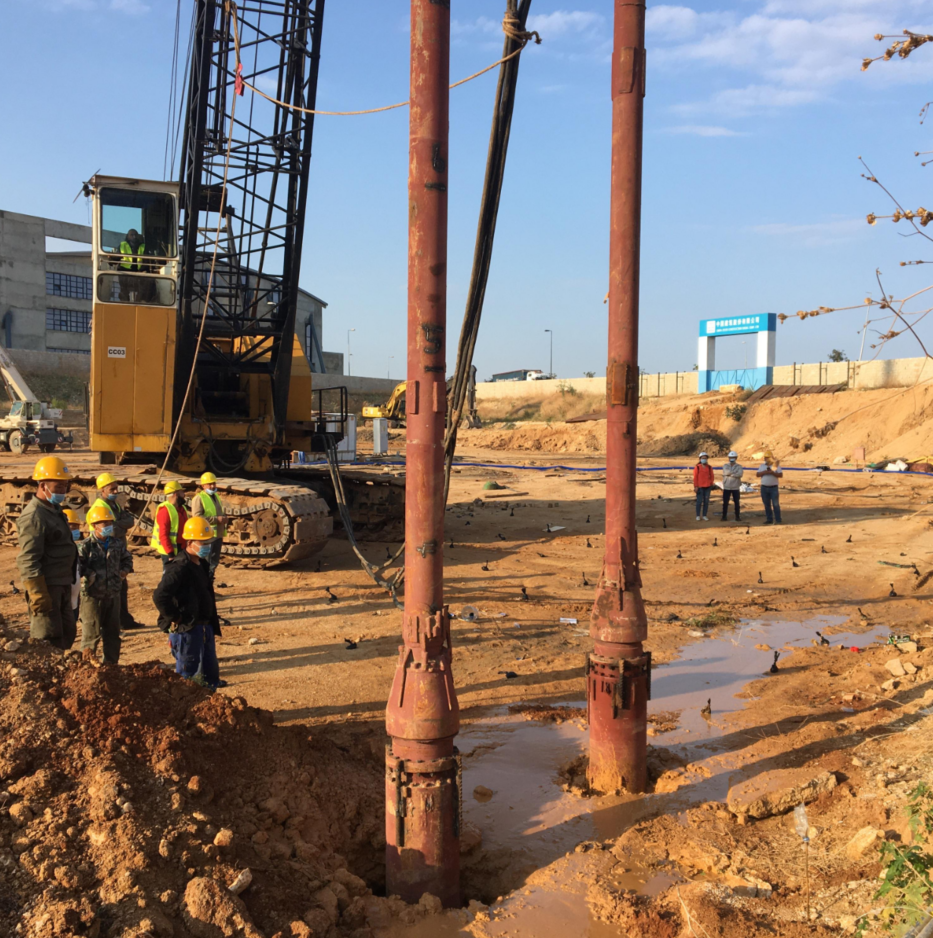
Petrochemical EPC (Engineering, Procurement, and Construction) projects operate under extreme pressure. Site engineers face the constant threat of differential settlement every single day. This geotechnical risk carries catastrophic costs and easily breaches strict environmental safety margins. Most site selections compound these risks significantly. Developers frequently choose coastal or reclaimed lands for new oil terminals. These locations present immediate, severe geotechnical challenges. You routinely encounter loose sands, highly compressible soils, and high water tables.
Conventional deep piling often proves too slow and resource-heavy for these environments. Instead, industry leaders now turn to alternative ground improvement methods. We introduce vibroflotation not just as a standard soil stabilization technique. It serves as a schedule-compressing, highly cost-effective alternative to deep pile foundations. You can deploy it efficiently to safely support massive, distributed loads across sprawling refinery facilities. By choosing this advanced approach, project managers protect both site safety and critical construction schedules.
Key Takeaways
Cost & Schedule: Vibroflotation typically accelerates project timelines by 30-50% compared to deep pile foundations while significantly reducing concrete and steel costs.
Compliance & Safety: Properly engineered stone columns ensure tank bases meet strict API 650 settlement tolerances, mitigating differential settlement.
Method Versatility: Applicable to both granular soils (Vibro Compaction) and cohesive/mixed soils (Vibro Replacement/Stone Columns) common in coastal refineries.
Procurement Strategy: Partnering with a vetted vibroflot supplier China offers a strategic advantage in capital equipment acquisition without sacrificing offshore reliability.
The Business Problem: Foundation Risks in High-Stakes Environments
Foundation failures in petrochemical facilities trigger cascading operational disasters. Liquid storage tanks exert immense, uniform static loads directly on the ground. A fully loaded oil tank compresses underlying soil layers relentlessly. Furthermore, refineries house massive compressor units and processing trains. These mechanical systems create continuous dynamic loads. This relentless combination of static and dynamic pressure stresses underlying soils heavily. Weak soil strata simply cannot support this weight naturally.
Ignoring poor soil conditions invites severe operational and environmental consequences. You risk catastrophic edge shear failure beneath the tanks. Unstable ground causes tanks to tilt dangerously over time. This differential settlement warps the structural geometry. Consequently, rigid pipe connections rupture suddenly under the resulting stress. These unpredictable ruptures often trigger massive environmental spills and hazardous chemical fires. Facility operators face crippling fines and irreversible reputational damage.
EPC contractors need highly reliable geotechnical solutions to mitigate these risks. Success requires a predictable, verified bearing capacity increase across the entire footprint. You must guarantee complete liquefaction mitigation, especially in active seismic zones. Furthermore, facility upgrades demand minimal disruption to concurrent site operations. Heavy machinery cannot interfere with ongoing processing activities. This is precisely where properly executed heavy foundation ground improvement becomes an absolute necessity for project survival.
Why Vibroflotation Outperforms Alternatives for Petrochemical Projects
Engineers often specify deep piling by default during early design phases. However, traditional piling frequently proves over-engineered for distributed loads like sprawling tank farms. Piling systems demand massive volumes of reinforced concrete and structural steel. This rigid approach drives up material costs unnecessarily. It also extends project timelines drastically due to slow installation rates and curing times. Piling concentrates load-bearing capacity into rigid points, rather than providing the uniform support required by flat-bottomed storage tanks.
Dynamic compaction offers another widely known ground improvement option. Yet, this method generates intensely destructive shockwaves. Contractors drop massive steel weights from significant heights to compress the soil. You cannot safely use dynamic compaction near operational pipelines or sensitive refining equipment. The vibrations easily damage buried utilities and crack nearby foundations. Vibroflotation solves this issue entirely. It provides localized, highly controlled soil improvement. The rotary vibrations remain confined to the immediate probe area. This precision respects strict vibration limits required in brownfield expansions.
We view vibroflotation for petrochemical projects as the optimal middle ground. It delivers the reliable deep-fill bearing capacity associated with rigid piling. At the same time, it maintains the rapid installation speed and small operational footprint of shallow stabilization techniques. You gain structural certainty without sacrificing project velocity.
Table 1: Ground Improvement Method Comparison for Petrochemical Sites
Petrochemical storage tanks must strictly adhere to industry design codes. The American Petroleum Institute sets these benchmarks through API 650 and API 653 standards. These codes govern acceptable planar tilt and out-of-plane settlement limits. Exceeding these tight tolerances compromises the structural integrity of the tank shell. Vibroflotation directly addresses these stringent engineering requirements by homogenizing the subgrade.
Robust oil storage foundation improvement relies heavily on the Vibro Replacement method. This process installs dense stone columns directly into cohesive or mixed soils. These crushed stone columns act as highly effective load-bearing elements. They also function simultaneously as vertical drains. They accelerate pore water dissipation rapidly during the initial tank hydro-testing phase. This dual action safely consolidates the soil and prevents dangerous post-construction settlement.
Massive circular tanks exert their most extreme pressure along their outer structural edges. Without targeted tank farm soil stabilization, localized edge shear frequently occurs. The tank base eventually sags and forms a 'dishing' shape in the center. Stone columns increase the edge-bearing capacity of the foundation significantly. They intercept vertical loads and distribute radial stresses safely into much deeper, stable soil strata.
Coastal zones present unique and highly complex implementation realities. Project sites typically feature heavily saturated reclaimed land and extremely high groundwater tables. Effective oil terminal ground improvement requires very specific operational techniques here. Standard methods often fail as open boreholes collapse instantly. Bottom-feed vibro techniques become structurally necessary in these coastal environments. The equipment injects aggregate directly through a feed tube to the probe tip. This continuous material flow prevents borehole collapse in saturated, unstable sands.
Evaluating and Selecting Vibroflotation Construction Equipment
Project success depends entirely on choosing the correct machinery. You must match the equipment configuration to your exact geotechnical soil profile. A mismatch causes severe installation delays and compromises column density. Top-feed vibroflotation works perfectly in stable, cohesive boreholes. The operator uses water or air jets to flush the soil upward. Conversely, bottom-feed configurations remain essential for collapsing soils and high water tables.
Evaluating machinery requires analyzing specific performance metrics. Choosing the right vibroflotation construction equipment demands a careful technical review of three primary specifications:
Motor Power (kW): The electric or hydraulic motor dictates the penetration capability. Higher kilowatt ratings allow the probe to push through dense intermediate soil layers without stalling.
Centrifugal Force: This force measures the compaction energy delivered radially into the ground. A higher centrifugal force achieves the required soil density much faster, accelerating overall production rates.
Amplitude: The peak-to-peak movement of the probe determines the diameter of the resulting stone column. Proper amplitude ensures the column integrates tightly into the surrounding native soil.
Petrochemical development sites create harsh, unforgiving working conditions. Equipment failures instantly stall critical path construction schedules. You must proactively watch out for common mechanical risks like motor burnout and sudden hydraulic fluid leaks. Evaluate overall equipment durability very carefully before procurement. Check the casing thickness and vibration isolator quality. Always verify easy maintenance access to minimize daily servicing times on site.
Sourcing Strategy: Navigating the Global Supply Chain
Multi-year, multi-phase petrochemical developments demand smart capital expenditure (CapEx) planning. Contractors constantly weigh the cost benefits of purchasing machinery versus renting it. Renting equipment seems financially attractive during the initial mobilization phase. However, prolonged project schedules quickly inflate cumulative rental costs. Purchasing your own customized fleet often yields much better long-term financial returns. It secures continuous equipment availability across multiple upcoming facility expansions.
Building a robust fleet requires identifying a trusted manufacturing partner. Partnering with a proven vibroflot supplier China requires strict, methodical vetting protocols. You must evaluate their manufacturing standards and historical project data.
Quality Assurance: Look closely for international ISO certifications and CE safety marks. Verify their actual track record in harsh environments. Request case studies from recent Middle Eastern or Southeast Asian oil terminal projects.
Factory Acceptance Testing (FAT): Demand transparent, rigorous testing protocols before authorizing any shipment. Inspect the vibration telemetry data closely. Run heat tests on the motors directly in the factory to ensure they withstand continuous load.
After-Sales Support: Excellent machinery fails without proper field support. Prioritize suppliers offering expert on-site commissioning services. Ensure critical spare parts remain readily available for immediate global shipping. Require comprehensive operator training programs. These proactive steps prevent crippling project downtime.
Conclusion
Vibroflotation aligns perfectly with the heavy-load, high-risk profile of modern oil and gas infrastructure. It resolves complex, deep-seated soil challenges safely and efficiently. You can achieve massive bearing capacity improvements while maintaining aggressive construction schedules.
Decision-makers must remember one critical, balancing fact. Foundation success relies on two equally important pillars. You need a flawless geotechnical design, including precise stone column grid spacing and depth targeting. You also need unmatched, sustained reliability from the chosen vibro compaction machinery.
Take decisive action today to secure your project baseline. Request a detailed technical consultation to match equipment with your soil reports. Review real-world case studies of similar tank farm projects to understand the logistics. Download technical specification sheets to compare equipment models directly and secure your CapEx strategy.
FAQ
Q: What soil types are unsuitable for vibroflotation in tank farm projects?
A: Vibroflotation struggles in thick, highly sensitive soft clays. These purely cohesive soils lack the inherent shear strength to confine stone columns laterally. The columns can bulge outward or fail structurally under extreme tank loads. In these specific soft-clay conditions, you should evaluate deep soil mixing or rigid pile foundations instead.
Q: How deep can vibroflotation reach for oil terminal ground improvement?
A: Modern construction equipment achieves impressive operational depths. Standard offshore and onshore rigs routinely treat soils between 15 and 20 meters deep. With specialized extended probe setups and high-power motors, you can successfully reach depths up to 30 or 40 meters. The final achievable depth depends entirely on the specific rig configuration and soil resistance.
Q: What is the typical cost saving of vibroflotation vs. piling for petrochemical storage tanks?
A: Projects typically see direct foundation material cost savings of 30% to 50% compared to traditional deep piling. You eliminate massive steel reinforcement and concrete volume requirements entirely. However, you must carefully factor in local aggregate logistics. The final financial return depends on how easily you can source quality crushed stone locally.