Deep foundation and ground improvement projects operate on strict margins and tight tolerances. Equipment failure or underperformance directly threatens project viability and safety. Geotechnical contractors often struggle to match specific soil profiles with the right compaction equipment. Granular soils behave differently than cohesive layers, and naturally deposited soils require different energy outputs than artificially reclaimed sands. Choosing a substandard manufacturer leads to costly downtime, failed load tests, and inequable settlement. Deploying the wrong vibratory probe compromises the entire foundation structure.
To mitigate these risks, buyers must evaluate manufacturers through a rigorous framework. You need to scrutinize engineering capabilities, component durability, global compliance, and post-sale technical support. Sourcing heavy machinery requires looking beyond basic spec sheets to find a partner capable of delivering reliable hardware and actionable field expertise. A thorough evaluation process ensures your equipment handles the exact stratigraphy of your site.
- Align equipment specifications (hydraulic vs. electric, frequency, amplitude) directly with the geotechnical realities of your project site rather than relying on baseline manufacturer claims.
- Prioritize vendors that supply verifiable CE certified vibroflotation equipment, ensuring strict adherence to international safety and manufacturing standards.
- Evaluate a manufacturer’s vibroflot after sales service and spare parts availability as strictly as the upfront capital expenditure.
- Look beyond hardware; the availability of comprehensive vibroflotation engineering support is critical for optimizing compaction patterns, accelerating soil drainage, and troubleshooting complex stratigraphy.
The Impact of Manufacturer Selection on Ground Improvement Outcomes
Equipment reliability dictates the schedule for deep vibro compaction and vibro replacement methods. Ground improvement relies on continuous, high-energy vibration to rearrange soil particles into a denser state. If a vibrator overheats or loses amplitude under load, the compaction process stops. This halts subsequent construction phases. A reliable vibroflot manufacturer designs probes that maintain consistent frequency even in highly resistant soil layers. Consistent performance ensures contractors meet strict relative density targets on schedule.
Deploying inadequate vibratory probes in complex ground conditions carries severe operational consequences. Granular soils with less than 10 to 15 percent silt require specific vibration frequencies for optimal densification. If equipment lacks the necessary centrifugal force, it fails to achieve required penetration depths. Struggling to penetrate dense layers causes excessive wear on the vibrator casing and vibration isolators. This mismatch leads to poor soil consolidation. Failed post-compaction load tests force contractors to rework entire sections. Rework destroys project margins and delays handover dates.
High-performance equipment directly enhances stability and reduces inequable settlement. Powerful vibrators accelerate soil drainage in both naturally deposited soils and artificially reclaimed gravels. The rapid dissipation of pore water pressure is necessary during the compaction process. Superior equipment designs incorporate efficient water jetting systems at the tip and along the sides of the probe. These systems facilitate faster penetration and better material displacement. Efficient displacement allows for the rapid construction of stone columns in cohesive soils, accelerating the overall consolidation timeline.
Buyers must establish strict metrics to measure a manufacturer's claims. Guaranteed uptime percentages serve as a primary indicator of mechanical reliability. Penetration rates in specific soil types validate the actual energy transfer of the probe. Verifiable soil densification outcomes, proven through Cone Penetration Testing (CPT) or Standard Penetration Testing (SPT), confirm equipment efficacy. Request field data from previous projects with similar stratigraphy. Compare these metrics against your specific project requirements to ensure the equipment delivers expected results.
Field operators know that a probe stalling at 10 meters depth because it lacks the eccentric moment to push through a dense sand lens is a massive liability. The crane operator has to repeatedly lift and drop the probe, wasting fuel and time. High-quality manufacturers engineer their motors to handle these sudden spikes in resistance without tripping breakers or overheating hydraulic lines. You must verify these capabilities before signing a purchase order.
Core Technologies Offered by a Top-Tier Vibroflotation Equipment Manufacturer
Selecting the right power delivery system determines operational efficiency. A leading vibroflotation equipment manufacturer provides distinct options tailored to different site conditions. Understanding the mechanics behind these systems prevents costly deployment errors.
Electric vs. Hydraulic Vibroflots
Electric and hydraulic units offer different advantages regarding energy efficiency and maintenance overhead. Electric units utilize specialized submersible squirrel-cage induction motors to drive the eccentric weight. They generally feature fewer moving parts, reducing the frequency of mechanical breakdowns. The motor sits directly inside the probe, transferring power efficiently to the eccentric shaft. Hydraulic units rely on pressurized fluid delivered from a surface power pack driven by a large diesel engine. They offer variable frequency control, which helps when navigating highly variable soil layers. However, hydraulic systems require meticulous maintenance of heavy, high-pressure hoses and seals to prevent fluid leaks.
Operational trade-offs heavily influence the selection process. Hydraulic units incur higher fuel and hydraulic fluid costs over their operational lifespan. They also require robust spill containment protocols on environmentally sensitive sites. Electric units significantly reduce long-term energy bills. However, electric systems demand stable, high-capacity power infrastructure. Remote sites without reliable grid access require large diesel generators to run electric probes. You must evaluate your site logistics, fuel availability, and environmental restrictions before committing to a specific power delivery method.
Power Delivery System Comparison
| Feature | Electric Systems | Hydraulic Systems |
| Power Source | High-voltage electrical grid or generator | Diesel-driven hydraulic power pack |
| Maintenance Needs | Lower (fewer moving parts inside probe) | Higher (hoses, seals, fluid checks) |
| Frequency Control | Typically fixed (variable with VFD) | Highly variable and adjustable on the fly |
| Environmental Risk | Minimal | High risk of hydraulic fluid spills |
| Energy Costs | Generally lower over time | Higher due to continuous diesel consumption |
Standard vs. Custom Vibroflotation Equipment
Standard top-feed, free-hanging configurations remain highly cost-effective for densifying clean granular soils. These setups utilize gravity and water jetting to penetrate the ground. They excel in environments where the primary goal is enhancing baseline stability in loose sands. Standard configurations require less specialized training for rig operators. They mobilize quickly and integrate easily with standard crawler cranes. For straightforward compaction tasks, standard units provide the most efficient path to achieving target densities.
Complex stratigraphy often necessitates custom vibroflotation equipment to achieve project specifications. Top-tier manufacturers engineer modifications to ensure optimal performance in challenging conditions. You will need custom engineering in several specific scenarios:
- High Silt Content Soils: Soils exceeding 15 percent silt require vibro replacement techniques using specialized bottom-feed systems. Bottom-feed setups deliver stone directly to the probe tip via a tremie pipe and compressed air. This prevents hole collapse in unstable or cohesive soils.
- Extreme Depth Requirements: Projects requiring compaction past 30 meters demand custom extension tubes, reinforced lifting heads, and specialized cable management systems to handle the immense weight and tension.
- Offshore Deployment: Marine projects require unique rig-mounted setups designed to withstand harsh saltwater environments, dynamic wave loads, and specialized barge crane attachments.
- Low Headroom Environments: Working inside existing structures or under bridges requires shortened probe designs and specialized excavator-mounted attachments instead of traditional crane suspension.
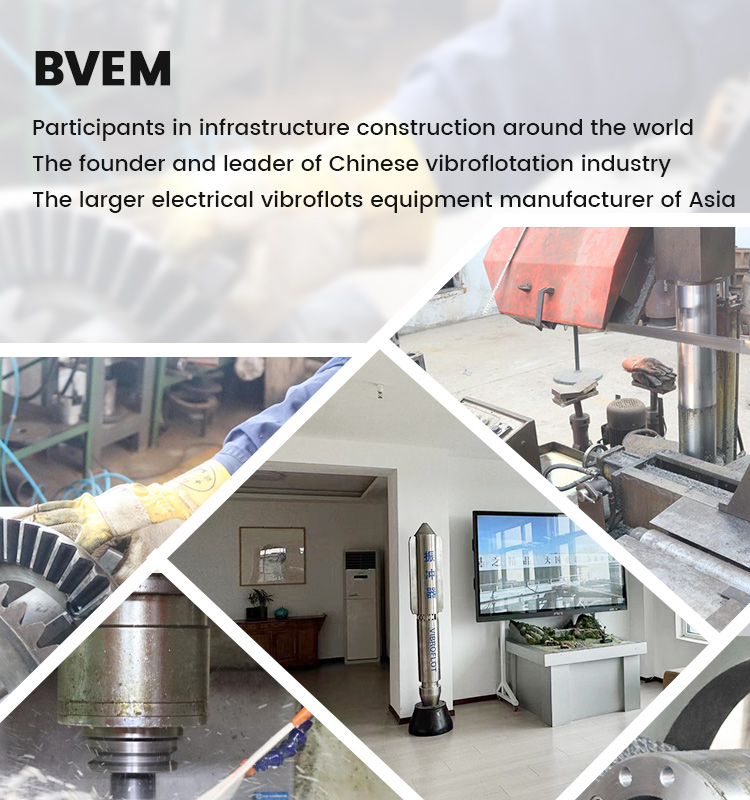
Key Evaluation Criteria When Auditing a Vibroflot Manufacturer
Auditing a manufacturer requires a deep dive into their engineering standards and quality control protocols. Surface-level specifications rarely tell the whole story. You must investigate the mechanical tolerances and regulatory compliance of the equipment.
Technical Specifications and Performance Tolerances
Evaluating vibratory mechanics ensures optimal compaction of artificially reclaimed sands. Eccentric moment dictates the theoretical displacement of the probe. Centrifugal force represents the actual compaction energy delivered to the surrounding soil. Amplitude consistency under maximum load separates high-quality equipment from inferior alternatives. When a probe enters dense soil, resistance increases dramatically. Inferior probes lose amplitude, effectively stalling the compaction process. Review the manufacturer's performance curves to verify that amplitude remains stable across varying resistance levels.
Component durability directly impacts equipment lifespan and continuous operation. The eccentric weight spins at high RPMs, generating extreme internal forces. High-grade spherical roller bearings are necessary for managing these loads without premature failure. Heavy-duty vibration isolators protect the crane and operator from damaging resonance. The casing material must withstand severe abrasion from quartz sands and gravels. Demand specifications on the steel alloys used for the probe casing and wear bands. Superior metallurgy prevents the need for frequent casing replacements during large-scale projects.
You should also inspect the coupling mechanisms between the motor and the eccentric shaft. This connection absorbs massive torsional stress. High-quality manufacturers use specialized flexible couplings that accommodate slight misalignments and absorb shock loads. Cheaper alternatives use rigid connections that frequently shear under heavy load, leaving the probe dead in the ground.
Quality Assurance and Global Certifications
Regulatory compliance is a non-negotiable requirement for modern construction projects. Sourcing CE certified vibroflotation equipment mitigates liability and ensures site safety. The CE mark indicates compliance with strict European health, safety, and environmental protection standards. This certification is often mandatory for public infrastructure projects. It guarantees that the equipment features necessary emergency stops, electrical shielding, and structural integrity. Operating non-certified equipment exposes contractors to significant legal and financial risks.
Demand comprehensive documentation on factory testing protocols. A reputable manufacturer maintains rigorous quality control processes. Request reports on third-party metallurgical assessments for critical load-bearing components. Ask for vibration analysis reports conducted during factory acceptance testing. Transparency in testing demonstrates a commitment to engineering excellence. If a manufacturer hesitates to provide detailed quality control documentation, consider it a major red flag. Verifiable testing ensures the equipment will perform safely under extreme field conditions.
Navigating Global Supply Chains: Cost vs. Long-Term Value
Global manufacturing dynamics have shifted significantly over the past decade. Buyers now have access to a wider range of high-quality suppliers. Navigating this landscape requires balancing initial capital outlay with long-term operational value.
Evaluating a Vibroflot Supplier in China vs. Western OEMs
The evolution of global manufacturing has elevated the engineering capabilities of Asian markets. Many facilities now produce world-class deep compaction technology. A top-tier vibroflot supplier China often utilizes the same high-grade imported bearings and hydraulic components as Western OEMs. Advanced CNC machining and automated welding processes ensure precise manufacturing tolerances. Buyers no longer have to sacrifice mechanical reliability to achieve favorable procurement terms. The focus must remain on verifying the specific engineering standards of the individual facility.
Evaluating long-term value requires looking beyond the initial purchase order. Consider the impact of shipping logistics and import tariffs on your project timeline. Factor in the lifecycle maintenance requirements of the equipment. Heavy machinery requires regular replacement of wear parts like nose cones, wear bands, and vibration isolators. Assess the availability and shipping speed of these critical components. A lower initial capital expenditure quickly loses its appeal if replacement parts take weeks to arrive. Calculate the projected maintenance expenses over a five-year operational period to understand the true value of the investment.
Vendor Vetting Framework
Implement a strict checklist for auditing international suppliers. Conduct virtual or physical facility audits to verify manufacturing capabilities. Inspect their machining centers, assembly lines, and testing bays. Demand transparency regarding sub-component sourcing. Knowing the exact brand of bearings, hydraulic motors, and electrical contactors used in the equipment is necessary. Verify reference projects in soil conditions similar to your upcoming jobs. Contact previous clients to discuss equipment reliability and the manufacturer's responsiveness to technical issues.
- Request a complete bill of materials for critical sub-components to verify bearing and motor brands.
- Schedule a live video walkthrough of the final assembly and testing facility to observe their quality control in real-time.
- Require case studies demonstrating successful compaction in specific silt percentages matching your site.
- Review the manufacturer's documented procedures for handling warranty claims and parts replacement.
- Verify the exact lead times for manufacturing, factory acceptance testing, and international freight forwarding.
Mitigating Project Risks Through Vendor Support and Expertise
Purchasing heavy machinery is only the first step. Ground improvement projects encounter unexpected soil variations and mechanical challenges. Robust vendor support is essential for maintaining project momentum and achieving compaction targets.
The Critical Role of Vibroflot After Sales Service
Extended downtime causes severe financial drain on geotechnical projects. When a vibrator fails, the entire support crew, crane, and loader sit idle. Proprietary part failures exacerbate this issue if the manufacturer lacks a responsive supply chain. Delayed maintenance responses push projects past their deadlines. This triggers liquidated damages and damages contractor reputations. You must proactively address these risks before signing a purchase agreement. Reliable support infrastructure is just as important as the equipment's mechanical specifications.
Negotiate service level agreements to protect your investment. Mandate guaranteed response times for technical support inquiries. Ensure the manufacturer maintains a localized spare parts inventory or guarantees expedited global shipping. Clear warranty terms must define exactly what constitutes a manufacturer defect versus normal wear and tear. A strong vibroflot after sales service program minimizes disruption. It ensures that replacement isolators, bearings, and electrical components reach your site rapidly, keeping your project on schedule.
Assessing Vibroflotation Engineering Support
Inefficient compaction patterns lead to failed post-compaction load tests. Improper operational techniques prevent the soil from reaching target relative densities. Operators might withdraw the probe too quickly or fail to manage water jetting pressures correctly. These errors result in inadequate soil consolidation. Reworking a site consumes massive amounts of time and fuel. Without expert guidance, contractors often struggle to adapt their techniques when transitioning from clean sands to silty layers.
Partner with manufacturers that provide robust vibroflotation engineering support. This support should include comprehensive geotechnical data analysis prior to deployment. Expert engineers help optimize grid spacing and penetration depths based on your specific CPT data. They calculate the exact amperage build-up required at different depths to ensure maximum density. Demand comprehensive operator training modules covering both maintenance and field techniques. On-site commissioning assistance ensures the equipment is perfectly calibrated for the site's specific stratigraphy. This level of expertise transforms a hardware vendor into a vital project partner.
Conclusion
- Request detailed technical proposals tailored to your specific soil profiles and depth requirements.
- Demand comprehensive component sourcing lists to verify the quality of bearings, motors, and steel alloys.
- Require documented case studies showing successful compaction in challenging stratigraphy similar to your upcoming projects.
- Draft service level agreements that guarantee rapid spare parts delivery and define clear warranty parameters.
- Schedule a technical consultation to establish protocols for on-site commissioning and operator training.
FAQ
Q: What should I look for when evaluating a vibroflotation equipment manufacturer?
A: Focus on engineering transparency and component quality. Verify their ability to handle specific silt thresholds through custom configurations. Demand proven field performance data, such as CPT results from previous projects. Ensure they use high-grade bearings and wear-resistant materials to maximize equipment lifespan under extreme loads.
Q: How do electric and hydraulic vibroflots compare in operating costs?
A: Hydraulic units incur higher continuous costs due to diesel fuel consumption and hydraulic fluid maintenance. Electric units significantly reduce long-term energy bills and generally require less mechanical maintenance. However, electric systems may require renting large generators if the site lacks robust power infrastructure.
Q: Why is CE certified vibroflotation equipment important for ground improvement projects?
A: CE certification ensures strict adherence to European safety, health, and environmental standards. It is often a mandatory regulatory requirement for complex public and private infrastructure projects. Using certified equipment mitigates legal liability, protects operators, and guarantees standardized manufacturing quality.
Q: Can a manufacturer provide custom vibroflotation equipment for complex or offshore projects?
A: Yes, top-tier OEMs engineer custom modifications for challenging environments. They design specialized bottom-feed systems for cohesive soils exceeding 15 percent silt. They also manufacture custom extension tubes for extreme depths and robust rig attachments designed specifically for dynamic offshore marine conditions.
Q: What is the typical lead time when ordering from a vibroflot supplier in China?
A: Lead times vary based on customization requirements. Standard units may ship within a few weeks. Custom-engineered bottom-feed systems or offshore rigs often require several months for design, manufacturing, and factory testing. Always factor in international freight forwarding and customs clearance timelines.
Q: What level of vibroflotation engineering support should I expect during commissioning?
A: Expect comprehensive on-site operator training and safety briefings. Engineers should assist with geotechnical parameter setup, optimizing grid spacing and withdrawal rates to accelerate soil drainage. They must conduct initial performance testing to ensure the equipment is correctly calibrated for the site's specific stratigraphy.
Q: How does vibroflot after sales service impact long-term project profitability?
A: Rapid parts availability minimizes costly project downtime. When wear parts or electrical components fail, immediate technical support and expedited shipping keep the project moving. Strong service agreements prevent minor mechanical issues from escalating into major schedule delays, thereby protecting overall project margins.


