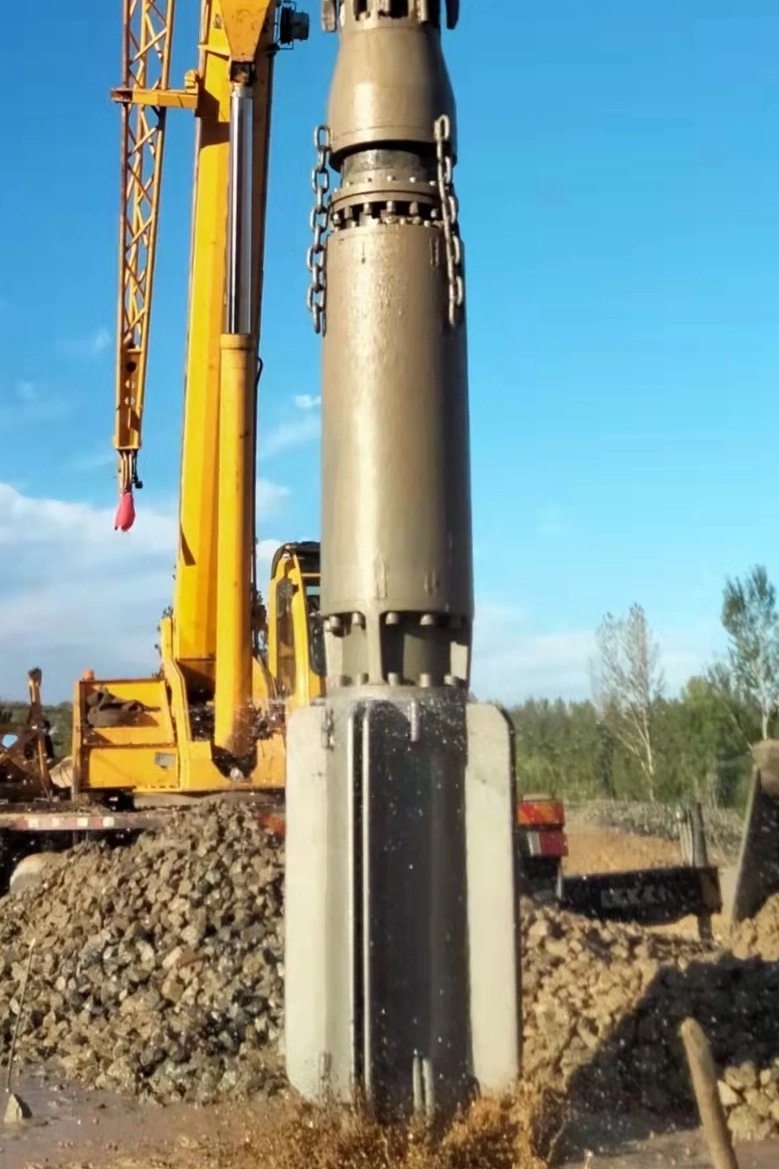
Ground improvement success—whether utilizing vibro-compaction or vibro-replacement—is fundamentally constrained by the mechanical capabilities of the penetration unit. Selecting the incorrect motor rating leads to immediate project failures. Underpowered units fail to achieve required soil bearing capacities or target depths, resulting in costly rework and schedule overruns. Conversely, deploying excessively high-powered units on standard sites inflates mobilization costs, increases energy consumption, and accelerates equipment wear without proportional geotechnical benefits.
This guide provides a rigorous, evidence-based framework for matching geotechnical site data—specifically soil type, permeability, depth, and groundwater conditions—to specific kW ratings. We ensure procurement decisions are driven by operational realities on the job site rather than theoretical maximums found in brochures. By aligning mechanical output with site-specific soil mechanics, you optimize both production rates and project budgets.
Geotechnical Alignment is Primary: Vibroflot power must be dictated by Standard Penetration Test (SPT) N-values, fines content, and soil permeability (minimum recommended 10-5 m/s for standard compaction).
Tiered Power Capabilities: Equipment ranges from 75kW units for shallow, loose sands to 180kW units for deep, dense, or offshore applications.
System Integration Matters: Power (kW) must be evaluated alongside centrifugal force, amplitude, RPM (typically 1200-1800), air flow rates (e.g., 10 M⊃3;/min), and cooling mechanisms (e.g., circulating water cooling).
Vendor Expertise is a Feature: Partnering with a proven vibroflot equipment manufacturer that offers a dedicated vibroflot equipment selection service mitigates the risk of specification mismatch.
The Mechanics of Vibroflot Power in Ground Improvement
You must understand the baseline physics of vibroflotation to make accurate equipment choices. The primary objective is to temporarily liquefy the surrounding soil. This temporary liquefaction allows soil particles to rearrange into a denser, more stable state. In cohesive soils, the process creates a stable cavity for stone column installation. We rely entirely on mechanical energy to break the existing friction between soil particles. The motor's output capacity dictates exactly how much energy transfers into the ground.
The standard operational cycle consists of three distinct phases. Each phase places different demands on the equipment. Power is applied dynamically throughout this cycle to maintain continuous soil displacement.
Positioning: The crane operator aligns the unit at the precise compaction point. The equipment hangs vertically, preparing for initial ground contact. The motor remains idle until the tip touches the working surface.
Penetration and Pre-compaction: The motor activates, generating horizontal vibrations. You utilize motor power combined with nose jet water to overcome initial soil resistance. The goal is to reach the target depth as fast as possible without stalling the eccentric weight. High-pressure water cuts the soil, while the vibration fluidizes the immediate area around the casing.
Compaction and Extraction: You raise and reinsert the penetration unit in controlled lifts, typically 0.5 to 1.0 meters at a time. This rapid movement displaces water in the voids. It maximizes soil densification and ensures uniform compaction across the entire treatment zone.
Motor power directly translates into eccentric moment and centrifugal force. Inside the equipment casing, an eccentric weight spins at high speeds. Higher power ratings allow for larger eccentric weights. These larger weights generate the necessary amplitude to overcome severe soil resistance at greater depths. If the motor lacks sufficient output, the amplitude dampens under high confining pressures. This dampening effect halts the compaction process entirely, leaving you with loose soil strata.
You must also distinguish between vibro-compaction and vibro-replacement techniques. Vibro-compaction relies heavily on displacing water in voids. It works best for very loose sands submerged under the water table. The energy requirement focuses on fluidizing clean sands. Vibro-replacement requires displacing cohesive soils to form structural stone columns. Pushing dense, cohesive material laterally demands significantly higher centrifugal force. Therefore, vibro-replacement generally requires more robust motor specifications than simple sand compaction.
Establishing Geotechnical and Project Parameters
You cannot select equipment based on assumptions. Detailed site investigation data is mandatory before evaluating any machinery. The soil profile dictates every operational parameter. You must analyze multiple geotechnical dimensions to ensure equipment compatibility and prevent field failures.
Soil permeability is the first critical metric. Standard vibro-compaction requires a minimum recommended permeability of 10-5 m/s. Soils meeting this threshold allow water to dissipate rapidly during the densification process. When fines content increases, permeability drops. Higher fines content restricts water flow, making temporary liquefaction much more difficult. You will need higher centrifugal forces to overcome this resistance. Submerged conditions are optimal for specific power tiers because the groundwater aids the fluidization process. Dry soils often require massive volumes of introduced water to achieve similar results.
Target depth and compaction diameter heavily influence your selection. Deeper penetrations subject the equipment to immense confining pressures. The weight of the overlying soil attempts to crush the vibrating casing. Larger influence radii demand exponentially higher centrifugal forces. The mechanical energy must travel further through the soil matrix to achieve the required density. If you need a wide compaction grid to save time, you must utilize a machine capable of maintaining high amplitude under extreme pressure.
Production rate requirements also dictate equipment sizing. Time-on-site constraints force contractors to seek faster penetration and extraction cycles. A low-power unit might eventually reach the target depth, but it will take twice as long. If project schedules are tight, investing in a higher-capacity motor ensures rapid cycle times. You must balance the daily operational cost of the crane and crew against the capital cost of the vibratory equipment.
Geotechnical Parameter
Measurement Metric
Impact on Equipment Selection
Soil Permeability
m/s (Target: >10-5)
Low permeability requires higher amplitude to force water dissipation.
Fines Content
Percentage (%)
>15% fines generally shifts requirement from compaction to replacement, needing more power.
High initial N-values require massive centrifugal force to achieve penetration.
Evaluating Vibroflot Power Tiers for Top Feed Applications
Equipment is categorized into specific output classes. Each class serves distinct use cases and carries specific operational limitations. Understanding these tiers prevents catastrophic mismatches in the field. We evaluate these machines based on their ability to maintain amplitude under load.
75kW Top Feed Vibroflot for Ground Improvement
The 75kw top feed vibroflot for ground improvement represents the entry-level tier for professional geotechnical work. It is engineered for highly specific, less demanding environments where heavy machinery is unnecessary.
This unit is ideal for shallow compaction depths, typically under 10 meters. It performs exceptionally well in very loose sands with minimal fines. Projects with strict budget constraints often utilize this tier because it requires smaller support cranes and lower-capacity generators. The mobilization footprint is minimal, making it suitable for tight urban sites.
You must accept certain trade-offs. The lower centrifugal force generates a smaller compaction radius. To achieve uniform site density, you must implement a tighter grid pattern. This means drilling more penetration points across the site. While the equipment is cheaper to run, the increased number of compaction points can extend the overall project timeline. It struggles significantly if unexpected dense gravel layers or clay lenses are encountered.
100kW Top Feed Vibroflot Equipment
The 100kw top feed vibroflot equipment serves as the industry standard for mid-range commercial projects. It offers a versatile balance of performance and efficiency. We often use this tier as the baseline when calculating required vibroflot power for standard sand compaction.
You will find this tier highly effective in loose to medium-dense sands. It handles moderate depths ranging from 10 to 15 meters comfortably. It is the go-to choice for standard port expansions, warehouse foundations, and mid-rise residential developments. The amplitude is sufficient to displace typical coastal sand deposits efficiently without overtaxing the support generator.
This equipment balances energy consumption with acceptable production speeds. The grid spacing can be wider than the 75kW model, reducing the total number of penetration points. Operators must monitor amperage closely. The machine may struggle to maintain its designed amplitude if it encounters highly dense gravel layers during penetration. Pushing this unit too hard in resistant strata leads to premature wear on the eccentric bearings.
130kW Top Feed Vibroflot Machine
When site conditions escalate in difficulty, the 130kw top feed vibroflot machine provides the necessary mechanical advantage. This tier is built for demanding soil profiles that stall smaller units.
This unit excels in soils with slightly higher fines content. It easily manages deeper treatment zones, often pushing past 20 meters. It is particularly excellent for large-diameter stone column construction. The high centrifugal force pushes cohesive soils laterally with ease, ensuring a wide, stable cavity for aggregate placement. Infrastructure projects like highway embankments and heavy industrial facilities rely heavily on this class.
The trade-offs involve infrastructure requirements. You need more robust crane support to handle the heavier casing and intense vibrations. The site must accommodate higher capacity generators. While the initial mobilization cost is higher, you justify the expense through significantly wider grid spacing. Fewer penetration points mean faster overall site completion, offsetting the higher daily rental or operational costs.
180kW High Power Vibroflot
The 180kw high power vibroflot represents the upper echelon of ground improvement technology. It is designed for extreme environments and massive scale operations where penetration speed is the primary metric.
You deploy this tier for deep compaction, often exceeding 30 meters. It is the standard for offshore land reclamation projects and highly dense, resistant soils. When projects require maximum production rates across vast acreages, this unit delivers unparalleled efficiency. The massive eccentric moment pulverizes soil resistance, allowing for rapid penetration even in highly consolidated strata.
Operating this equipment requires advanced technical management. It represents a significant capital expense. The motor generates intense heat during continuous high-load operation. Therefore, it requires advanced circulating water cooling systems to prevent catastrophic stator failure. The support infrastructure, including massive crawler cranes and industrial-grade power packs, must be flawless. When evaluating hydraulic alternatives, this tier often translates to high HP equivalents, requiring careful hydraulic power pack matching to maintain consistent RPM.
Power Tier
Centrifugal Force Range
Optimal Grid Spacing
Generator Requirement
75kW
200 - 300 kN
1.5m - 2.0m
150 kVA
100kW
300 - 400 kN
2.0m - 2.5m
200 kVA
130kW
400 - 550 kN
2.5m - 3.0m
250 kVA
180kW
550 - 700+ kN
3.0m - 4.0m
350 kVA
Technical Specifications Beyond the kW Rating
Evaluating equipment based solely on the top-line power number is a dangerous oversight. You must look past the kW rating to ensure operational reliability. System-level integration determines whether the equipment will survive the harsh realities of a construction site.
RPM and frequency are critical variables. The standard operational range falls between 1200 and 1800 RPM. The frequency must match the natural resonance of the target soil type. Sandy soils generally respond better to higher frequencies, which induce rapid liquefaction. Cohesive soils often require slightly lower frequencies but higher amplitude to physically displace the material. Mismatching the RPM to the soil type wastes energy and reduces compaction efficiency.
Fluid dynamics play a massive role in penetration success. Nose jet water pressure must be robust. A standard 6 Bar pressure system is necessary for initial penetration and pre-compaction. The high-pressure water cuts through the soil, reducing friction along the casing. You must also maintain an optimal air flow rate, typically around 10 M⊃3;/min, for specific soil displacement techniques. Compressed air helps evacuate water and fines from the hole, keeping the cavity open for stone placement.
Thermal management is non-negotiable. Electric motors operating under extreme loads generate massive amounts of heat. Cooling-down methods dictate the equipment's duty cycle. Circulating water cooling is mandatory for high-power units. The system pumps cool water through the motor jacket, absorbing heat before it damages the internal windings. Without adequate cooling, continuous operation will inevitably lead to stator burnout, halting your project entirely.
Implementation Risks and Mitigation Strategies
Field operations rarely go exactly as planned. You will encounter implementation realities that challenge your equipment selection. Understanding common failures related to power selection allows you to implement proactive mitigation strategies before mobilization.
Equipment jamming is a frequent issue. This occurs when underpowered units attempt to penetrate dense strata. The soil resistance overcomes the motor's torque, causing the eccentric weight to stall. The casing becomes stuck in the ground. You mitigate this risk through proper SPT data review before mobilization. If dense layers are identified, you must either upgrade the equipment tier or implement a pre-drilling strategy to break up the resistant strata before vibratory compaction begins.
Overheating and motor failure destroy project schedules. This failure is usually caused by inadequate cooling or pushing the equipment beyond its designed duty cycle. Operators often ignore warning signs to meet daily production quotas. You must implement real-time amperage monitoring in the crane cabin. Operators must be trained to recognize amperage spikes and pull back on the penetration rate. Strict adherence to manufacturer cooling specifications is required to preserve motor lifespan.
Inadequate column diameter is a critical failure in vibro-replacement. If the equipment lacks sufficient amplitude, it cannot push the cohesive soil far enough laterally. This results in narrow, weak stone columns that fail load tests. The mitigation strategy is straightforward. You must size up the equipment. Upgrading to a 130kW or 180kW unit ensures proper soil displacement, guaranteeing the structural integrity of the installed columns.
How to Assess a Vibroflot Equipment Manufacturer
Your success depends heavily on your supply chain partners. Selecting the right vibroflot equipment manufacturer is just as important as selecting the right kW rating. You must evaluate vendors based on their ability to support your operations long after the initial sale.
Engineering support is paramount. The vendor must provide verifiable case studies matching your specific soil profile and groundwater conditions. Theoretical performance charts are insufficient. You need proof that their equipment has successfully densified similar soils at similar depths. Ask for reference projects and speak with past clients about the equipment's field reliability.
Parts availability and maintenance infrastructure dictate your uptime. Vibratory equipment endures brutal conditions. Bearings wear out. Eccentric weights require servicing. Motors need rewinding. You must assess the vendor's supply chain for replacement parts. A manufacturer with a robust inventory of spare parts can ship replacements overnight. A vendor with poor logistics will leave your crew standing idle for weeks while parts are manufactured overseas.
A consultative approach indicates a reliable partner. Emphasize the importance of utilizing a formal vibroflot equipment selection service. A reputable manufacturer will not simply sell you their most expensive unit. They will analyze your geotechnical reports. They will calculate the required centrifugal force and recommend the exact tier needed. This shifts the specification risk to the experts and ensures you procure the most efficient tool for the job.
Conclusion
Compile your geotechnical reports, specifically isolating SPT N-values and soil classification data.
Define your absolute maximum target depth and required production schedule for the site.
Map your site's groundwater conditions to determine if top feed or bottom feed methods apply.
Contact a specialized manufacturer to initiate a customized equipment selection analysis based on your precise site data.
FAQ
Q: What is the minimum recommended soil permeability for vibroflotation?
A: The minimum recommended soil permeability is typically 10-5 m/s. Soils meeting this threshold allow water to dissipate rapidly during densification. Soils with higher fines content restrict water flow and require vibro-replacement to form stone columns rather than simple vibro-compaction. The process is most suitable for very loose sands submerged under the water table.
Q: How does a 180kW high power vibroflot prevent overheating?
A: High-power units utilize continuous circulating water cooling systems. Cold water is pumped from the surface down through the equipment casing. It circulates around the motor jacket to dissipate the intense heat generated during deep, continuous penetration. This prevents the internal stators from burning out under heavy loads.
Q: What is the difference between top feed and bottom feed vibroflots?
A: Top feed relies on water jets to flush the hole and feeds aggregate from the surface down the annular space. Bottom feed uses compressed air and an attached tremie pipe to deliver stone directly to the tip of the equipment. Bottom feed is ideal for unstable soils or high water tables where the hole might collapse.
Q: Why is water pressure important during vibroflot penetration?
A: Nose jet water, often maintained around 6 Bar, is critical for pre-compaction. The high-pressure water cuts into the soil matrix, displacing material and significantly reducing friction along the casing. This allows the equipment to overcome initial resistance and reach the target depth as fast as possible.
Q: What happens if the vibroflot power is too low for the soil type?
A: If the power is too low, the equipment will fail to generate sufficient amplitude under confining pressure. The unit may jam in dense strata, fail to reach the target depth, or create an inadequate compaction radius. This leads to failed load tests, narrow stone columns, and mandatory project rework.
Q: How does fines content affect equipment selection?
A: High fines content prevents clean temporary liquefaction. The soil becomes cohesive and resistant to simple vibratory densification. When fines exceed 15%, you must upgrade to higher-power units capable of physically displacing the cohesive material laterally to construct structural stone columns.