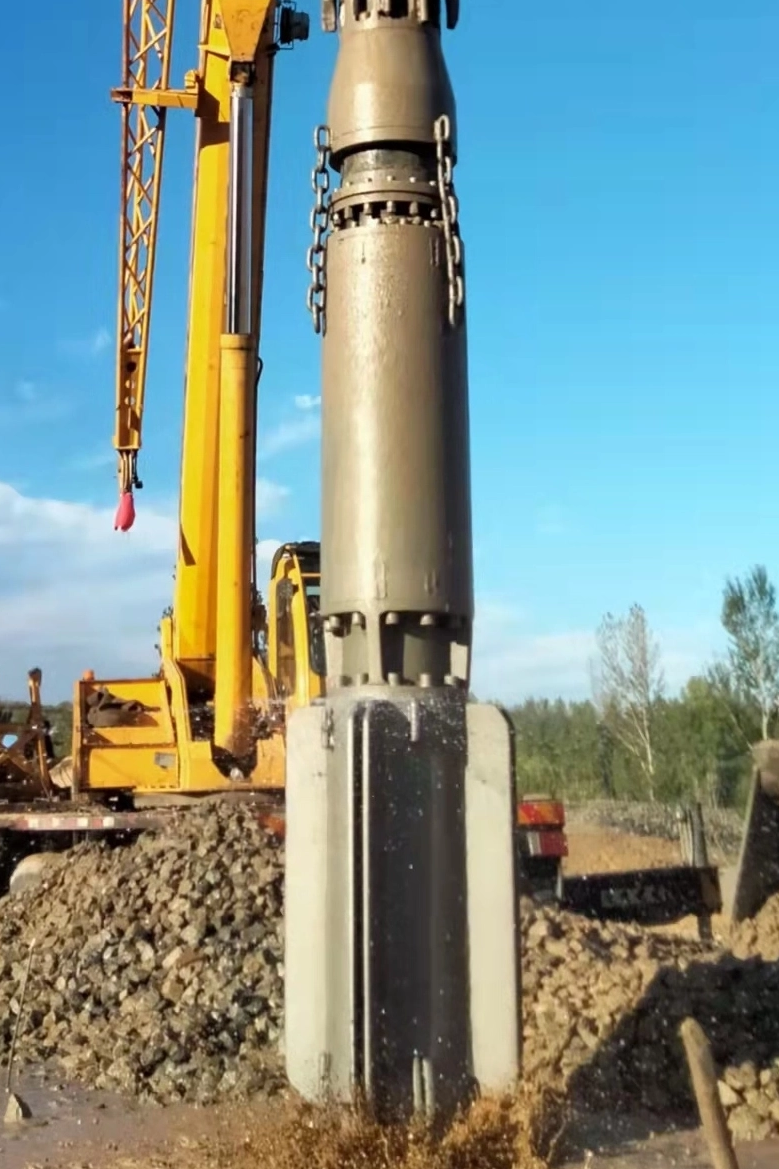
Ground improvement forms the critical path for heavy civil and commercial construction. Schedule deviations during this phase immediately erode project margins. Site managers constantly face a frustrating gap between theoretical compaction rates and actual field performance. Compounding minor inefficiencies in rearranging soil particles for a denser foundation quickly leads to significant project delays and cost overruns.
Resolving these delays requires moving beyond simple operator blame. Project teams must execute a systematic evaluation of geotechnical realities, equipment specifications, and site logistics. Tool weight, rig setup, and continuous operational capabilities dictate success. Understanding the exact variables that impact vibroflotation productivity allows contractors to optimize their approach, select the right machinery, and maintain aggressive project schedules without sacrificing foundation integrity.
Geotechnical surprises—specifically excessive fines, organics, and unexpected clay lenses—are the primary disruptors of vibratory energy transfer and particle rearrangement.
Equipment thermal management is a critical bottleneck; specifying a water cooled vibroflot motor is often necessary for continuous deep-compaction operations.
Modernizing the vibroflot control system eliminates operator guesswork, directly tying real-time amperage and depth data to verifiable compaction criteria.
Proactive vibroflotation site management and robust vibroflotation contractor support are non-negotiable for minimizing unplanned mechanical downtime.
Establishing Baselines: How to Measure Vibroflotation Productivity
Accurate measurement drives operational success. You cannot improve what you do not measure accurately. Establishing strict baselines before mobilization prevents schedule disputes later. Site engineers must define clear success criteria based on empirical data rather than assumptions. Relying on outdated metrics or visual confirmation leads to inconsistent ground improvement and eventual structural settlement.
Defining Success Criteria
Evaluating performance requires tracking specific daily metrics across the entire site grid. Site superintendents should monitor these primary indicators to gauge operational health:
Linear Meters of Penetration Per Hour: This serves as the primary indicator of probe efficiency. It measures how fast the equipment reaches the target design depth before the compaction cycle begins.
Volume of Backfill Consumed: Tracking the tonnage of stone or sand consumed per compaction point indicates the degree of lateral displacement and densification achieved in the surrounding soil matrix.
Amperage Draw Duration: Monitoring how long the motor sustains peak amperage at specific depth intervals confirms that maximum vibratory energy is transferring into the soil.
Achieved Relative Density: Post-compaction testing dictates whether the ground meets engineering specifications, validating the entire operational process.
The Baseline Fallacy
Initial productivity estimates often fail spectacularly. Estimators frequently rely on ideal granular soil conditions during the bidding phase. They assume uniform sand deposits that respond perfectly to vibratory energy. Site-specific geotechnical realities rarely match these pristine models. Variations in soil density, fluctuating groundwater levels, and complex stratigraphy drastically alter penetration speeds and compaction times. When field crews encounter dense gravel layers or unexpected silt pockets, the theoretical production rate drops immediately.
Cost of Deviation
Falling behind schedule carries severe financial penalties. Ground improvement sits at the very beginning of the construction sequence. Delays here push back subsequent foundation work, structural steel erection, and concrete pouring. Idle crawler cranes, waiting concrete trucks, and extended labor hours multiply the financial impact. A single rig falling behind by just five compaction points per shift can extend a large commercial project by weeks. Quantifying this cost highlights the necessity of maintaining peak operational speed through rigorous equipment selection and site planning.
Geotechnical Realities: When Soil Conditions Resist Compaction
Soil composition dictates the success or failure of vibratory compaction. The equipment simply delivers energy into the ground. How the ground responds depends entirely on its physical properties. Understanding these mechanics prevents costly misapplications of the technology and allows engineers to adjust their approach before equipment mobilizes.
The Mechanics of Particle Rearrangement
Vibroflotation relies on high-frequency vibration to densify granular soils. The probe fluidizes the surrounding soil using water or air jets, breaking the friction between individual grains. Gravity and horizontal vibratory force then cause these particles to rearrange into a tighter, denser matrix. This fundamental mechanism works flawlessly in clean sands and gravels. It fails rapidly when soil composition changes and introduces cohesive elements that resist liquefaction.
Soil Composition and Vibratory Response
Soil Classification
Fines Content (%)
Vibratory Response
Recommended Method
Clean Sand / Gravel (SP, GW)
Less than 5%
Excellent. Rapid fluidization and dense particle rearrangement.
Standard Vibro-Compaction
Silty Sand (SM)
5% to 15%
Moderate. Fines dampen energy; requires longer compaction time.
High silt and organic content act as a dampener. Fines absorb vibratory energy rather than transmitting it through the soil matrix. This dampening effect drastically reduces the effective radius of influence around the probe. Operators must implement closer grid spacing to achieve the required relative density. Closer spacing means more compaction points per square meter, directly increasing project duration, fuel consumption, and operational costs.
Unforeseen Stratigraphy and Clay Layers
Cohesive soil layers completely resist vibration. Clay does not fluidize or rearrange under vibratory stress. Encountering unexpected clay lenses often causes immediate probe refusal during the penetration phase. The productivity impact is severe. Crews must pivot from pure vibro-compaction to vibro-replacement mid-project. This involves forming interlocking stone columns with surrounding soil, requiring different backfill materials, specialized hoppers, and significantly more time per point.
Mitigation Strategy
Guesswork leads to failure. High-density pre-construction Cone Penetration Testing (CPT) is mandatory. CPT maps problematic zones, clay lenses, and dense strata before equipment ever mobilizes. Accurate mapping allows engineers to adjust grid spacing, select appropriate tool weights, and prepare for vibro-replacement techniques in specific site sectors. Identifying a three-meter clay layer during the design phase prevents weeks of wasted effort during the execution phase.
Equipment Limitations and the Causes of Vibroflot Downtime
Mechanical failure halts production instantly. Pushing equipment beyond its design parameters guarantees broken parts and idle crews. Understanding the physical limitations of the machinery allows for better planning, proactive maintenance, and drastically reduces vibroflot downtime.
Tool Weight and Rig Configuration
Overall tool weight directly impacts penetration rates in dense soils. A heavier probe overcomes tip resistance faster, utilizing gravity to punch through stiff upper layers. Contractors must evaluate the efficiency of their rig setup based on the geotechnical report. A free-hanging, crane-suspended vibroflot offers excellent depth capabilities and flexibility for deep compaction zones. However, a leader-guided piling rig provides downward crowd force, accelerating penetration in highly resistant strata. The choice dictates transit times between points and overall daily output.
Thermal Overload in Continuous Operations
Vibrating massive eccentric weights requires immense electrical power. Prolonged operation in dense soils forces the motor to draw peak amperage continuously to maintain frequency. This generates extreme heat within the steel casing. Standard air-cooled motors quickly reach thermal overload under these conditions. Operators face mandatory cooling periods that halt production entirely. Waiting for a motor to cool down wastes expensive labor, fuel, and crane rental hours.
The Role of a Water Cooled Vibroflot Motor
Thermal management dictates continuous operational capacity. Specifying a water cooled vibroflot motor eliminates the overheating bottleneck entirely. These systems circulate cooling fluid around the stator, dissipating heat efficiently even under maximum load. This technical advantage maintains continuous operation cycles. It proves essential when working in deep boreholes exceeding 20 meters or highly resistant strata where the compaction phase takes significantly longer to achieve target amperage.
Wear Parts Degradation
Vibration destroys metal over time. High-stress components require strict monitoring and scheduled replacement. Failing to monitor these parts proactively causes sudden, catastrophic mechanical failures on site.
Nose Cones: Endure severe abrasion from quartz sands and gravels. They require hard-facing welding or complete replacement when the profile wears down, otherwise penetration speed drops.
Eccentric Weight Bearings: Absorb massive radial loads at high RPMs. Bearing failure seizes the motor instantly, requiring a complete teardown in a clean environment.
Coupling Elastomers: Degrade from constant torque and heat transfer. Worn elastomers fail to isolate vibration, sending destructive energy back up the extension tubes to the crane line.
Water/Air Jets: Clog with fine sediment if flushing pressure drops. Blocked jets prevent soil fluidization, making penetration impossible.
Operational Inefficiencies and Vibroflotation Site Management
Even perfect soil and flawless equipment fail under poor logistics. Moving massive amounts of water, air, and stone requires precise coordination across the entire site. Effective vibroflotation site management eliminates the hidden idle times that destroy daily production targets.
Flushing Logistics (Air, Water, or Combination Mixtures)
Flushing mediums fluidize the soil, allowing the probe to penetrate to design depth. The selection of air, water, or a combination mixture is critical. Inadequate water pressure fails to break soil friction. Insufficient air volume cannot lift cuttings out of the borehole. The wrong combination prevents effective soil fluidization, slowing penetration rates to a crawl and drastically increasing wear on the nose cone and motor. Site managers must ensure high-capacity water pumps and industrial air compressors deliver consistent pressure to the probe tip, regardless of depth.
Granular Backfill Supply Chain Bottlenecks
Stone columns require continuous backfill. Mapping the logistical flow of stone or sand is vital for maintaining momentum. Wheel loaders must keep hoppers full at all times. Delays in material delivery to the probe create immediate idle time. In top-feed systems, waiting for stone to drop down the borehole disrupts the continuous formation of interlocking columns. A broken supply chain means the multi-million dollar rig sits doing nothing while waiting for a dump truck to arrive from the quarry.
Grid Sequencing and Rig Positioning
Movement wastes time. Optimizing the movement of the crawler crane or piling rig minimizes transit time between compaction points. Site managers must design grid sequencing that prevents the rig from tracking back over completed, uneven ground. Efficient sequencing keeps the rig working in a linear, predictable path, maximizing the time the probe spends in the ground. Proper sequencing also ensures that previously compacted points are not disturbed by heavy machinery tracking over them before the surface is stabilized.
Data Deficits: The Impact of Outdated Vibroflot Control Systems
Operating blindly guarantees inefficiency. Legacy methods rely heavily on operator feel and visual cues, which vary wildly between individuals. Modern ground improvement demands precise, verifiable data to ensure structural integrity and operational speed.
Operator Guesswork vs. Empirical Data
Legacy manual operation relies on the operator watching an analog ammeter in the crane cab. This approach carries massive risks. Operators often over-compact easy soils, wasting valuable time and electrical energy holding the probe at depth longer than necessary. Conversely, they may under-compact difficult zones to maintain their daily quota, failing quality assurance tests later. Guesswork has no place in modern foundation engineering where structural loads demand exact bearing capacities.
Leveraging Real-Time Telemetry
Modernization changes the paradigm. A sensor-driven vibroflot control system tracks depth, amperage, and fluid pressure in real-time. This telemetry optimizes the lift-and-repenetration cycle. The system tells the operator exactly when the target density is achieved based on sustained amperage draw, prompting immediate movement to the next depth interval. This precision eliminates wasted effort and ensures uniform compaction across the entire soil profile.
Automating Quality Assurance
Data speeds up approvals. Integrated data logging records the exact compaction profile of every single point on the grid. This provides engineers with immediate, verifiable evidence of ground improvement. Automating the quality assurance process eliminates disputes with third-party inspectors and accelerates the handover to the foundation contractor, directly boosting overall vibroflot construction efficiency. Digital records also protect the contractor from liability if settlement issues arise years after project completion.
Evaluating Vibroflotation Contractor Support and Vendor Reliability
Equipment breaks. How fast it gets fixed determines project profitability. Selecting an equipment vendor based solely on upfront capital costs ignores the harsh reality of heavy civil construction. Support infrastructure matters significantly more than the initial purchase price.
Spare Parts Availability and Field Service
Remote sites punish weak supply chains. Evaluate equipment vendors based on their logistics network and inventory depth. They must possess the ability to dispatch critical replacement parts within 24 hours. Waiting a week for specialized eccentric bearings, custom vibration isolators, or proprietary hydraulic hoses paralyzes a project. Rapid field service deployment is a mandatory requirement for keeping the critical path moving.
Technical Training and Commissioning
Operator error destroys equipment faster than tough soil. Vendor-provided on-site training prevents user-induced failures. Mechanics must understand the specific maintenance schedules for coupling elastomers and water jackets. Operators must learn how to interpret the control system data rather than just pulling levers. Proper commissioning ensures the crew knows how to push the equipment safely without crossing the threshold into mechanical abuse.
Warranty and Maintenance SLAs
Contracts protect margins. Review service level agreements (SLAs) rigorously before signing procurement documents. The vendor must share the financial risk of prolonged equipment failure. Strong vibroflotation contractor support includes guaranteed response times and clear warranty terms covering high-wear components under specific operating conditions. If the motor burns out due to a manufacturing defect, the vendor must provide a replacement unit immediately to prevent schedule collapse.
Implementation Risks and Mitigation Strategies
Proactive planning prevents reactive chaos. Identifying risks before mobilization allows site teams to build robust mitigation strategies into their daily workflows. A well-prepared site superintendent anticipates failure points and stages resources to address them instantly.
Mandate a formal equipment-to-soil matching phase during procurement, utilizing trial compaction zones.
Single points of failure in fleet
A blown motor or damaged crane halts the entire ground improvement phase instantly.
Build redundancy into the project plan. Keep a backup vibroflot probe and generator on site.
Environmental compliance violations
Local authorities halt work due to excessive noise, vibration, or uncontrolled water runoff.
Implement closed-loop water recycling systems and deploy continuous vibration monitors at site boundaries.
Backfill supply chain collapse
Probe idles while waiting for stone, reducing daily linear meters completed.
Stockpile minimum 3-day supply of granular material on site before commencing operations.
Conclusion
Vibroflotation productivity is rarely derailed by a single catastrophic failure. It suffers from the compounding effects of poor site data, inadequate thermal management, incorrect tool configurations, and logistical bottlenecks. Success requires mastering the interplay between soil mechanics and machine capabilities. Project managers and procurement teams must prioritize equipment with robust control systems, appropriate tool weight, and water-cooled motors. You must back these technical specifications with vendors who possess proven field support infrastructure. Do not compromise on spare parts availability or real-time data logging capabilities.
Take immediate action on your next project by implementing these steps:
Conduct a comprehensive audit of upcoming geotechnical reports to identify clay lenses and high-fines zones before selecting equipment.
Initiate technical dialogues with equipment manufacturers to match probe specifications, specifically motor cooling types and tool weights, directly to your site realities.
Build redundancy into your logistics plan to ensure the rig never waits for stone, water pressure, or critical spare parts.
Mandate the use of digital control systems to track amperage and depth, eliminating operator guesswork.
FAQ
Q: What is the average production rate for vibroflotation?
A: Production rates typically range from 150 to 400 linear meters per 10-hour shift. This variance depends heavily on soil type, tool weight, and equipment specifications. Clean, loose sands yield the highest rates, while dense soils or those requiring vibro-replacement with stone backfill significantly reduce daily output.
Q: How does soil type affect vibroflotation productivity?
A: Clean granular soils rearrange easily under vibration, allowing rapid compaction. Soils with high fines dampen vibratory energy, requiring closer grid spacing and more time per point. Clay content resists vibration entirely, forcing a slower transition to vibro-replacement methods to form interlocking stone columns.
Q: Why is my vibroflot motor overheating?
A: Continuous operation in dense, highly resistant soils forces the motor to draw peak amperage, generating extreme heat. Standard air-cooled motors cannot dissipate this heat fast enough. Upgrading to a water cooled vibroflot motor solves this by actively circulating coolant, allowing continuous operation without mandatory cooling breaks.
Q: How can I reduce vibroflot downtime on site?
A: Implement strict preventative maintenance on eccentric bearings and coupling elastomers. Maintain a seamless backfill supply chain so the rig never waits for stone. Optimize your air and water flushing mixtures to prevent the probe from getting stuck. Finally, utilize real-time telemetry to prevent operators from over-stressing the equipment.
Q: What features should I look for in a modern vibroflot control system?
A: A modern system must include automated depth tracking, real-time amperage monitoring, and fluid pressure sensors. It should feature integrated data logging that records the exact compaction profile for every grid point, providing immediate, verifiable data for quality assurance and quality control approvals.
Q: What is the difference between top-feed free-hanging and bottom-feed vibroflotation efficiency?
A: Top-feed free-hanging systems are faster in stable boreholes, relying on gravity to drop stone from the surface. Bottom-feed systems use a leader-guided rig and tremie pipe to deliver stone directly to the probe tip. Bottom-feed is slower but mandatory for unstable soils or high groundwater conditions where boreholes collapse.
Q: How important is vibroflotation contractor support during a project?
A: It is critical. Waiting days for specialized technicians or proprietary replacement parts during an active project phase costs thousands of dollars in idle crane and crew time. Strong contractor support ensures rapid dispatch of spares and technical guidance, keeping the project on schedule.