Sand liquefaction is a major concern in foundation engineering, especially in areas with loose, saturated sand. When subjected to seismic or dynamic loading, these soils lose their strength and behave like a liquid, leading to potential structural failure. Proper treatment of sand liquefaction is critical for ensuring foundation stability and minimizing the risk of settlement or lateral spreading. This article explores how Vibroflot Equipment, a leading solution for soil densification, plays a key role in treating sand liquefaction and mitigating its effects in construction projects.
1.What Causes Sand Liquefaction?
Understanding Sand Liquefaction
Sand liquefaction occurs when saturated, loose sand layers lose their strength during dynamic loading, such as during an earthquake or heavy vibration. The process happens because of the sudden buildup of pore water pressure within the soil. When this pressure becomes too high, the soil particles are pushed apart, causing the sand to behave like a liquid, resulting in the loss of soil strength.
Key Site Conditions That Increase Liquefaction Risk
Certain conditions make sand more susceptible to liquefaction:
· Loose Granular Soils: Sands with a low relative density are more prone to liquefaction, as they can more easily rearrange under stress.
· High Water Table: Saturated soils, where the groundwater level is close to the surface, increase the potential for liquefaction.
· Seismic Activity: Areas prone to earthquakes or heavy vibrations are at higher risk for liquefaction, as these dynamic forces can trigger the process.
Typical Consequences of Liquefaction
When liquefaction occurs, it can result in severe consequences such as:
· Settlement: Buildings and structures may sink or tilt due to the loss of soil strength beneath them.
· Lateral Spreading: Soil shifts horizontally, which can cause damage to foundations, roads, and utilities.
· Foundation Instability: The lack of soil strength can compromise the integrity of the foundation, potentially leading to structural collapse.
2.How Vibroflot Equipment Helps Treat Sand Liquefaction
Vibro Compaction for Liquefaction Mitigation
Vibroflot Equipment uses high-frequency vibrations to compact loose, saturated sand. By introducing vertical vibrations, the Vibroflot device causes the sand particles to rearrange and settle into a more compact configuration. This increases soil density, reducing the risk of liquefaction during seismic events. Vibroflot works by applying vibrations at various depths and controlled forces, allowing for efficient densification of soil layers.
Benefits of Using Vibroflot for Liquefaction Treatment
Vibroflot Equipment offers several key benefits in treating sand liquefaction:
· Efficient Densification: Vibroflot helps increase soil density, which directly reduces pore water pressure and mitigates the risk of liquefaction.
· Precise Control: The equipment provides precise control over vibration frequency and amplitude, ensuring optimal compaction at the required depth.
· Minimally Disruptive: Vibroflot causes minimal disturbance to surrounding areas, making it ideal for urban and environmentally sensitive projects.
3.When Vibroflot Equipment Is a Suitable Solution
Soil Conditions Suitable for Vibroflot Treatment
Vibroflot Equipment is most effective for treating sand liquefaction in the following conditions:
· Loose Granular Soils: Vibro Compaction is ideal for compacting loose sands and silts that are prone to liquefaction.
· Shallow Soil Layers: Vibroflot works best for shallow soil improvement, typically up to 30 meters deep. For deeper layers, other methods may be required.
· Saturated Soils: Vibroflot is highly effective in saturated soils where liquefaction is a risk due to the excess pore water pressure.
Typical Projects for Vibroflot Equipment
Vibroflot is particularly beneficial for the following types of projects:
· Reclamation Projects: Vibroflot is commonly used in land reclamation projects to improve the stability of newly deposited soils.
· Ports and Waterfront Foundations: It is widely used in coastal areas and port developments where loose, sandy soils are often found.
· Tank Farms and Industrial Sites: Vibroflot provides necessary soil densification in industrial sites where liquefaction risk may impact the stability of heavy structures.
4.Key Steps in Treating Sand Liquefaction with Vibroflot Equipment
Site Investigation and Soil Assessment
Before implementing Vibroflot treatment, a thorough site investigation is essential. Engineers conduct various tests such as Cone Penetration Tests (CPT) or Standard Penetration Tests (SPT) to assess soil conditions, groundwater levels, and grain size. This helps determine the depth of the liquefiable layers and guides the treatment design.
Equipment Selection
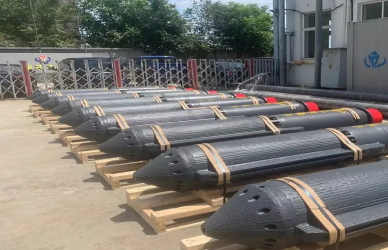
Choosing the right Vibroflot equipment depends on the soil profile, compaction depth, and project requirements. The Vibroflot power source (electric or hydraulic) and the type of probe are selected based on the depth and nature of the soil. For deeper compaction, a higher-powered unit may be needed, while shallower applications may require smaller, more precise equipment.
Construction Execution
The Vibroflot is driven into the ground, where it applies vibrations to the soil. The process is repeated in layers, ensuring that the soil is densified evenly. The compaction is monitored continuously to ensure optimal results, and adjustments are made as necessary.
Quality Verification
After treatment, post-compaction tests such as boring samples and density tests are conducted to confirm that the soil has reached the required density. The results are compared with pre-treatment data to verify the improvement in soil stability and liquefaction resistance.
5.Important Factors That Affect Treatment Results
Several factors can influence the effectiveness of Vibroflot Equipment in treating sand liquefaction. These include soil properties, groundwater conditions, and treatment execution. Addressing these factors ensures successful compaction and foundation stability.
Soil Gradation and Fines Content
The soil's gradation and fines content are crucial in determining Vibroflot’s effectiveness. Vibroflot works best in granular soils like sand and gravel, where the larger particles can be easily compacted by vibrations.
· Soils with High Fines Content: Soils rich in fine particles like silt or clay are less ideal for Vibro Compaction. The smaller particle size makes it harder for vibrations to effectively rearrange the soil, reducing compaction efficiency.
· Granular Soils: Granular soils, such as sands and gravels, are ideal for Vibroflot as they respond well to vibration, improving soil density and stability.
Groundwater Conditions
The groundwater table depth affects Vibroflot’s performance by influencing soil saturation and compaction efficiency.
· Shallow Water Table: In areas with a shallow water table, the soil is fully saturated, making it easier for Vibroflot to compact the soil effectively.
· Deep Water Table: For deeper water tables, the soil may be less saturated at the surface, reducing compaction effectiveness. Dewatering may be required to ensure proper saturation and improve results.
Treatment Depth and Spacing
The compaction depth and spacing of Vibroflot probes are essential to achieving uniform treatment across the soil layers.
· Treatment Depth: Vibroflot is effective for shallow to medium depths (up to 30 meters). For deeper layers, additional methods may be needed.
· Spacing of Probes: Proper spacing between probes ensures uniform compaction. Too much spacing can leave areas poorly compacted, while too little can lead to over-treatment.
By carefully considering these factors, Vibroflot treatment can be optimized to effectively mitigate sand liquefaction.
6.Why Vibroflot Equipment Is Valuable for Liquefaction Mitigation
Efficient and Cost-Effective Solution
Vibroflot Equipment offers an efficient and cost-effective method for treating sand liquefaction. By using high-frequency vibrations, Vibroflot densifies loose, saturated sands, enhancing soil stability and reducing the likelihood of liquefaction. This efficient process allows for rapid treatment, minimizing project timelines and labor costs. Compared to other methods, Vibroflot is a more affordable solution for many soil improvement projects, making it an attractive choice for large-scale developments and areas with tight budgets.
Environmentally Friendly Approach
Vibroflot treatment is environmentally friendly, as it causes minimal disruption to surrounding areas. Unlike traditional compaction methods that may generate excessive noise, vibration, and air pollution, Vibroflot operates with low environmental impact. The process produces less ground disturbance and is quieter, making it ideal for use in urban environments, sensitive ecosystems, and projects near existing infrastructure. Additionally, Vibroflot uses hydraulic or electric power, reducing emissions and promoting sustainability during construction.
Enhancing Soil Stability and Foundation Integrity
Vibroflot significantly improves soil stability by compacting loose sands, which are particularly vulnerable to liquefaction during seismic events. By reducing the potential for pore water pressure buildup, Vibroflot prevents the soil from losing its load-bearing capacity, thus enhancing the overall foundation integrity. This makes Vibroflot a critical solution for ensuring the stability of infrastructure in seismic zones or areas with high liquefaction risk, such as coastal areas, ports, and reclaimed land projects.
FAQ
1. What is sand liquefaction and why is it a concern?
Sand liquefaction occurs when loose, saturated sand loses its strength during dynamic loading, such as during an earthquake or heavy vibrations. The soil behaves like a liquid, causing it to lose its ability to support structures. This leads to significant risks, including foundation instability, settlement, and lateral spreading, which can result in structural damage and even the collapse of buildings, roads, and other infrastructure.
2. How does Vibroflot help prevent sand liquefaction?
Vibroflot densifies loose, saturated sands by applying high-frequency vibrations to the soil. These vibrations rearrange the soil particles into a more compact arrangement, which increases the soil's density and reduces the space between particles. This process helps prevent the buildup of pore water pressure during seismic events, significantly reducing the risk of liquefaction and improving the stability of foundations and structures built on such soils.
3. What soil conditions are ideal for Vibroflot treatment?
Vibroflot is most effective in loose, granular soils such as sands and silts, particularly when they are saturated and prone to liquefaction. The technique works best in soils with low relative density, where the particles are loosely packed, allowing the vibration to rearrange and compact them. In addition, Vibroflot is also suitable for shallow soil layers, making it ideal for projects in areas with soft or reclaimed land.
4. How do engineers verify the effectiveness of Vibroflot treatment?
Engineers verify the effectiveness of Vibroflot treatment through post-compaction testing, which includes soil sampling, boring tests, and density assessments. By analyzing soil samples taken before and after treatment, engineers can confirm that the soil has achieved the desired density and compaction. These tests help ensure that the liquefaction risk has been mitigated and that the treated soil meets the required specifications for foundation stability and safety.
Conclusion
Treating sand liquefaction is essential for ensuring the stability of foundations and preventing detrimental effects such as settlement or lateral spreading during seismic events. As liquefaction can lead to the collapse of structures and significant infrastructure damage, it is crucial to address this risk through effective soil improvement techniques. Vibroflot Equipment provides a reliable and efficient solution for improving soil density, especially in loose, granular, and saturated sands that are most prone to liquefaction. By using high-frequency vibrations, Vibroflot enhances soil compaction, reduces pore water pressure, and significantly mitigates the risks associated with liquefaction. This process ensures the long-term stability of infrastructure, protecting both the structure and the surrounding environment. Whether for reclamation projects, port developments, or urban construction, Vibroflot's precise and environmentally friendly approach makes it an ideal choice for liquefaction mitigation. For more information on treating sand liquefaction with Vibroflot, contact BVEM for expert consultation and customized ground improvement solutions tailored to your specific project needs.


