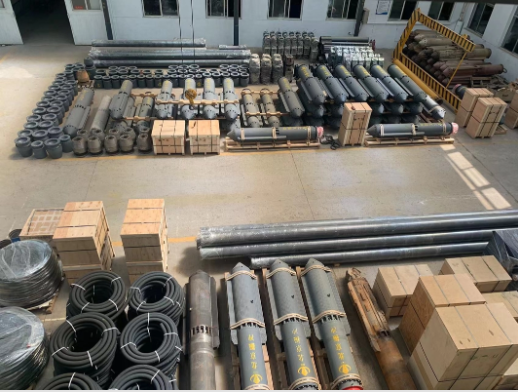
Supporting massive vertical loads from 20-plus story structures on granular, reclaimed, or mixed-cohesive soils presents a severe engineering challenge. High-rise developments in coastal zones, reclaimed land, or seismically active areas face severe risks of differential settlement, bearing capacity failure, and soil liquefaction. Defaulting to deep piling often introduces prohibitive material demands, complex site logistics, and extended project schedules. Deep foundation vibroflotation provides a verifiable, structurally sound, and economically viable alternative for weak soil stabilization. This method works exceptionally well provided the geotechnical data aligns with the correct equipment specifications. By densifying the soil in situ, you create a stable matrix capable of handling extreme structural loads without the logistical burden of massive concrete pours.
Vibroflotation can densify granular soils to depths exceeding 30 meters (100+ feet), directly mitigating liquefaction and controlling settlement for heavy high-rise structures.
Equipment selection—specifically matching motor power (e.g., a 150kW vibroflotation machine) to soil density targets—dictates project viability and compaction efficiency.
Compared to traditional bored piles, vibro-techniques are easily implemented, often reducing foundation schedules and material costs, though they require rigorous in-situ testing and continuous parameter monitoring.
Partnering with an experienced vibroflotation equipment manufacturer ensures access to site-specific probe configurations (top-feed, bottom-feed, free-hanging) and reliable technical support.
The method is highly adaptable for complex urban environments, allowing developers to prepare weak ground for high-rises even in close proximity to subways and existing deep excavations.
The Engineering Case for High-Rise Foundation Ground Improvement
Defining Success Criteria for Weak Soil Stabilization
Establishing strict success criteria dictates the trajectory of any ground improvement project. You must determine the exact load-bearing thresholds required for the structure before mobilizing equipment. High-rise raft foundations and heavy spread footings exert massive downward pressure, often exceeding 400 kPa depending on the structural design. The underlying soil must resist this pressure without shearing or yielding. Engineers calculate these thresholds based on dead loads from the building mass, live loads from occupancy, and transient environmental forces like wind shear. Proper weak soil stabilization ensures the ground achieves the necessary internal friction angle to safely support these extreme demands.
Settlement tolerances dictate the acceptable movement of the building over its operational lifespan. Total settlement refers to the overall downward movement of the structure, while differential settlement is the uneven settling across different column lines within the building footprint. Differential settlement poses a severe threat to structural integrity. It causes concrete cracking, plumbing shear failures, and elevator shaft misalignment. Engineering limits for high-rises are exceptionally tight, often restricting differential movement to less than 1/500. Ground improvement homogenizes the soil stiffness across the entire site, keeping settlement well within these strict tolerances.
Seismic resilience remains a primary driver for ground improvement, especially in loose granular soils located in active fault zones. Earthquakes generate rapid, cyclic loading that increases pore water pressure in saturated sands. When this pore pressure exceeds the confining stress of the soil, the material loses its shear strength entirely. This phenomenon, known as liquefaction, causes catastrophic foundation failure and building tilt. Densifying the soil matrix reduces void ratios and prevents pore pressure buildup. This secures the foundation against seismic events and meets stringent building code requirements for life safety.
Urban site constraints complicate the stabilization process significantly. High-rise developments typically occur in dense metropolitan areas surrounded by existing structures. You must manage vibration propagation carefully to avoid damaging adjacent infrastructure. This includes subways, utility corridors, historic masonry buildings, and neighboring deep foundations. Engineers monitor peak particle velocity (PPV) at the site boundaries using seismographs. Modern high-rise foundation ground improvement techniques allow operators to control energy delivery precisely. This ensures structural integrity for surrounding assets while still achieving target compaction depths in the primary work zone.
Vibroflotation vs. Traditional Deep Piling Methods
Conceptual Trade-Offs and Overall Value
Evaluating foundation options requires a strict, objective cost-benefit analysis based on site-specific data. Traditional deep piling involves driving or boring concrete and steel deep into the earth to bypass weak strata. Piling requires massive material mobilization. You must transport heavy steel casings, massive rebar cages, and continuous fleets of ready-mix concrete trucks through congested city streets. Vibroflotation takes a fundamentally different approach by improving the existing soil rather than bypassing it. This drastically reduces material requirements. You eliminate the need for extensive concrete curing times, complex pile cap construction, and the handling of hazardous drilling spoils. The result is a highly economical technique that simplifies site logistics and reduces overhead.
Environmental impact drives decision-making in modern construction. Manufacturing Portland cement generates massive carbon emissions, contributing heavily to the project's overall carbon footprint. Transporting heavy steel and concrete to the site adds further emissions and disrupts local traffic patterns. In-situ soil densification offers a significantly greener alternative. By utilizing the native soil as the primary load-bearing medium, you cut material consumption drastically. You reduce truck traffic, lower heavy equipment fuel usage, and minimize site waste. This approach aligns directly with sustainable building practices and helps developers achieve high-tier green building certifications.
Schedule compression often dictates the financial profitability of a high-rise development. Bored piles require a sequential, time-intensive workflow. Crews must drill the shaft, manage the bentonite slurry, place the reinforcement cage, pour the concrete, and wait days for it to reach early strength. Vibroflotation accelerates the critical path of the project. The equipment mobilizes quickly and the compaction process provides immediate, verifiable results. You can perform concurrent ground improvement and shallow foundation preparation in different zones of the site. This overlap shortens the overall construction schedule, allowing vertical construction to begin weeks or even months sooner.
Table: Comparison of Foundation Improvement Approaches
Operational Metric
Vibroflotation
Traditional Bored Piles
Driven Precast Piles
Material Dependency
Low (uses native soil or aggregate)
High (requires concrete and steel)
High (requires precast concrete)
Schedule Impact
Rapid mobilization, immediate results
Time-intensive drilling and curing
Moderate speed, requires splicing
Spoils Management
None (soil is densified in place)
High volume of wet, heavy spoils
None (displacement method)
Site Logistics
Minimal material storage needed
Requires space for rebar and slurry
Requires large laydown yards
Core Vibroflotation Techniques for Deep Foundations
Vibro Compaction (For Granular Soils)
Vibro compaction specifically targets loose sands and gravels with low fines content. The mechanism of action relies on intense horizontal centrifugal forces generated by the equipment. A heavy vibrating probe, called a vibroflot, penetrates the ground using its own weight combined with high-pressure water or air jetting at the tip. As it vibrates, it applies high-frequency energy to the surrounding soil. This energy breaks the friction between individual soil particles. The soil matrix temporarily collapses into a liquefied state. Gravity and the continuous vibration then rearrange the sand and gravel particles into a much denser, tightly packed state. The operator withdraws the probe in controlled increments, creating a continuous column of densified soil.
Achieving specific depth and density metrics is mandatory for high-rise support. The engineering goal is to reach a target relative density across the entire treated zone. Geotechnical engineers typically require a relative density greater than 75 to 85 percent to support heavy structural loads and prevent liquefaction. Deep foundation vibroflotation achieves these metrics at impressive depths. Modern equipment easily reaches 30 meters (100+ feet) below grade. This deep compaction creates a massive, stiffened soil block beneath the building footprint. This block safely distributes the immense vertical loads of a 20-story building, preventing localized shear failure and minimizing settlement.
Vibro Replacement / Stone Columns (For Cohesive or Mixed Soils)
Not all construction sites consist of clean, compactable sand. Many coastal, estuarine, or reclaimed sites feature cohesive soils, silts, or highly mixed stratigraphy. Vibration alone cannot densify clays because the cohesive bonds between particles resist rearrangement. For these conditions, engineers specify vibro replacement, commonly known as stone columns. This method provides targeted reinforcement rather than broad densification. The probe penetrates the weak interlayers and isolated soft soil lenses. As the probe withdraws, the operator feeds crushed stone or gravel into the cavity. The vibrator then compacts this aggregate outward into the surrounding soft soil, creating a dense, high-friction pier.
The resulting compacted aggregate piers act as stiff vertical inclusions within the weaker soil matrix. They fundamentally change the load transfer mechanism of the foundation system. The stone columns possess high shear strength and a high internal friction angle. They carry the majority of the high-rise loads, transferring them downward to stiffer underlying strata. Furthermore, the stone columns act as highly efficient vertical drains. They accelerate the consolidation of the surrounding cohesive soils by providing a short drainage path for pore water. This rapid drainage dissipates pore water pressure quickly, further reducing long-term settlement risks for the structure.
Evaluating Foundation Improvement Equipment Specs
Sizing the Probe: The Role of the 150kW Vibroflotation Machine
Selecting the right equipment dictates the success of the compaction effort and the overall project schedule. Power-to-soil matching is a strict engineering requirement. You must overcome the natural resistance of the soil at great depths, especially when penetrating dense intermediate layers. A 150kW vibroflotation machine serves as a standard benchmark for high-rise foundation projects. It provides the necessary centrifugal force to break down dense soil structures and achieve the required compaction radius. Lower-powered units often fail to achieve the required compaction diameter, forcing contractors to drill more points on a tighter grid. They also risk stalling when encountering stiff pre-existing soil layers. The 150kW class offers the ideal balance of penetration power, compaction radius, and operational reliability.
You must evaluate specific technical parameters based on the site geology and the target soil gradation. Key metrics include amplitude, frequency, and eccentric moment. Amplitude determines how far the probe displaces the soil horizontally during each revolution. Frequency affects the breakdown of inter-particle friction, with different soil types responding better to specific vibration rates. The eccentric moment dictates the total compaction energy delivered per cycle. Engineers analyze the soil gradation curve to select these parameters accurately. Coarser gravels require different operational frequencies than fine sands. Matching the machine's specifications to the soil profile ensures maximum densification efficiency and prevents equipment fatigue.
Deployment Configurations: Free-Hanging vs. Mast-Guided Systems
Contractors deploy vibroflots using two primary configurations depending on the site conditions and the specific technique required. Free-hanging systems utilize standard heavy-duty crawler cranes. The crane suspends the vibrating probe and its heavy extension tubes via a vibration isolator. This setup is highly common for top-feed vibro compaction and top-feed stone columns. Free-hanging configurations offer maximum depth reach, easily exceeding 30 meters. They provide excellent flexibility and maneuverability on site. The crane can rapidly swing the probe from one compaction point to the next on the grid. This allows for rapid mobilization and high daily production rates across large building footprints.
Mast-guided rigs offer a different set of operational advantages, specifically for challenging soil conditions. These systems mount the vibroflot on a specialized vertical mast attached to a base carrier, similar to a piling rig. The mast provides significant downward crowd force, often exceeding 15 tons. This crowd force is mandatory when penetrating stiffer pre-existing soil layers that a free-hanging probe cannot breach using its own weight. Mast-guided systems are essential for bottom-feed stone column installation. The rigid mast keeps the probe perfectly plumb, ensuring precise column geometry and verticality. While less mobile than a free-hanging crane, a mast rig delivers superior control in mixed-soil conditions.
Top-Feed vs. Bottom-Feed Systems
Choosing the correct aggregate feed method depends entirely on site conditions, specifically borehole stability and groundwater levels. Top-feed systems introduce the stone at the ground surface using a front-end loader. The aggregate falls down the annular space around the probe to the tip. This method requires a stable borehole that does not collapse during probe withdrawal. Top-feed is generally faster and more cost-effective but relies heavily on continuous water jetting to keep the hole open and flush out fines. Bottom-feed systems deliver the stone directly to the tip of the probe via an attached feed pipe and a specialized hopper system. You choose bottom-feed when dealing with high water tables, highly collapsible soils, or environmental restrictions on water usage.
Equipment footprint remains a major logistical concern in congested urban developments. Foundation improvement equipment requires significant operational space. You must assess crane swing radii, mast heights, aggregate stockpile locations, and safe working zones. Top-feed systems require large water management setups, including settling ponds and pumps, to handle the high volume of flush water. Bottom-feed systems often use compressed air jetting instead of water, eliminating wet runoff issues and keeping the site clean. You must plan site maneuverability carefully. The equipment must access every grid point without disrupting adjacent construction activities, shoring walls, or underground utilities.
Implementation Risks and Mitigation Strategies
Geotechnical Variability and Quality Control
Subsurface conditions are rarely uniform across a large high-rise footprint. Geotechnical variability presents a severe risk to foundation integrity. Undetected clay lenses, organic deposits, or zones with excessive fines content can impede the densification process. If the vibrator encounters a thick clay layer during a vibro compaction program, it cannot densify it. This leaves untreated weak zones directly beneath the high-rise foundation. These untreated zones become focal points for differential settlement once the building loads are applied. Relying on sparse, widely spaced borehole data increases the likelihood of encountering unexpected soil variations during production.
Strict quality control protocols mitigate these subsurface risks. You must mandate comprehensive testing and real-time monitoring throughout the project.
Execute a dense grid of pre-treatment Cone Penetration Testing (CPT) to map all subsurface clay lenses and verify soil gradation continuously.
Utilize automated data acquisition systems mounted in the operator's cabin to log amperage, depth, and time continuously during probe penetration and withdrawal.
Monitor the amperage draw of the electric motor; a spike in amperage indicates dense soil resistance, while a drop suggests a weak or cohesive layer.
Perform post-treatment CPT or Standard Penetration Testing (SPT) at the exact midpoint between compaction locations to verify the minimum relative density has been achieved.
Adjust the grid spacing or compaction hold times immediately if post-treatment tests fail to meet the engineered design criteria.
Vetting a Vibroflotation Equipment Manufacturer
The mechanical reliability of your machinery dictates your project schedule and profit margins. Equipment breakdowns cause unacceptable delays, leaving expensive cranes and crews idle. OEM support is mandatory when operating complex foundation machinery under harsh, high-vibration conditions. You need immediate access to specialized spare parts, including eccentric weights, heavy-duty bearings, vibration isolators, and hydraulic components. On-site commissioning by factory technicians ensures the equipment integrates smoothly with your base carriers and power generators. Operator training is equally important. A skilled operator maximizes compaction efficiency, reads the soil response accurately, and prevents unnecessary wear on the vibroflot.
You must evaluate the manufacturer's track record carefully before procurement. Look for documented success in similar geological conditions and project scales. A reputable vibroflotation equipment manufacturer will provide detailed case studies of high-rise ground improvement. They should demonstrate their equipment's performance in dense urban environments and deep treatment zones. Assess their engineering support capabilities. Can they assist in sizing the probe, selecting the eccentric moment, and determining the optimal grid spacing for your specific soil gradation? Partnering with a proven manufacturer reduces mechanical risks and guarantees technical backing throughout the project lifecycle.
Conclusion
To execute a successful ground improvement program and ensure long-term structural stability, implement the following next steps:
Commission a comprehensive geotechnical site investigation, utilizing dense CPT grids to map all soil stratigraphy and identify cohesive lenses.
Specify the exact motor power, amplitude, and frequency of the vibroflot based on the required compaction diameter and the specific soil gradation curve.
Execute a localized pilot test program on site to calibrate the equipment amperage, vibration frequency, and withdrawal rates before full-scale production begins.
Implement continuous, automated data logging for every compaction point to guarantee strict quality control and verify energy delivery.
Establish a clear maintenance and spare parts protocol with your equipment manufacturer to prevent downtime during the critical path schedule.
FAQ
Q: What is the maximum depth vibroflotation can reach for high-rise foundations?
A: Modern vibroflotation equipment can effectively densify soils to depths exceeding 30 meters (approximately 100 feet). Specialized free-hanging configurations using heavy-duty crawler cranes and reinforced extension tubes can reach even deeper, depending on the soil resistance and the specific power output of the vibrating probe.
Q: How does the vibrating probe rearrange soil particles to prevent liquefaction during earthquakes?
A: The probe emits intense horizontal vibrations that temporarily break the friction between soil particles, causing the soil matrix to collapse. Gravity and the centrifugal force then pack the sand and gravel into a much denser configuration. This reduces void spaces and prevents the pore pressure buildup that triggers liquefaction.
Q: When should a 150kW vibroflotation machine be specified over lower-power models?
A: A 150kW machine is specified when treating deep foundation zones for high-rise buildings, especially in dense or highly resistant granular soils. Lower-power models lack the centrifugal force needed to achieve the required compaction diameter and frequently stall when penetrating stiff intermediate soil layers.
Q: Is deep foundation vibroflotation safe to perform near existing subways or adjacent high-rises?
A: Yes, it is safe if engineered correctly. The vibration energy attenuates rapidly through the soil. However, engineers must strictly monitor Peak Particle Velocity (PPV) at the site boundaries using seismographs to ensure vibrations remain well below the damage thresholds for adjacent infrastructure.
Q: Can vibroflotation be used in clay or highly cohesive soils?
A: Vibration alone cannot densify clay. For cohesive soils, engineers use the vibro replacement method. This involves creating a cavity and filling it with crushed stone. The vibrator compacts this stone to form dense aggregate piers, which transfer structural loads and accelerate soil drainage.
Q: How is the success of weak soil stabilization verified post-treatment?
A: Success is verified through post-treatment in-situ testing, primarily using Cone Penetration Testing (CPT) or Standard Penetration Testing (SPT). Engineers compare the post-treatment tip resistance data against the pre-treatment baseline to confirm that the soil has achieved the target relative density.
Q: What is the typical cost difference between vibroflotation and bored piles?
A: Vibroflotation requires significantly less capital than bored piles. It eliminates the need for massive volumes of concrete, steel reinforcement, and the associated transport logistics. By improving the native soil rather than replacing it, projects save heavily on material procurement and reduce overall schedule duration.