Vibroflot equipment and dynamic compaction are two widely used techniques in soil improvement and foundation stability for construction projects. Vibroflot equipment utilizes high-frequency vibrations to compact soil, making it particularly effective for soft and loose soils. This method is highly precise and minimally disruptive, making it ideal for urban and environmentally sensitive areas. On the other hand, dynamic compaction involves dropping heavy weights onto the soil to achieve densification, which is most effective for deeper and denser soil layers. The choice between these two methods is crucial for ensuring optimal soil stability, improving load-bearing capacity, and preventing future settlement. Selecting the right compaction method depends on the specific characteristics of the soil, project scale, and environmental considerations, making it a key decision in ensuring the long-term success of foundation construction.
1.Understanding Vibro Compaction
How Vibroflot Equipment Works: The Process of Soil Densification Using High-Frequency Vibrations
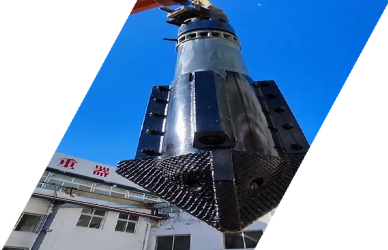
Vibro Compaction uses Vibroflot equipment to improve soil density by applying high-frequency vibrations. The Vibroflot, a type of vibratory probe, is inserted into the ground, where it generates vertical vibrations. These vibrations break up soil particles and help rearrange them into a denser configuration, improving the overall strength and stability of the soil. The process is particularly effective for compacting granular soils and loose sands, as the vibrations allow the soil particles to settle into a more compact arrangement, reducing voids and increasing load-bearing capacity. Vibroflot equipment can be powered electrically or hydraulically, depending on the project requirements.
Applications of Vibro Compaction: Common Uses in Soft Soils, Ports, and Reclamation Projects
Vibro Compaction is commonly used in a variety of applications where soil improvement is critical for foundation stability:
· Soft Soils: Vibroflot equipment is particularly effective in soft, loose soils where other compaction methods might not be as effective. The vibrations penetrate deeper layers, providing significant densification without disturbing the surrounding environment.
· Ports and Coastal Areas: In projects like port construction and reclamation, Vibro Compaction is ideal for improving soil strength in areas subject to water saturation. It’s used to densify sand and silt before the construction of foundations, terminals, and piers.
· Reclamation Projects: Vibro Compaction plays a crucial role in land reclamation, particularly in coastal areas where the soil often needs significant densification to support new infrastructure. The method allows for better control over the compaction process and minimizes the risk of settlement over time.
Advantages of Vibro Compaction: Higher Precision, Minimal Disturbance, and Reduced Noise Pollution
Vibro Compaction offers several key benefits:
· Higher Precision: The ability to control vibration frequency and amplitude provides a high level of precision in compaction, ensuring that soil is densified to the exact specifications required.
· Minimal Disturbance: Unlike traditional methods, Vibro Compaction causes minimal disruption to surrounding areas. The vibrations are localized, preventing damage to nearby structures and reducing the impact on the surrounding environment.
· Reduced Noise Pollution: Vibroflot equipment generates less noise compared to other compaction techniques, making it ideal for urban environments and environmentally sensitive projects. The relatively quiet operation ensures that Vibro Compaction can be used in noise-sensitive areas, such as near residential zones or in marine environments.
2.Understanding Dynamic Compaction
How Dynamic Compaction Works: The Process of Improving Soil Using Heavy Weight Drops
Dynamic Compaction is a soil improvement technique that involves dropping a heavy weight from a significant height onto the surface of the soil. The weight, typically a large steel or concrete block, is lifted by a crane or similar equipment and then dropped repeatedly onto the ground. The impact from each drop generates a high level of energy that compacts the soil, reducing its porosity and increasing its density. This process is especially effective for deeper layers of granular soils (such as sands and gravel) and cohesive soils (like clay), where the ground needs to be compacted to a significant depth. The depth and effectiveness of compaction depend on the weight of the drop and the height from which it falls, as well as the number of repetitions.
Applications of Dynamic Compaction: Ideal for Granular and Cohesive Soils with Significant Depth
Dynamic Compaction is particularly suitable for situations where deep soil compaction is needed:
· Granular Soils: It is highly effective in compacting granular soils, such as sand and gravel, which are often found in larger construction projects like highways, airports, and dams. These soils benefit from the heavy impact, which rearranges the particles and increases density.
· Cohesive Soils: While less effective in some clay-rich soils, Dynamic Compaction can be used in areas with cohesive soils when deep compaction is required, particularly in areas with a mix of granular and cohesive layers.
· Large-Scale Projects: It is frequently used in large construction projects that require deep and extensive soil densification, such as industrial plants, landfills, and substantial infrastructure developments.
Advantages of Dynamic Compaction: Effective for Larger Areas, Cost-Effective for Deep Soil Improvement
Dynamic Compaction offers several notable advantages:
· Effective for Larger Areas: The technique can cover large areas quickly, making it ideal for projects where the compaction needs to be done over a vast expanse, such as airport runways, highways, and large industrial sites.
· Cost-Effective for Deep Soil Improvement: Compared to more precision-based techniques, Dynamic Compaction is often more affordable, especially for deep soil improvement. The heavy weight and simple mechanism provide a cost-effective solution for large-scale soil densification.
· Depth of Compaction: Dynamic Compaction is highly effective for deeper layers of soil (typically up to 10-15 meters), making it an excellent choice for projects that require substantial soil improvement at greater depths.
3.Key Differences Between Vibro and Dynamic Compaction
Feature | Vibro Compaction | Dynamic Compaction |
Method | Vibration-based densification | Weight-drop-based compaction |
Best for | Soft soils, shallow layers | Granular and cohesive soils, deep layers |
Energy Source | Electric/Hydraulic power | Weight drops from cranes |
Precision | High precision, controlled vibration | Less precise, broader impact area |
Environmental Impact | Lower noise and vibration | Higher noise, larger ground disturbance |
Cost | Higher initial cost | Generally lower cost |
Effectiveness | Effective for shallow depths | Effective for deeper compaction |
This table summarizes the main differences between Vibro Compaction and Dynamic Compaction based on their methods, applications, energy sources, precision, environmental impacts, costs, and effectiveness, helping to guide the choice between the two for specific construction projects.
4.When to Choose Vibro Compaction Over Dynamic Compaction
Ideal Conditions for Vibro Compaction:
Vibro Compaction is ideal in situations where precision, minimal environmental impact, and shallow soil improvement are essential:
· Shallow Depths: Best suited for shallow soil layers, where vibrations can achieve effective compaction without disturbing deeper soil.
· Environmentally Sensitive Areas: With lower noise and vibration, Vibro Compaction is ideal for projects in residential or protected areas, minimizing environmental disruption.
· Soft Soils: Particularly effective for compacting soft, loose soils like sands and silts, improving their density and load-bearing capacity.
Why Vibroflot Equipment is the Preferred Choice for Reclamation Projects:
In reclamation projects, Vibroflot equipment is favored because:
· Shallow Compaction: Reclamation typically requires soil improvement at shallow depths, making Vibro Compaction an efficient method.
· Minimal Disturbance: The equipment’s low noise and vibration levels are crucial for preserving surrounding environments in coastal or urban reclamation areas.
· Precision: Vibroflot allows for precise control over compaction, ensuring stability for new structures in reclaimed land.
· Sustainability: Its use of electricity or hydraulics is more eco-friendly compared to other methods, making it a sustainable choice for reclamation projects.
Vibro Compaction is the ideal method for reclamation projects, offering effective, environmentally sensitive, and precise soil improvement.
5.When to Choose Dynamic Compaction Over Vibro Compaction
Ideal Conditions for Dynamic Compaction:
Dynamic Compaction is best suited for situations where deep soil compaction, large-scale coverage, and cost efficiency are primary concerns:
· Deeper Soil Layers: Dynamic Compaction is highly effective for compacting deeper soil layers, typically reaching depths of 10-15 meters. It’s ideal for projects that require densification of granular or cohesive soils at significant depths.
· Large-Scale Projects: When compaction is needed over large areas, such as in highways, airports, or industrial plants, Dynamic Compaction offers a cost-effective solution. The technique can cover expansive sites quickly, making it efficient for large projects.
· Cost Concerns: Compared to Vibro Compaction, Dynamic Compaction generally has a lower initial cost, making it a more budget-friendly option for projects where cost is a significant factor. While less precise, it still provides effective densification for many large-scale applications.
FAQ
1. What is the main difference between Vibro and Dynamic Compaction?
Vibro Compaction uses vibration to densify soil, while Dynamic Compaction uses heavy weight drops to compact deeper soil layers.
2. Which compaction method is better for soft soils?
Vibro Compaction is more suitable for soft soils as it delivers precise vibrations to improve soil density at shallow depths.
3. Can Dynamic Compaction be used for deep soil layers?
Yes, Dynamic Compaction is ideal for compacting deeper soil layers, especially in granular or cohesive soils.
4. Is Vibro Compaction more environmentally friendly than Dynamic Compaction?
Yes, Vibro Compaction generates less noise and vibration, making it more suitable for environmentally sensitive areas.
Conclusion
In summary, Vibro Compaction and Dynamic Compaction each offer distinct advantages depending on the project requirements. Vibro Compaction is best suited for shallow depths, soft soils, environmentally sensitive areas, and projects requiring high precision and minimal disturbance. It is especially ideal for reclamation projects, where controlled compaction is critical. On the other hand, Dynamic Compaction excels in deep soil layers, large-scale projects, and when cost is a significant concern, offering a more affordable solution for compaction over large areas.
BVEM's Vibroflot equipment plays a crucial role in providing a more efficient, precise, and environmentally friendly solution for many soil improvement projects. With its ability to achieve high-precision compaction and minimal environmental impact, Vibroflot is the preferred choice for construction projects that demand both accuracy and sustainability. Whether you are working on a large reclamation project or need deep soil improvement, BVEM offers the right technology to ensure your project's success.


