Weak soil often causes cracks and unsafe foundations. Builders rely on Vibroflotation Equipment to make soil stable. But which method works best? Top Feed or Bottom Feed? In this article, you will learn how each system works, their pros and cons, and which option fits different ground improvement needs.
Understanding Vibroflotation Equipment Basics
What Vibroflotation Equipment Does in Ground Improvement
Vibroflotation Equipment is designed to make weak soils stronger. It uses a vibrating probe called a vibroflot to change how soil behaves. When the probe penetrates the ground, it either densifies loose sandy soils or creates stone columns in soft clay. Both methods reduce settlement and increase the load-bearing capacity of foundations. This makes it possible to build safely on land that would otherwise be unsuitable for construction.
● In sandy soils, vibration compacts the grains tightly together.
● In soft or clay soils, stone columns are inserted to improve stability.
● Engineers choose the right method based on soil type and project needs.
The Role of Vibroflot Probes and Vibratory Motors
At the heart of every system is the vibroflot probe. It consists of a cylindrical steel body that houses a vibratory motor. The motor generates high-frequency oscillations that loosen or densify soil. Some probes use water or air jets to aid penetration. Others use pressurized air to feed stone through the tip.
● Top feed probes drop gravel from the surface while vibrating.
● Bottom feed probes release stone directly at the base of the probe.
● Both rely on continuous vibration to achieve uniform results.
The efficiency of the motor determines how fast the soil responds. For deep ground improvement, dual or tandem probes can be deployed, reaching depths of 20–25 meters (needs verification).
Key Differences Between Vibro Compaction and Vibro Replacement
Although both methods use similar Vibroflotation Equipment, their mechanisms differ.
Aspect | Vibro Compaction (Top Feed) | Vibro Replacement (Bottom Feed) |
Soil Type | Loose sands, granular soils | Soft clay, silt, organic soils |
Method | Densifies existing soil | Creates stone columns |
Tools | Vibratory probe, water jets | Probe, gravel hopper, air pressure |
Result | Tighter soil structure | Reinforced soil with load-bearing columns |
Applications | Ports, airports, reclamation | Embankments, industrial tanks, mid-rise |
This comparison shows why the feed method matters. One is best for cohesionless sands, the other for weak cohesive soils.
Why the Feed Method Matters for Soil Types
The feed method determines how effective the improvement will be. In top feed systems, gravel falls from the surface and may mix with soil on its way down. This can cause quality variations in soils that are prone to collapse. In bottom feed systems, stone is placed directly at the probe's tip. This ensures better control and reduces contamination.
Soil type, groundwater, and depth all affect the choice. Engineers prefer bottom feed in sites with very soft soils or high water tables. Top feed is often faster and cheaper but less precise.
Tip: Always match the feed system to soil conditions instead of choosing based on cost alone. This avoids long-term settlement risks and ensures structural safety.
How Top Feed Vibroflot Works
Principle of Top Feed Vibro Compaction
Top feed methods use Vibroflotation Equipment to densify loose sands. The vibroflot probe penetrates the soil using vibration, often supported by water or air jets. Once the probe reaches depth, gravel is dropped from the surface. The probe's oscillations push the gravel downward and sideways, filling voids between soil particles. Over repeated cycles, the soil mass becomes denser and more stable. This approach is efficient for reclamation and projects where sandy soil dominates.
Typical Soil Conditions Suited for Top Feed
Top feed works best in non-cohesive soils. Loose sands and coarse granular deposits respond strongly to vibration. Clean sands with low silt content compact quickly, while silty or clay-rich soils often resist improvement. Sites with minimal groundwater are ideal, since excess water may carry gravel away from the column. In coastal reclamation, where large sandy layers exist, top feed is often the faster and more cost-effective choice.
● Best suited soils: medium to coarse sands, gravelly fills.
● Less effective soils: silts, clays, and peat layers.
● Typical projects: port terminals, land reclamation, airports.
Advantages of Top Feed Vibroflotation Equipment
Top feed systems are widely used because they offer practical benefits:
● Fast installation: Simple setup and high production rates.
● Cost savings: Lower material and equipment costs compared to bottom feed.
● Depth flexibility: Effective for treating soil up to 20–25 meters (needs verification).
● Proven track record: Used globally for reclamation and coastal development.
This makes top feed attractive when project timelines are tight, and soils are naturally sandy.
Limitations and Risks of the Top Feed Method
Despite its strengths, top feed is not always the best option. Gravel dropped from the surface may mix with surrounding soils before reaching the probe tip. This can reduce column quality and uniformity. In soils with high water tables, gravel can be washed away, leaving incomplete stone columns. The method is also unsuitable for soft clays or organic soils, where vibration alone does not stabilize the ground.
Key risks include:
● Lower control over column diameter and length.
● Soil collapse during gravel placement.
● Limited performance in fine-grained or wet soils.
How Bottom Feed Vibroflot Works
Principle of Bottom Feed Vibro Replacement
Bottom feed systems use Vibroflotation Equipment to create stone columns directly within soft or weak soils. The vibroflot probe penetrates the ground and stays in place while stone is supplied through a pressurized pipe to its tip. Vibration compacts the stone layer by layer, forming strong columns that reinforce the surrounding soil. Unlike top feed, the probe is never withdrawn until each column is complete. This ensures higher accuracy and reduces soil collapse risks.
Suitable Soils for Bottom Feed Applications
Bottom feed methods are highly versatile. They work in cohesive soils, silty deposits, and even soft organic layers. Where top feed struggles, bottom feed provides controlled improvement. Projects with high groundwater levels also benefit since the pressurized feed prevents gravel loss.
● Best suited soils: clay, silt, peat, and organic deposits.
● Effective in: soft fills, made ground, and high water table areas.
● Common projects: embankments, storage tanks, industrial units.
This makes bottom feed systems the preferred choice when soil is compressible or waterlogged.
Advantages of Bottom Feed Vibroflotation Equipment
Bottom feed systems deliver several advantages compared to top feed.
● Greater control: Column size and depth are more consistent.
● High quality: Minimal mixing of stone with soil.
● Adaptability: Suitable for more soil types, including soft clays.
● Productivity: Continuous process reduces downtime.
● Reliability: Lower risk of soil collapse during installation.
For projects where stability and precision are critical, bottom feed provides stronger long-term performance.
Disadvantages and Practical Challenges
Despite its benefits, bottom feed methods have drawbacks. Equipment is more complex and requires skilled operation. The process is slower and more expensive compared to top feed. Transporting and maintaining pressurized systems also adds cost. In addition, excavator-mounted systems may have depth limits, restricting their use in very deep ground improvement projects.
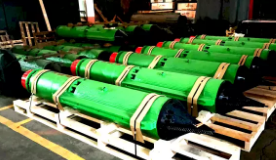
Top Feed vs Bottom Feed Vibroflot
Soil Suitability and Versatility
Both methods rely on Vibroflotation Equipment, yet their soil targets differ. Top feed excels in loose, clean sands where vibration alone compacts grains. Bottom feed adapts to soft clays, silts, and organic soils, where added stone reinforcement is essential. This versatility makes bottom feed more flexible for varied ground conditions.
● Top feed: clean sands, reclamation projects.
● Bottom feed: soft clays, high groundwater, organic soils.
● Overlap: mixed soils where hybrid methods may apply.
Depth of Treatment and Control Accuracy
Top feed systems can reach greater depths in sandy soils, sometimes up to 25 meters (needs verification). However, accuracy in column size and shape may vary since gravel drops from the surface. Bottom feed offers tighter control, as stone is delivered directly at the probe tip. This reduces contamination and ensures uniform column geometry.
Productivity, Speed, and Cost Efficiency
Top feed is generally faster, with higher production rates and lower material costs. It requires simpler setup and less supervision. Bottom feed, while slower, delivers higher-quality columns. The trade-off comes in budget planning: bottom feed has higher upfront costs but may prevent expensive remediation later.
Settlement Reduction and Long-Term Stability
Both techniques aim to minimize settlement, but their effectiveness differs. Top feed densifies sand layers, reducing overall settlement by tightening soil structure. Bottom feed improves soft soils by forming stone columns that distribute loads evenly. In long-term performance, bottom feed often provides greater assurance, especially where differential settlement poses risks to structural integrity.
Environmental and Safety Considerations
Top feed may use water jets, which increase turbidity and require careful site management. Gravel loss is also more likely, leading to material waste. Bottom feed systems are cleaner, as stone is fed directly with pressurized air. Noise and vibration are present in both methods but can be mitigated with site planning.
● Top feed concern: soil collapse, material washout.
● Bottom feed concern: higher energy demand and complex logistics.
Applications of Vibroflotation Equipment in Real Projects
Land Reclamation and Coastal Infrastructure
Vibroflotation Equipment is essential in large-scale land reclamation projects. By densifying sandy fills, top feed methods stabilize reclaimed ground for ports, harbors, and waterfront structures. Bottom feed systems are often used where silts or soft clays dominate below the reclaimed layer. Coastal projects also benefit from improved liquefaction resistance, reducing earthquake-related risks in reclaimed land.
● Use case: container terminals on reclaimed seabeds.
● Benefit: safer load distribution for heavy cranes.
● Challenge: high groundwater requires careful method selection.
Embankment and Airport Runways
For embankments and runways, settlement control is critical. Vibroflotation Equipment helps reduce differential settlement, which can damage long linear structures. Top feed compaction is often applied to sandy base layers, while bottom feed replacement reinforces soft soils below. Airports in regions with soft subsoils rely on this method to support runways, taxiways, and aprons.
● Use case: airport runway expansion over clayey ground.
● Benefit: improved stability for high-impact loads.
● Challenge: maintaining uniform compaction over large areas.
Industrial Foundations and Tank Pads
Heavy industrial facilities demand strong ground support. Tank pads, refinery units, and power plant foundations often sit on weak soils. Bottom feed stone columns created by Vibroflotation Equipment improve bearing capacity and drainage, lowering long-term settlement risks. Top feed can still play a role when sandy fills are present beneath the site.
● Use case: oil storage tanks on compressible soils.
● Benefit: reduced settlement under high static loads.
● Challenge: achieving uniform results under large-diameter pads.
Residential and Mid-Rise Building Sites
For residential projects, vibro methods provide a cost-effective alternative to deep piling. Vibroflotation Equipment creates stone columns that allow shallow foundations to be used instead of expensive piles. Top feed is typically used for sandy soils beneath housing developments. Bottom feed is preferred for mixed soils or clay-rich areas where housing density increases settlement risks.
● Use case: mid-rise apartment blocks on soft ground.
● Benefit: foundation stability without costly piling.
● Challenge: vibration management in urban areas.
Choosing Between Top Feed and Bottom Feed Vibroflot
Key Site Assessment Factors (Soil Type, Depth, Groundwater)
Selecting between top feed and bottom feed begins with site investigation. Engineers analyze soil samples, depth of weak layers, and groundwater levels. Vibroflotation Equipment adapts differently depending on these factors. Top feed is ideal for loose sands, while bottom feed handles soft clays or high groundwater sites more effectively. A mismatch can lead to poor compaction, uneven settlement, or material loss.
● Soil type: granular soils → top feed; cohesive soils → bottom feed.
● Depth: shallow layers → either; deeper layers → top feed preferred.
● Groundwater: low → top feed; high → bottom feed recommended.
Project Requirements (Load, Settlement Tolerance, Timeline)
Project design goals influence which system is best. For heavy tanks, embankments, or mid-rise buildings, bottom feed provides reliable settlement control. For port terminals or reclamation projects where speed matters, top feed offers faster installation. Timeline, safety factors, and acceptable settlement tolerances must be balanced when choosing the method.
Cost-Effectiveness and Equipment Availability
Budget plays a significant role. Top feed systems are generally cheaper, with simpler rigs and faster operation. Bottom feed requires advanced equipment and higher supervision costs. However, avoiding long-term foundation problems often offsets the initial expense. Equipment availability also matters—local contractors may have limited access to certain rigs, influencing the decision.
Expert Consultation and Quality Control in Decision Making
Even with clear soil data, expert input ensures success. Ground improvement specialists interpret soil tests and recommend the right configuration of Vibroflotation Equipment. Quality control during installation, such as monitoring probe depth and gravel volume, prevents errors that lead to costly remediation. Digital data loggers now make real-time monitoring easier, improving reliability.
Future Trends in Vibroflotation Equipment
Data Loggers and Digital Monitoring for Better Accuracy
Modern Vibroflotation Equipment increasingly integrates smart sensors. Data loggers track depth, vibration frequency, compaction rate, and stone volume in real time. This ensures consistent results across large sites. Digital monitoring also reduces reliance on manual checks and provides valuable records for quality assurance. By using these tools, engineers can detect anomalies early and adjust the process immediately.
Hybrid Top-Bottom Feed Systems
A growing trend is hybrid feed technology. Some rigs allow switching between top and bottom feed without changing probes. This flexibility saves time when soil conditions vary within a project. For example, sandy zones can be treated with top feed, while adjacent clay layers require bottom feed replacement.
● Benefit: one rig handles multiple soil profiles.
● Challenge: higher equipment cost and operator training.
● Future outlook: wider adoption in mixed-soil regions.
Eco-Friendly Aggregates and Carbon Reduction Goals
Sustainability pressures are reshaping ground improvement. Many contractors now use recycled aggregates instead of quarried stone. This reduces carbon footprint and cuts costs. Some Vibroflotation Equipment systems are optimized for handling recycled materials without performance loss. Green practices also include lighter rigs, efficient power units, and reduced spoil generation compared to piling methods.
Conclusion
Top Feed and Bottom Feed Vibroflot each have strengths and limits. Neither is always better, as soil type and project needs guide the choice. Vibroflotation Equipment, when applied correctly, ensures stability, efficiency, and sustainability. BVEM delivers advanced solutions with reliable performance and expert support. Their equipment, including innovative vibratory motors, helps projects achieve cost savings and long-term safety in diverse ground improvement applications.
FAQ
Q: What is the difference between Top Feed and Bottom Feed Vibroflot?
A: Top Feed compacts clean sands, while Bottom Feed with Vibroflotation Equipment installs stone columns in soft soils.
Q: Which soil types are best for Top Feed Vibroflot?
A: Top Feed Vibroflotation Equipment works best in loose, clean sands with low groundwater.
Q: Why choose Bottom Feed Vibroflot over Top Feed?
A: Bottom Feed Vibroflotation Equipment offers better control in clay, silt, or high-water conditions.
Q: Is Bottom Feed Vibroflot more expensive than Top Feed?
A: Yes, Bottom Feed Vibroflotation Equipment costs more but gives higher precision and stability.
Q: How do I decide which Vibroflot method to use?
A: Site factors like soil type, load, and budget guide the best Vibroflotation Equipment choice.


