Weak soils often sink, causing costly failures. Older methods cannot always stop settlement or ensure safety. Vibroflotation Equipment offers a stronger and smarter way to stabilize ground. In this article, you will learn why it is preferred over traditional soil stabilization methods, focusing on effectiveness, cost, and sustainability.
Understanding the Challenge of Weak Soil Layers
Common Risks of Weak Soil Foundations
Weak soils pose serious threats to construction. They often lead to settlement, tilting, or cracks in structures. In seismic zones, loose sand can liquefy and lose all strength. Low load-bearing capacity makes it unsafe to build large facilities. These risks force engineers to find ground improvement solutions before work begins.
Why Traditional Stabilization Often Falls Short
Conventional stabilization has its limits. Simple surface compaction cannot reach deeper weak zones. Lime or cement treatments may work in clay but fail in granular soils. In fast-growing cities, these methods cannot keep pace with large-scale demands. That is why more reliable options like Vibroflotation Equipment gain attention. It provides deeper densification and stronger results than older tools.
The Demand for Advanced Soil Solutions
Urbanization keeps pushing construction into weaker terrains. Coastal projects reclaim land that is sandy and unstable. Heavy infrastructure like ports, highways, and airports need soil support that lasts decades. These conditions highlight the need for advanced methods. Engineers prefer vibro compaction because it improves deep layers quickly. The result is ground that resists settlement and supports heavy loads.
How Vibroflotation Equipment Works to Prevent Settlement
The Vibroflot Probe and Its Key Components
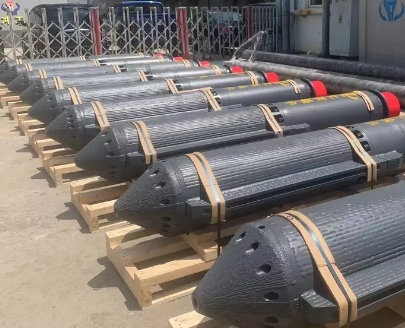
At the heart of Vibroflotation Equipment is the vibroflot probe. It is a cylindrical tool fitted with an internal motor that produces strong vibrations. Jets of air or water help the probe penetrate dense soils. A support frame controls its lowering and lifting. These components work together to reach and compact deep layers.
Soil Particle Rearrangement Under Vibration
When the probe vibrates, soil grains lose friction and shift. This rearrangement reduces voids and makes the soil denser. As water and air escape, grains settle into stronger positions. Once vibration stops, the soil holds its new structure. This densification increases shear strength and reduces risk of collapse.
Step-by-Step Compaction Process
The process follows a clear sequence:
1. Insertion – The vibroflot is lowered into the soil using jets.
2. Vibration – High-frequency energy shakes particles into a dense state.
3. Withdrawal – The probe rises slowly, compacting layers on the way up.
4. Refilling – Extra sand or gravel may be added to fill gaps.
5. Final Compaction – The probe ensures uniform density across the site.
This method covers wide areas efficiently, making it ideal for large projects.
Effective Depth and Soil Type Range
Unlike rollers or surface compaction, Vibroflotation Equipment reaches deep. It can densify soils over 30 meters below ground. It is most effective in granular soils such as sands or silts. In these conditions, particles respond well to vibration. Clay soils, however, resist the process and need other solutions.
Load-Bearing Improvements Achieved with Vibroflotation Equipment
Compacted soil carries much heavier loads. Foundations supported by vibroflotation can sustain buildings, runways, and ports. Engineers note fewer cracks, tilts, and uneven settlements. This makes it a safer choice for heavy infrastructure.
Factor | Before Vibroflotation | After Vibroflotation |
Void ratio | High | Low |
Load-bearing capacity | Limited | Strong |
Settlement risk | High | Reduced |
Environmental Advantages Compared to Excavation or Chemical Methods
Traditional excavation generates waste and disrupts sites. Chemical stabilizers may harm water and soil quality. Vibroflotation, however, relies on physical vibration. It leaves behind little waste and fewer environmental risks. Using recycled aggregates can make the method even greener.
Why This Method Minimizes Settlement Risks Long-Term
By compacting soil at depth, vibroflotation prevents uneven sinking. It strengthens foundations against heavy loads and seismic shocks. Unlike shallow compaction, its effects last for decades. That is why engineers trust it for ports, airports, and urban projects.
Tip: For long-term projects, request monitoring data from Vibroflotation Equipment providers to confirm uniform soil density across treated areas.
Why Is Vibroflotation Preferred Over Traditional Soil Stabilization Methods?
Direct Comparison with Chemical Stabilizers
Chemical stabilizers like lime and cement have been used for decades. They change soil chemistry but do not always reach deep layers. In granular soils, the reaction is often weak. Vibroflotation Equipment provides a physical solution instead. It densifies soil particles directly without relying on chemical reactions. This makes it more reliable for sandy or reclaimed land.
Performance Differences vs. Mechanical Compaction
Rollers and dynamic compaction treat only surface or near-surface soils. They struggle with depths beyond a few meters. Vibroflotation reaches down to 30 meters or more. Its probe vibrates soil from within, creating uniform density across layers. This performance gap explains why engineers prefer it for airports, ports, and bridges.
Cost, Speed, and Scalability Advantages
Deep piling is strong but expensive. Excavation takes time and produces waste. Vibroflotation is faster and more cost-effective. One rig can cover large treatment zones in a shorter period. It reduces labor needs and material costs. The savings are especially clear in mega projects that demand both speed and durability.
Versatility Across Project Types
Vibroflotation adapts to many applications. In coastal areas, it supports land reclamation against liquefaction risks. In urban projects, it prepares weak ground for high-rises and subways. Heavy transport infrastructure, such as runways and embankments, benefits from its long-term stability. Engineers choose it because one method can serve multiple site conditions effectively.
Decision Factors Driving Preference for Vibroflotation Equipment
Engineering Criteria
Engineers select soil stabilization methods based on performance. Vibroflotation Equipment delivers higher bearing capacity by reducing voids in granular soils. It also minimizes liquefaction risk in earthquake-prone regions. Unlike shallow compaction, it creates uniform density across deep layers. This consistency makes it reliable for large foundations and transport hubs.
Economic Considerations
Budget is always a deciding factor. Deep piling can be effective but is costly and time-consuming. Chemical stabilizers may be cheaper but lack durability in sandy conditions. Vibroflotation strikes a balance between performance and cost. It requires less material and labor while covering wider treatment zones quickly. Over time, lower maintenance needs increase overall savings.
Environmental and Sustainability Benefits
Modern projects demand eco-friendly solutions. Vibroflotation uses vibration rather than chemicals, producing little waste. Unlike excavation, it avoids excess soil removal and disposal. Some projects also refill voids with recycled aggregates, improving sustainability. These features support green building goals and align with global carbon reduction targets.
Risk Management in Seismic or Coastal Zones
Seismic safety and coastal stability drive many design decisions. In earthquakes, compacted soils resist liquefaction better. In coastal reclamation, vibroflotation strengthens reclaimed land against heavy construction loads. Engineers rely on it to reduce long-term risks for critical projects such as ports, airports, and seawalls.
Applications Where Vibroflotation Outperforms Alternatives
Coastal and Marine Reclamation Projects
Coastal engineering often faces sandy and unstable soils. Ports, seawalls, and reclaimed land need strong foundations. Vibroflotation Equipment has proven its value in such settings. A famous case is Dubai’s Palm Jumeirah, where vibro compaction helped stabilize dredged sand. By densifying soil, it prevents liquefaction from waves or seismic shocks. This makes it the go-to method for waterfront mega projects.
Large-Scale Infrastructure
Railways, highways, and airports demand soil stability across wide areas. Surface compaction cannot meet these needs. Vibroflotation penetrates deep and achieves uniform density. Runways compacted this way can withstand the repeated loads of heavy aircraft. Railway embankments remain firm against soil shifts, reducing maintenance costs. Highways built on improved soil last longer and resist settlement better.
Industrial and Commercial Foundations
Factories, warehouses, and high-rise buildings all need reliable ground support. Uneven settlement in these projects leads to cracks and structural damage. Vibroflotation reduces these risks by delivering dense, stable soil. It also shortens construction timelines since deep piling is often unnecessary. For developers, this means safer projects at lower cost.
Slope and Embankment Stability Improvements
Unstable slopes can collapse under heavy rain or traffic. Embankments supporting roads and bridges face similar risks. Vibroflotation strengthens the ground by reducing voids and improving shear strength. It makes slopes safer and prevents landslides in hilly areas. For embankments, it ensures long-term performance under dynamic loads.
Advances in Vibroflotation Technology Enhancing Preference
Automated Monitoring and Energy Optimization
Modern Vibroflotation Equipment now includes automated systems. Sensors track soil response in real time. Operators adjust vibration frequency and energy output instantly. This ensures uniform densification across large areas. Automated control also reduces wasted energy, cutting fuel and power costs. For large projects, efficiency gains translate into significant savings.
Integration with Stone Columns and Hybrid Methods
Vibroflotation does not work alone in every case. Engineers often combine it with stone columns to reinforce weak zones. The columns act as drains and vertical supports, improving stability further. Hybrid methods extend the range of soils suitable for treatment. For example, sandy soils gain density, while stone columns help clayey layers handle load. This integration improves both bearing capacity and long-term drainage.
Use of Recycled Aggregates for Sustainable Densification
Sustainability has become a key driver in geotechnical work. Vibroflotation allows the use of recycled aggregates during refilling. Crushed concrete or reclaimed gravel fills voids and reduces material waste. This approach cuts costs and supports green building targets. It also reduces reliance on virgin materials, lowering project carbon footprints.
Limitations and When to Consider Alternatives
Soil Conditions Not Suitable for Vibroflotation
Despite its strengths, Vibroflotation Equipment is not a universal solution. It works best in non-cohesive soils such as sands, silty sands, and gravels. These soils allow grains to rearrange under vibration, creating denser structures. However, when the ground contains a high percentage of clay or silt, particles stick together due to cohesion. In such cases, vibration energy cannot break interparticle bonds effectively. This makes compaction inefficient and leaves the soil vulnerable to settlement. For projects in clay-rich areas, engineers often turn to alternatives like deep soil mixing, chemical stabilization with lime or cement, or geosynthetic reinforcement. Each of these methods offers better performance in cohesive soils where vibration alone cannot achieve the desired density.
Equipment and Skilled Labor Requirements
Another limitation lies in the scale and complexity of the equipment. Vibroflotation requires heavy rigs, cranes, and support systems to operate the vibroflot probe. Transporting this machinery to remote or space-constrained sites can be challenging. Additionally, the success of the process depends heavily on operator skill. Workers must monitor soil conditions, adjust vibration frequency, and control probe withdrawal speed. If handled incorrectly, compaction may be uneven, leaving zones of weakness beneath the structure. This risk underscores the importance of training and experienced supervision. Companies investing in Vibroflotation must budget for specialized crews or contract with firms that have proven expertise. Without this, even high-quality equipment may fail to deliver optimal results.
Complementary Role with Other Stabilization Techniques
Vibroflotation is powerful, but it rarely acts as a stand-alone answer for every soil profile. Many projects involve mixed ground conditions, such as alternating layers of sand and clay. In these scenarios, engineers often combine vibro compaction with other stabilization approaches. A common pairing is vibro replacement, where stone columns are created to reinforce soils and improve drainage. This hybrid solution adds vertical strength and allows excess pore water to escape more easily, reducing long-term settlement risk. Similarly, vibroflotation can be integrated with deep soil mixing or geotextile layers to handle cohesive soils or slopes. By working alongside complementary methods, vibroflotation expands its usefulness, covering a broader range of soil challenges than vibration alone.
Practical Considerations for Project Planning
Project owners must weigh the pros and cons carefully. Vibroflotation offers speed, depth, and cost efficiency in the right soils, but its limitations can affect outcomes if not considered early. Site investigations should always include soil classification tests to measure grain size, density, and water content. These tests guide engineers in determining whether vibroflotation is the best option or if hybrid stabilization is required. Budgeting must also include allowances for mobilizing heavy rigs and hiring specialized crews. Where these constraints are too great, alternatives such as dynamic compaction or piling may provide a better balance of cost and practicality.
Conclusion
Vibroflotation is preferred for its deeper reach, stronger compaction, and better long-term stability. It offers cost savings and reduces settlement risks compared to traditional soil stabilization. Vibroflotation Equipment helps engineers build safer and more sustainable foundations. With advanced solutions, BVEM delivers reliable equipment and services that add value to modern geotechnical projects.
FAQ
Q: Why is vibroflotation preferred over traditional soil stabilization methods?
A: It reaches deeper layers, improves soil strength, and lowers settlement risks more effectively than older methods.
Q: What role does Vibroflotation Equipment play in soil improvement?
A: Vibroflotation Equipment uses vibration to rearrange soil particles, creating denser and more stable foundations.
Q: Is Vibroflotation Equipment cost-effective compared to piling?
A: Yes, Vibroflotation Equipment often reduces project costs by covering wide areas faster with less material waste.
Q: Can Vibroflotation Equipment work in all soil types?
A: Vibroflotation Equipment is best for granular soils; clay-heavy soils may need hybrid stabilization methods.


