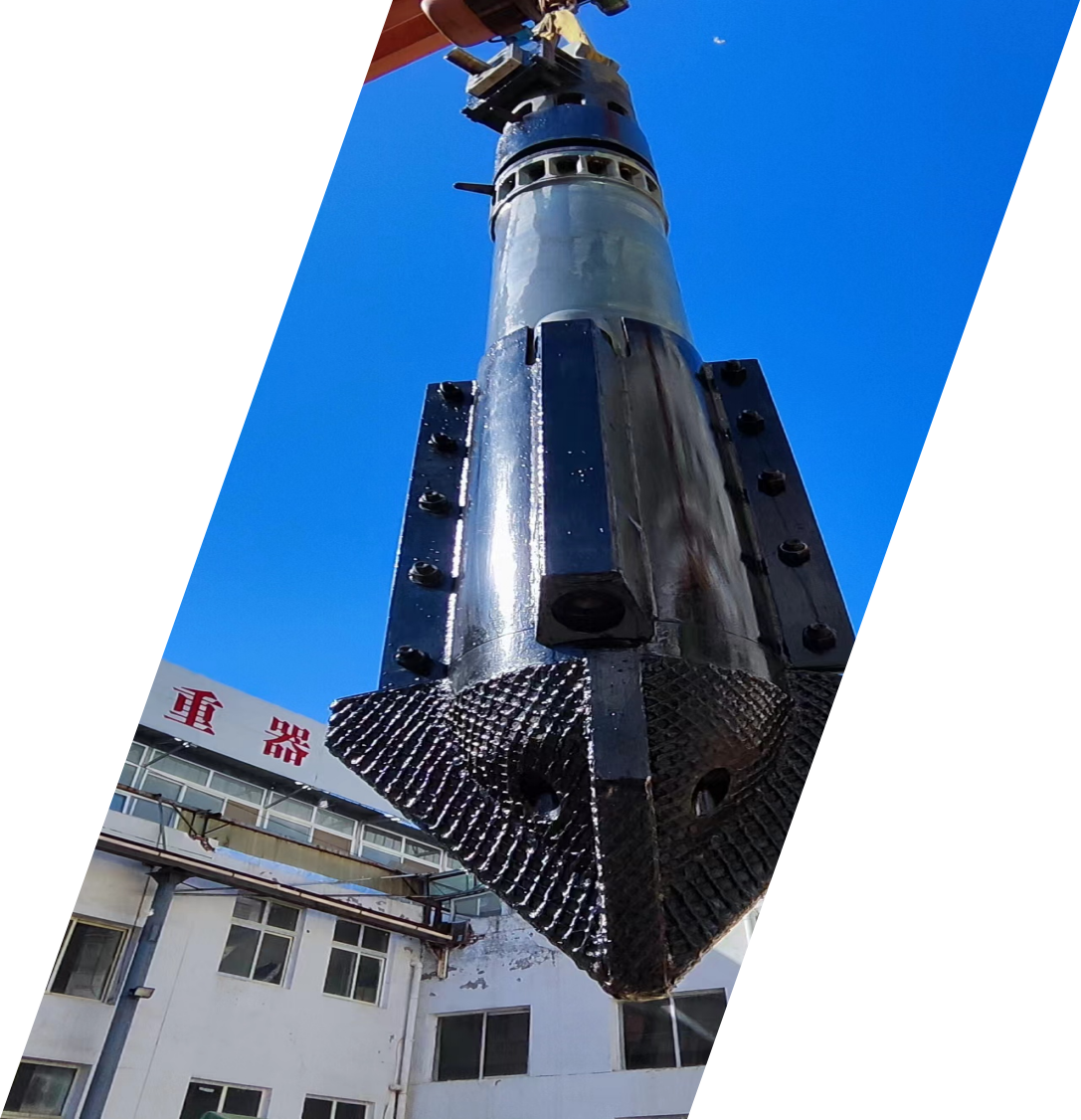
In modern construction, foundation stability is essential for safety, efficiency, and long-term performance. Vibroflotation, or vibro-compaction, is a widely used method to improve soil density and reduce settlement risks. Two major types of vibroflotation equipment are the Top Feed Vibroflot and the Hydraulic Vibroflot. Both play key roles in foundation engineering, but their design, operation, and applications differ. Understanding these differences allows engineers and construction managers to select the best equipment for their project needs, ensuring optimal results.
What is Top Feed Vibroflot?
The Top Feed Vibroflot is a modern vibroflotation machine that introduces aggregate material directly from the top, which is then compacted by the vibrating probe. This mechanism reduces the need for additional feeding equipment, streamlines operations, and improves overall efficiency.
Key Features of Top Feed Vibroflot:
Top feeding mechanism: Aggregates are supplied directly from the top, simplifying the feeding process and reducing construction complexity.
High vibration efficiency: Ensures uniform soil densification across layers, improving foundation stability.
Advanced monitoring systems: Provides real-time control and data on pile quality, ensuring construction consistency.
Versatility: Works effectively on loose sand, silt, and granular soils, suitable for various construction environments.
Advantages of Top Feed Vibroflot:
Reduces construction complexity and project time. The top feeding mechanism eliminates the need for extra aggregate handling equipment, allowing projects to progress more smoothly and efficiently.
Ensures consistent soil compaction across multiple layers. Advanced vibration control helps maintain uniform soil density, minimizing the risk of uneven settlement in foundations.
User-friendly operation suitable for medium-scale projects. Operators can manage the machine with minimal training, making it ideal for projects with limited technical resources.
Flexible applications in industrial, airport, and port foundations. Its adaptable design allows it to perform efficiently across a variety of construction environments and soil types.
Industrial plant foundations: Provides efficient compaction for medium-scale projects.
Port and dock foundations: Reduces project time while maintaining soil stability.
Medium-scale infrastructure projects: Streamlined operation and consistent performance make it a reliable choice.
What is Hydraulic Vibroflot?
The Hydraulic Vibroflot is a high-power machine designed for deep soil compaction. It uses a hydraulic drive system to generate strong vibrations, making it suitable for dense or semi-cohesive soils and large-scale construction projects.
Key Features of Hydraulic Vibroflot:
High power hydraulic drive system: Delivers strong vibrations to penetrate dense soil layers effectively.
Durable construction: Built to withstand demanding construction environments and reduce downtime.
Adjustable vibration settings: Allows operators to tailor soil compaction based on specific project requirements.
Wide soil compatibility: Effective in dense, mixed, and semi-cohesive soils, making it suitable for large infrastructure projects.
Advantages of Hydraulic Vibroflot:
Provides deep soil compaction for high-rise and heavy structures. Its hydraulic power allows it to reach deeper layers, ensuring long-term stability.
Robust design reduces maintenance needs. The durable construction minimizes equipment downtime and maintenance costs.
Versatile for large-scale projects. Can handle complex soil profiles efficiently, making it ideal for industrial, port, and high-rise building foundations.
Adjustable operation for various soils. Operators can modify vibration frequency and amplitude for optimal compaction results.
Common Applications:
High-rise buildings: Ensures stable foundations for heavy loads.
Offshore reclamation projects: Effective in deep and underwater soil compaction.
Large industrial plants: Suitable for dense soil layers and demanding construction environments.
Port and dock foundations: Provides consistent deep compaction for heavy infrastructure.
Comparison of Top Feed Vibroflot and Hydraulic Vibroflot
Choosing the right vibroflot depends on soil conditions, project scale, and operational requirements. The table below summarizes the key differences:
Feature
Top Feed Vibroflot
Hydraulic Vibroflot
Soil Type
Loose sand, silt, granular soils
Dense, mixed, semi-cohesive soils
Compaction Depth
Medium
Deep
Efficiency
High for medium-scale projects
High for large-scale projects
Energy Consumption
Moderate
Higher due to hydraulic drive
Maintenance
Moderate
Low due to durable design
Application Scale
Medium
Large
Ease of Operation
User-friendly
Requires skilled operators
This comparison highlights that the Top Feed Vibroflot is more suitable for medium-scale projects with loose soils, while the Hydraulic Vibroflot excels in large-scale or challenging soil conditions.
Applications of Both Vibroflots
Both machines are widely used across construction sectors, and each has its optimal applications:
Airports: Top Feed Vibroflot compacts upper soil layers quickly and efficiently.
Ports: Hydraulic Vibroflot ensures deep soil compaction for dense layers.
Industrial parks: Top Feed Vibroflot provides faster operation with consistent results.
High-rise buildings: Hydraulic Vibroflot handles deep compaction for stable foundations.
Offshore reclamation projects: Hydraulic Vibroflot is ideal for deep underwater soil stabilization.
In some projects, both machines are used together. Top Feed Vibroflots can handle upper layers efficiently, while Hydraulic Vibroflots compact deeper, denser layers. This combination ensures efficiency and high-quality compaction for complex sites.
Trends and Innovations in Vibroflotation Technology
The vibroflotation industry continues to advance with innovations:
Smart monitoring systems: Sensors provide real-time data on soil density, pile formation, and vibration efficiency.
Energy-efficient designs: Machines are optimized to reduce power consumption without compromising performance.
Hybrid models: Emerging designs combine top feed and hydraulic features for greater flexibility.
Global standardization: Compliance with international construction standards ensures consistent performance worldwide.
These innovations allow construction professionals to enhance efficiency, reduce costs, and improve overall foundation quality.
How to Choose the Right Vibroflot
Selecting between a Top Feed Vibroflot and a Hydraulic Vibroflot requires evaluating key factors:
Soil Conditions: Loose soils favor Top Feed Vibroflot; dense or semi-cohesive soils favor Hydraulic Vibroflot.
Project Scale: Medium-scale projects benefit from Top Feed Vibroflot; large-scale infrastructure projects require Hydraulic Vibroflot.
Operational Budget: Consider energy usage, maintenance requirements, and equipment lifespan.
Construction Timeline: Projects with tight deadlines may benefit from the faster Top Feed Vibroflot.
Technical Expertise: Hydraulic Vibroflot requires skilled operators, while Top Feed Vibroflot is more user-friendly.
A careful assessment ensures the chosen machine meets technical, operational, and financial requirements.
Conclusion
Both Top Feed Vibroflot and Hydraulic Vibroflot provide essential solutions for modern foundation engineering. The Top Feed Vibroflot offers efficiency, flexibility, and user-friendly operation for medium-scale projects. The Hydraulic Vibroflot delivers high power, deep compaction, and robust performance for large-scale or complex construction sites.
Understanding the strengths and limitations of each machine allows construction teams to select the optimal equipment, ensuring safe, stable, and high-quality foundations. Choosing the right vibroflot is more than selecting machinery—it’s about achieving reliable, long-term results in foundation construction.