Have you ever wondered why buildings sink on Weak Soil Layers? Such ground struggles to support heavy loads. This raises a key question: how can vibro compaction solve it? With the help of Vibroflotation Equipment, engineers strengthen soil and cut settlement risks. In this article, you will discover how this process ensures safe, stable foundations.
Understanding Vibro Compaction in Ground Improvement
The principle of soil densification through vibration
Vibro compaction is a method used to make weak soils stronger. It works by sending vibrations deep into the ground through specialized probes. The vibration causes loose soil particles to rearrange, reducing the spaces between them. As the soil becomes denser, its ability to carry heavy loads improves. The settlement that often troubles weak soils is minimized because the ground now resists compression more effectively. Engineers often use Vibroflotation Equipment for this task, as it is designed to deliver controlled vibration energy at different depths.
Suitable soil types for vibro compaction
Not every soil responds well to this method. Vibro compaction works best on granular, non-cohesive soils such as sands and gravels. These soils are free-draining, meaning water moves easily through their structure. When vibrations are applied, the grains shift into a tighter arrangement without trapping water. In contrast, soils with high clay or silt content absorb vibration and do not densify effectively. A typical example is reclaimed coastal land, where vibro compaction is often used to prepare sandy deposits for ports, roads, or large storage tanks.
Key differences between vibro compaction and vibro replacement
Although vibro compaction and vibro replacement share similar equipment, their application differs. Vibro compaction densifies the soil that already exists on-site. It relies on vibration and backfilling, sometimes with sand, to stabilize the ground. Vibro replacement, however, goes one step further by creating stone columns within the soil. These stone columns reinforce weaker soils, especially those containing fines that do not respond well to vibration alone. While vibro compaction is most effective in clean granular deposits, vibro replacement is chosen for soils with mixed content or higher levels of silt and clay.
The Role of Vibroflotation Equipment in Preventing Settlement
Core components of vibroflotation equipment
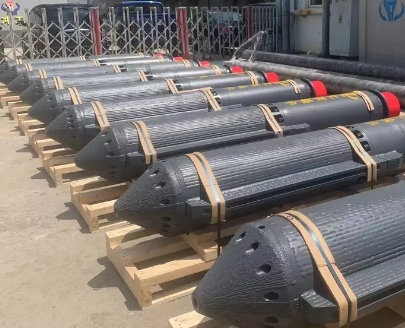
At the heart of vibro compaction projects is the Vibroflotation Equipment system. Its main unit, the vibroflot, is a cylindrical probe fitted with an internal motor and eccentric weights. Cranes or rigs suspend the vibroflot vertically, lowering it to the treatment depth. Water or air jets attached to the probe help loosen soil and allow penetration. Together, these components create the vibration and flushing needed to rearrange soil particles.
How equipment penetrates and compacts soil at depth
The vibroflot penetrates soil using both its own weight and vibration energy. Once inserted, it transmits horizontal vibrations that force soil grains into denser packing. Jets of water or air reduce friction, letting the probe reach deeper layers. As the vibroflot moves upward, soil closes tightly around it, locking particles in place. This creates a more stable soil mass with higher bearing capacity.
Procedure: penetration, vibration, backfilling, repetition
The process follows a cycle:
1. Lower the vibroflot into weak soil.
2. Activate vibration and flushing jets.
3. Add sand or gravel at the surface to fill voids created by densification.
4. Raise and lower the probe repeatedly until the layer reaches target density.
This sequence is repeated across the site in a grid pattern. Each point treated adds to the overall ground improvement, reducing settlement risks.Depth capacity and adaptability
Vibro compaction can be applied to depths of up to 30 meters (needs verification). It is effective in both wet and dry soil conditions, making it suitable for coastal, reclaimed, or inland projects. Adaptability is a key advantage: contractors can adjust jetting pressure, probe power, and spacing to match soil variability. This flexibility allows engineers to address unique site challenges without changing the entire system.
Field testing and monitoring settlement reduction
Verification is essential to ensure settlement control. Engineers perform field tests like Standard Penetration Tests (SPT) or Cone Penetration Tests (CPT) before and after treatment. These tests confirm density improvements and show the reduction in potential settlement. Monitoring equipment can also measure vibrations and soil response during operations. This data helps confirm that the compaction process meets project requirements.
Equipment selection factors
Choosing the right Vibroflotation Equipment depends on project scale, soil conditions, and required depth. High-power vibroflots are suited for dense sands, while lighter units may be enough for loose deposits. Cranes must be capable of handling probe weight and movement range. Engineers also consider jetting needs: water jets for saturated soils and air jets for dry conditions. A tailored selection ensures efficient performance and avoids unnecessary energy costs.
Mechanism – How Vibro Compaction Reduces Settlement
Particle rearrangement and void ratio reduction
The science behind vibro compaction starts with particle movement. When Vibroflotation Equipment delivers vibration, loose sand and gravel grains shift. The shaking forces particles into tighter contact, reducing the void ratio. As gaps shrink, water escapes, and the soil mass becomes denser. This rearrangement transforms weak soil layers into a stable foundation material.
Achieving permanent soil density and increased bearing capacity
Once compacted, granular soils retain their denser structure. Unlike surface rolling, the changes are deep and long-lasting. Permanent soil density means improved bearing capacity for foundations, embankments, and storage tanks. Denser soils can support higher loads without collapsing. Engineers often measure this improvement through Standard Penetration Test values or Cone Penetration resistance. The results confirm that densification achieved by vibro compaction remains consistent over time.
Controlling immediate vs long-term settlement
Settlement in weak soils happens in two phases: immediate and long-term. Immediate settlement occurs under the weight of construction loads, while long-term settlement can continue for years. Vibro compaction addresses both. By reducing voids and increasing density at depth, it minimizes immediate compression. Over time, the improved soil resists creep and secondary settlement. This dual benefit ensures that structures stay level and serviceable over decades.
Settlement Type | Cause | Effect on Structures | Vibro Compaction Impact |
Immediate | Load-induced compression | Uneven foundation sinking | Greatly reduced |
Long-term | Soil creep, consolidation | Progressive tilting or cracks | Strongly minimized |
Note: Field monitoring after compaction helps confirm that immediate and long-term settlement risks are under control.
Applications of Vibro Compaction in Weak Soil Layers
Land reclamation and coastal projects
Vibro compaction is widely used in coastal engineering. Many reclamation sites consist of loose sand fills that settle unevenly. By applying vibration at depth, the soil becomes denser and less compressible. Vibroflotation Equipment is especially effective for these projects because it can operate below the water table. Ports, airports, and artificial islands all benefit from stable reclaimed ground. In addition, compaction reduces the risk of liquefaction in marine sands during storms or earthquakes.
Infrastructure foundations (ports, tanks, embankments, highways)
Large infrastructure projects require solid foundations. Storage tanks demand uniform ground to avoid tilting, while embankments and highways need stable support to prevent cracking. Vibro compaction improves the bearing capacity of sandy layers, making them suitable for heavy loads. It also helps distribute stress evenly under massive structures like port cranes and container yards. Contractors prefer Vibroflotation Equipment for these works because it can treat wide areas in a grid pattern, ensuring consistency.
Mitigating liquefaction in seismic zones
One of the most critical applications is reducing liquefaction risk. In seismic zones, loose saturated sands may lose strength and behave like liquid when shaken. This leads to sudden settlement and foundation failure. Vibro compaction changes soil structure before construction begins. Denser soils resist liquefaction, safeguarding buildings, bridges, and lifelines during earthquakes. Engineers often combine compaction with monitoring instruments to confirm that treated soils meet seismic design standards.
Performance Benefits Compared to Other Soil Improvement Methods
Vibro compaction vs dynamic compaction
Dynamic compaction relies on dropping heavy weights on the ground surface. It is powerful but generates strong vibrations that may affect nearby structures. Vibro compaction, by contrast, uses Vibroflotation Equipment to work directly within the soil mass. This reduces surface disruption and makes it safer for urban or coastal projects. While dynamic compaction is faster for shallow layers, vibro compaction provides more uniform results at greater depths.
Vibro compaction vs compaction grouting
Compaction grouting injects thick grout into the soil to displace and densify it. This method works well in silty or clay-rich soils but can be costly and messy. Vibro compaction avoids adding foreign material. Instead, it rearranges existing particles and may use added sand as backfill. With Vibroflotation Equipment, contractors achieve deep treatment without large grout volumes or long curing times. The process is also more predictable in granular soils, where vibration energy spreads effectively.
Why vibro compaction is more cost-effective in granular soils
Granular soils such as sands and gravels are ideal for vibro compaction. They respond quickly to vibration, reducing the time and energy needed per treatment point. In these conditions, costs are lower compared to grouting or piling solutions. Fewer materials are imported, and heavy surface equipment is minimized. This makes vibro compaction highly competitive for large-scale projects like ports and reclamation works. When applied correctly, it combines speed, depth, and economic efficiency.
Method | Best Soil Type | Pros | Cons |
Vibro Compaction | Granular, free-draining | Deep treatment, cost-efficient, clean | Limited use in cohesive soils |
Dynamic Compaction | Loose fills, shallow soils | Fast coverage, simple equipment | Strong surface vibration, shallow depth |
Compaction Grouting | Silts, clays, mixed soils | Works in varied soils, targeted zones | High material cost, slower process |
Design and Quality Control in Vibro Compaction Projects
Pre-construction soil testing and grain size analysis
Every vibro compaction project starts with detailed soil testing. Engineers study grain size, density, and water table depth to decide if vibration will be effective. Clean sands and gravels react well, while soils with too many fines may not compact properly. Using Vibroflotation Equipment without testing risks poor results and wasted investment. Grain size distribution also helps determine backfill choice when added material is required.
Grid spacing and cone formation for uniform densification
Compaction points are placed in a grid pattern across the treatment area. Each probe forms a cone-shaped zone of densified soil. Overlapping these cones ensures full coverage and consistent improvement. The spacing depends on soil type, energy level, and design load. Too wide a grid leaves untreated gaps, while too tight a grid increases cost. Engineers balance spacing to achieve density targets while maintaining efficiency.
In-situ testing (SPT, CPT) to verify improvement
After compaction, field tests confirm performance. The Standard Penetration Test (SPT) and Cone Penetration Test (CPT) are common tools. They measure resistance and strength within treated layers. Results show if the soil reached design density and if settlement risks are reduced. Monitoring during and after compaction gives assurance that treated soils will perform as expected under long-term loads.
Challenges and Limitations in Weak Soil Treatment
Ineffectiveness in cohesive soils with high fines
Vibro compaction works best in clean, granular soils. When soils contain high amounts of silt or clay, vibration energy cannot rearrange particles effectively. The fine grains absorb and dampen vibrations, leaving the soil structure unchanged. Even when Vibroflotation Equipment is used at full power, cohesive soils may require alternative methods such as stone columns or chemical stabilization. Recognizing these soil limitations early prevents failed treatments.
Site accessibility and equipment logistics
Vibro compaction requires heavy machinery, including cranes, power units, and water or air systems. On remote or restricted-access sites, moving Vibroflotation Equipment can be difficult. Soft ground may also struggle to support crane loads, adding complexity. Logistics planning must consider site layout, nearby structures, and available working platforms. Without proper preparation, mobilization delays can increase costs and extend project timelines.
Environmental considerations (noise, vibrations, water usage)
Compaction generates strong vibrations and noticeable noise, which may disrupt nearby residents or sensitive facilities. Projects in urban or coastal environments must follow local noise and vibration limits. Water jetting, used for penetration in saturated soils, increases water demand and requires disposal planning. Contractors should balance project needs against environmental impacts. Adjusting jetting methods, scheduling night shifts, or using noise barriers can help reduce community concerns.
Conclusion
Vibro compaction prevents settlement in weak soil layers by rearranging particles and reducing voids. It strengthens granular soils and increases bearing capacity. Vibroflotation Equipment plays a vital role in ensuring reliable ground improvement across diverse projects. When applied correctly, vibro compaction delivers lasting stability and safer foundations. BVEM provides advanced solutions with durable equipment and expert services, helping clients achieve efficient soil treatment and long-term construction success.
FAQ
Q: How does vibro compaction prevent settlement in weak soil layers?
A: It densifies granular soils by rearranging particles, reducing voids, and improving stability.
Q: What is Vibroflotation Equipment used for in soil treatment?
A: Vibroflotation Equipment delivers vibration energy at depth to compact weak soils effectively.
Q: Why choose Vibroflotation Equipment over dynamic compaction?
A: It treats deeper layers with less surface disruption, making it safer near existing structures.
Q: Is vibro compaction cost-effective in sandy soils?
A: Yes, Vibroflotation Equipment provides faster treatment in sands, lowering material and labor costs.


