Have you ever wondered how engineers compact soil more than 100 feet deep? Vibroflot technology reshapes loose sand into stronger ground, but reaching deeper layers is a challenge. Extension Tubes solve this by extending the Vibroflot's reach while keeping compaction efficient. In this article, you will learn how these tools support deep vibro compaction projects.
Understanding Vibroflot Technology in Deep Soil Improvement
Core components of a Vibroflot system
A Vibroflot is the heart of modern vibro compaction projects. It is a cylindrical steel probe powered by an internal electric or hydraulic motor. At its core, an eccentric weight generates horizontal vibrations that shake surrounding soils into denser states. Many Vibroflots are also equipped with water or air jets at the tip, which loosen soil and allow easier penetration. These elements work together to improve soil stability and prepare foundations for large structures.
How Vibro Compaction works in granular soils
When the Vibroflot is lowered into granular soils such as sand or gravel, vibrations cause particles to rearrange into tighter configurations. This process increases density and reduces voids that could otherwise lead to settlement. Contractors often add sand or gravel backfill during operation. The backfill flows down alongside the Vibroflot and fills gaps created during densification. Over time, this forms a uniform, dense layer with improved load-bearing capacity. In free-draining soils, the method achieves high efficiency and can reduce liquefaction risks during earthquakes.
Depth limitations without extension tubes
Although effective, Vibroflot systems have natural limits. Standard equipment can typically compact soils to depths of 40–60 feet before performance starts to drop. At greater depths, vibration energy weakens, making densification less uniform. This creates challenges for projects requiring deeper ground improvement, such as port expansions, coastal reclamation, or heavy industrial facilities.
This is where Extension Tubes become critical. They are bolted to the top of the Vibroflot, allowing the probe to reach depths up to 120 feet or more without losing efficiency. By maintaining a rigid connection and steady energy transfer, Extension Tubes ensure that compaction quality remains consistent from the surface down to deep layers.
Component | Function in Vibroflot System | Impact on Soil Improvement |
Vibrator & Eccentric Weight | Generates horizontal vibration | Rearranges soil particles |
Water/Air Jets | Helps penetration and loosens soil | Easier probe entry |
Extension Tubes | Extends probe depth to >120 ft | Consistent deep compaction |
Backfill (Sand/Gravel) | Fills voids created during densification | Strengthens soil mass |
Note: Extension Tubes are most valuable when compaction must extend below standard depths, especially in coastal or seismic zones.
Role of Extension Tubes in Vibroflot Operations
What Extension Tubes Are and How They Connect to Vibroflots
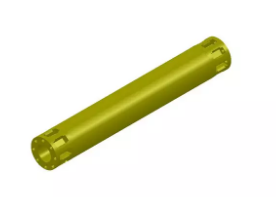
Extension Tubes are modular steel sections designed to increase the working length of a Vibroflot. They bolt directly onto the vibrator’s upper housing and provide a seamless continuation of the shaft. This design ensures that the Vibroflot can be lowered deeper into the soil without compromising stability. By acting as rigid extensions, they allow the system to maintain proper alignment, vibration transfer, and operator control throughout the process.
Increasing Penetration Depth for Deep Soil Projects
One of the primary functions of Extension Tubes is to extend reach. Without them, most Vibroflots are limited to moderate depths. When attached, the system can penetrate soils down to 100–120 feet, depending on project requirements. This extended reach is crucial for projects such as offshore reclamation, container terminals, and tall building foundations where soil layers must be densified far below the surface.
Maintaining Compaction Efficiency at 50–120 ft Depths
Deeper compaction often suffers from energy loss. Extension Tubes counter this problem by preserving the vibrator’s transmission capacity. The dense vibrations generated at the probe tip remain effective even at depth. This ensures consistent soil densification across layers, rather than weak compaction at the bottom. For contractors, this consistency translates into predictable settlement control and reliable load-bearing performance.
Ensuring Energy Transfer Without Equipment Overload
A key engineering challenge is ensuring that vibration energy is transmitted efficiently without overstressing the motor. Extension Tubes are designed to balance structural rigidity and weight, so the Vibroflot’s motor is not overloaded. When properly installed, they deliver high-frequency vibrations through the entire length of the shaft, reducing mechanical strain while maintaining soil improvement efficiency.
Adaptability Across Varying Soil Conditions
Extension Tubes are not limited to one soil type. They provide flexibility in different ground conditions, from loose coastal sands to deeper silty deposits. By enabling deeper probe insertion, they make it possible to target weak layers beneath stronger surface soils. This adaptability allows engineers to design treatment plans that address site-specific geotechnical challenges.
Enhancing Precision in Large-Scale Ground Improvement Projects
Large projects require repeatable, accurate results. Extension Tubes improve precision by allowing Vibroflots to reach design depths without deviation. They ensure consistent probe spacing and compaction energy distribution across the site. This precision minimizes variability, which is especially valuable in infrastructure projects where uneven settlement could compromise long-term performance.
Technical Advantages of Using Extension Tubes with Vibroflotation
Greater flexibility in treatment depth
Extension Tubes give a Vibroflot the flexibility to work well beyond its normal depth. Standard probes may compact soil effectively up to 60 feet, but deeper layers remain untreated. By adding Extension Tubes, projects can extend treatment depth to 120 feet or more. This added reach is essential for ports, tall structures, and land reclamation where deep uniform compaction is required.
Improved soil densification consistency across layers
Consistency is one of the most important outcomes in ground improvement. Without Extension Tubes, the Vibroflot may lose vibration strength in lower layers, leaving weak zones. Extension Tubes preserve the energy flow from the vibrator to the tip, ensuring soil densification remains uniform from top to bottom. This uniformity reduces settlement risks and enhances the reliability of the foundation across large sites.
Reduced need for multiple rigs or equipment relocation
On large projects, deeper layers often require multiple setups or different rigs to achieve desired compaction. Extension Tubes simplify this process by extending the reach of a single Vibroflot system. With fewer relocations and no need to switch equipment, contractors can save significant time and operational costs. This efficiency is especially important in projects with strict timelines and limited budgets.
Safety and stability when operating below groundwater tables
Working below groundwater can increase risks of instability and uneven results. Extension Tubes help stabilize the process by allowing the Vibroflot to reach deep zones without compromising control. They maintain steady vibration transfer, preventing equipment strain while ensuring safe operation in submerged conditions. This stability is vital for coastal and seismic regions where groundwater levels complicate soil treatment.
Project Scenarios Where Extension Tubes Are Essential
Land reclamation projects with deep sandy deposits
Land reclamation requires densifying large sandy areas that often extend far below the surface. A Vibroflot alone may not reach these depths efficiently. Extension Tubes allow contractors to penetrate down to 100 feet or more, ensuring even the deepest sandy layers are compacted. This prevents uneven settlement and provides a stable base for future construction.
Infrastructure foundations requiring uniform deep compaction
Critical infrastructure such as bridges, power plants, and high-rise towers depend on stable ground. Extension Tubes give the Vibroflot the reach needed to treat soil consistently across the entire foundation zone. Uniform deep compaction reduces differential settlement, lowering long-term maintenance risks and ensuring structural safety.
Coastal or seismic regions with liquefaction risk
Coastal sites and seismic zones are especially vulnerable to soil liquefaction. Vibroflot operations supported by Extension Tubes can densify layers well below groundwater, strengthening sandy soils that would otherwise lose strength during earthquakes. This targeted compaction significantly increases resilience in regions where liquefaction could compromise both safety and service life.
Mixed soil layers needing targeted densification
Many projects encounter layered ground, with loose sand under stiffer soils. A Vibroflot may struggle to reach or treat these deep weak zones. Extension Tubes extend penetration without requiring additional excavation. By reaching the exact layers that need improvement, they ensure only the weaker soils are compacted, saving time and avoiding unnecessary energy use.
Operational Considerations When Using Extension Tubes
Equipment compatibility and setup requirements
Before operation, contractors must confirm that the Vibroflot and Extension Tubes are mechanically compatible. Tube joints must fit securely to avoid misalignment during vibration. Proper lifting gear and cranes should also be sized to handle the added length and weight. Incorrect setup can lead to downtime, safety hazards, or uneven soil treatment.
Monitoring motor load and energy transfer efficiency
The deeper a Vibroflot goes, the greater the demand on its motor. Extension Tubes add length but must not overload the drive unit. Operators should track motor load continuously to confirm efficient energy transfer down the shaft. Modern systems often use ammeter readings to detect when the motor draws excess power. This monitoring prevents overheating and ensures that compaction energy reaches the soil tip effectively.
Managing sand or gravel backfill delivery at depth
Backfill plays a key role in vibro compaction. As the Vibroflot densifies soil, added sand or gravel fills the voids created. Extension Tubes allow backfill delivery to deeper layers, but this requires precise handling. Material must flow evenly down the annulus without clogging. Coarser gravel may improve performance in silty soils, but operators must ensure proper volume control at every depth.
Ensuring accurate probe spacing and withdrawal rates
Probe spacing and withdrawal speed strongly influence compaction results. Even when using Extension Tubes, the Vibroflot should follow carefully planned grid patterns. The probe is raised gradually, pausing or cycling to maximize densification. Too rapid withdrawal can leave untreated pockets, while inconsistent spacing may reduce uniformity across the site. Maintaining precision is essential for project success.
Quality Control and Performance Verification
Standard penetration tests for post-treatment evaluation
After a Vibroflot project is complete, engineers use standard penetration tests (SPT) to measure soil strength. These tests give clear data on how dense the soil became after compaction. When Extension Tubes are used, SPT helps confirm that deep layers reached target density. Results also guide adjustments for future treatment areas, ensuring reliable outcomes across the site.
Monitoring densification progress during operation
Quality control does not wait until the end. Contractors often monitor progress during compaction. A Vibroflot fitted with sensors provides data on motor load, penetration resistance, and withdrawal speed. Tracking these values ensures that energy is reaching the soil through the Extension Tubes. If performance drops, operators can adjust vibration time or backfill volume in real time to maintain quality.
Ensuring compliance with soil improvement design specifications
Every project follows strict soil improvement standards. Extension Tubes extend the Vibroflot’s reach, but results must still match design specifications. This means verifying probe spacing, depth coverage, and compaction energy. Documentation from monitoring systems and penetration tests provides evidence that the soil treatment met the required safety and durability standards. Such compliance protects both contractors and owners from costly failures.
Verification Method | Purpose in Vibroflot Projects |
Standard Penetration Tests | Confirm density and strength of treated soil |
Real-time Monitoring | Adjust operations for consistent densification |
Design Compliance Checks | Ensure safety and project specification match |
Cost and Efficiency Benefits of Extension Tubes
Reduced overall project duration due to deeper single-pass compaction
A Vibroflot fitted with Extension Tubes can treat deeper layers in a single pass. Without them, contractors may need multiple shorter insertions or different machines to reach design depth. By extending the probe length, crews save time on setup, insertion, and repositioning. This faster cycle reduces total project duration, a key benefit for time-sensitive projects like port upgrades or industrial sites.
Lower mobilization costs compared to multiple rigs
Mobilization of heavy rigs and cranes is one of the largest costs in ground improvement. When a standard Vibroflot cannot reach deep enough, additional rigs may be required. Extension Tubes eliminate this need by allowing one unit to perform the full scope of work. Fewer machines on-site also mean reduced labor, fuel, and logistics costs. This makes projects both more affordable and easier to manage.
Higher return on investment in large-scale soil improvement
On large-scale projects, the savings gained from faster operations and lower mobilization quickly add up. Extension Tubes extend the functional life of a Vibroflot by enabling deeper work without the purchase of specialized equipment. The result is a higher return on investment for contractors and owners. More efficient resource use, combined with reliable soil improvement, makes Extension Tubes a cost-effective upgrade.
Conclusion
Extension Tubes extend the reach of Vibroflot equipment, making deep soil compaction reliable and efficient. They deliver consistent improvement, reduce project costs, and enhance safety across challenging sites. For deep vibro compaction projects, Vibroflot systems with Extension Tubes offer proven solutions. BVEM provides advanced equipment designed to maximize performance, ensuring durable results and long-term project value.
FAQ
Q: What role do Extension Tubes play in deep Vibroflotation Equipment projects?
A: Extension Tubes allow Vibroflotation Equipment to reach deeper soil layers, ensuring consistent compaction.
Q: How do Extension Tubes improve Vibroflotation Equipment efficiency?
A: They maintain vibration energy transfer, reducing the need for multiple rigs and cutting project time.
Q: Are Extension Tubes suitable for mixed soil layers?
A: Yes, they help Vibroflotation Equipment target weaker zones beneath stronger soils for precise densification.
Q: Do Extension Tubes reduce project costs?
A: By enabling single-pass deep treatment, they lower mobilization costs and increase return on investment.


